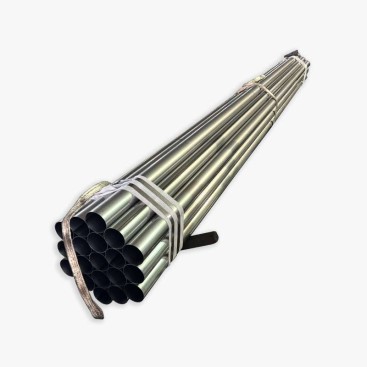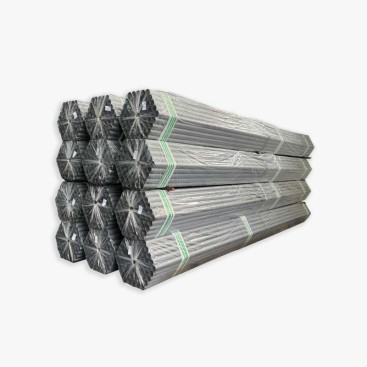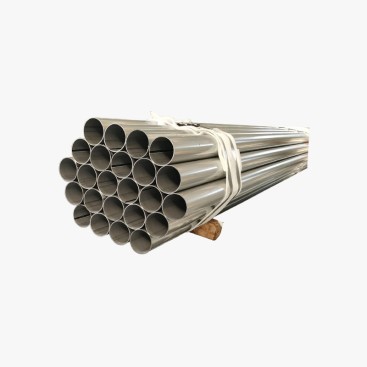

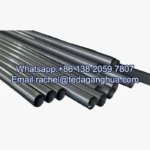
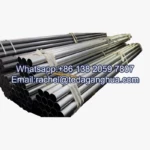
Aluminized Steel Pipe Made In China
- Description
Description
Aluminized pipe made in China covers a broad manufacturing and export supply base, but “Made in China” itself is not a technical specification. For procurement managers, the useful approach is to evaluate the Chinese supply chain through applicable standards, substrate grade, coating mass, dimensional tolerances, production capability, inspection records, and destination-country compliance requirements.
What Makes China’s Aluminized Tube Supply Different?
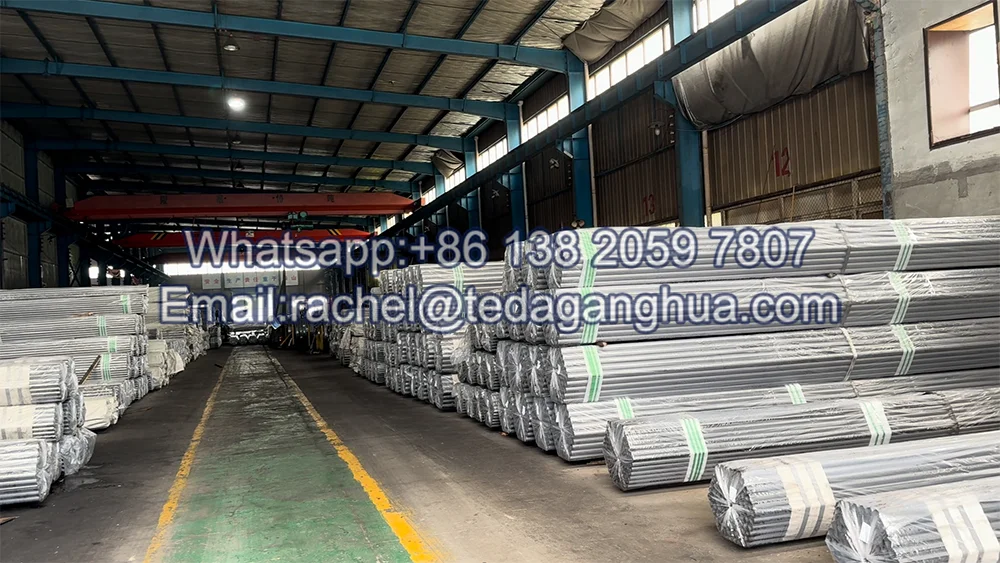
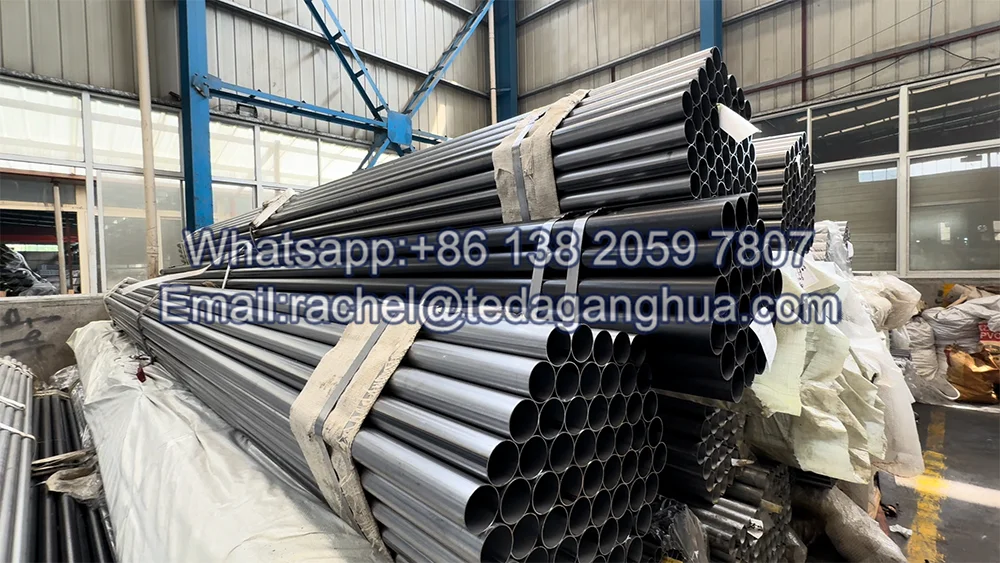
China has a large metal-processing and tube-manufacturing ecosystem, allowing buyers to source coated strip, welded tubes, fabricated sections, and customized tube components through different production routes. The supply structure is not limited to one type of manufacturer.
Different forming mills and tooling ranges allow suppliers to cover multiple outside diameters, wall thicknesses, lengths, and downstream processing requirements.
Buyers may find options ranging from samples and stock quantities to production batches and recurring container orders.
Some suppliers combine raw-material sourcing, coating, tube forming, cutting, inspection, packaging, and export coordination.
For procurement purposes, however, supply-chain scale should not be confused with guaranteed product quality. A buyer should qualify the specific production route and inspection system used for the requested specification.
Which Standards Are Commonly Used?
Chinese suppliers can manufacture and export coated steel products according to different technical standards. The applicable standard should be agreed before quotation rather than selected after production.
| Standard System | Procurement Relevance | Items to Define |
|---|---|---|
| GB/T system | Used for Chinese-market specifications and can provide a domestic technical reference. | Grade, dimensions, coating requirements and testing provisions |
| JIS G3314 | Common reference for continuously hot-dip aluminium-coated steel products in Japanese-oriented specifications. | Steel grade, coating designation, dimensions and mechanical requirements |
| ASTM A463/A463M | Frequently specified when the buyer’s project uses ASTM requirements for aluminium-coated steel sheet or strip. | Coating type, coating class, base steel and applicable testing |
| EN 10346 | Relevant when the underlying coated flat-steel specification follows European requirements. | Steel grade, coating designation, tolerances and mechanical properties |
Important: A standard for coated flat steel does not automatically describe every finished tube characteristic. If coated strip is subsequently formed and welded into a tube, the purchase specification should separately define tube dimensions, weld quality, tube-end condition, length, straightness, and any pressure or leak testing required.
GB/T 36399 and the Chinese Standard Route
For buyers considering Chinese-standard supply, GB/T specifications can be used as part of the technical basis, including standards applicable to aluminium-coated steel products. When a project specifically requires GB/T 36399, the buyer should identify the exact edition and product scope in the purchase order.
This is important because a Chinese standard reference alone does not tell the supplier all the commercial details needed for a finished tube. The final specification should connect the standard with the actual tube geometry, coating requirement, tolerance, testing, and acceptance criteria.
Better specification practice: Write “standard + grade + OD × wall thickness + coating requirement + length + tolerance + testing + packing” rather than simply writing “Made in China aluminized pipe.”
The Main Quality Points to Check
For coated tubes, the coating and the tube-making process need to be evaluated together. A visually attractive surface does not by itself confirm coating mass, adhesion, or dimensional conformity.
| Quality Point | What to Verify | Why It Matters |
|---|---|---|
| Coating mass | Specified coating designation, measured result and tolerance | Provides a measurable basis for coating quantity |
| Coating uniformity | Variation along and around the product | Helps maintain consistent surface protection |
| Adhesion | Bend, forming, or other applicable adhesion test | Important when the tube is bent, formed, or assembled |
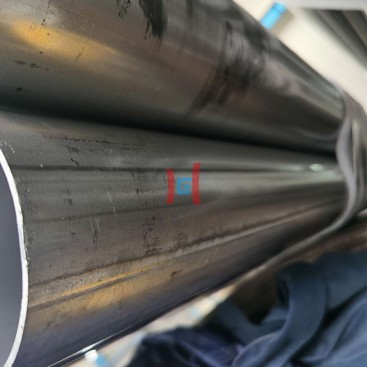
| Surface | Scratches, bare spots, peeling, excessive oxidation or other specified defects | Surface condition affects application and acceptance |
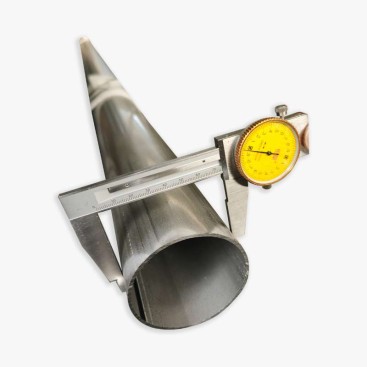
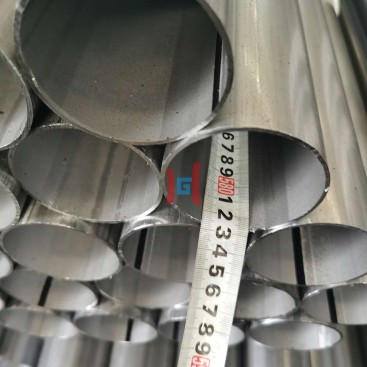
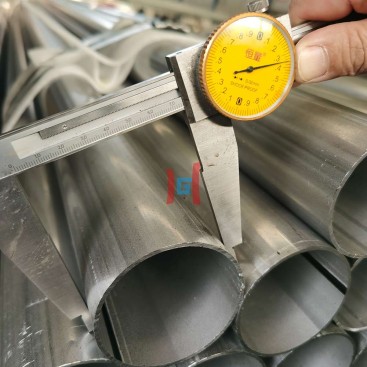
| Tube dimensions | OD, wall thickness, ovality, straightness and length | Ensures fit and assembly compatibility |
| Tube ends | Cut quality, burrs, deformation and required end preparation | Important for welding, insertion, flaring and assembly |
Coating Mass Is Not a Temperature Rating
One common procurement mistake is treating the coating designation as though it were a service-temperature rating. Coating mass describes the amount of coating applied; it does not independently define the maximum operating temperature of the finished tube.
Actual service suitability depends on the substrate, coating system, atmosphere, thermal cycling, mechanical loading, joint design, and application. For exhaust, heating, appliance, or other elevated-temperature applications, these factors should be evaluated together.
Defines the required coating system and coating quantity according to the applicable standard.
Must be assessed from the complete material and service environment rather than coating mass alone.
Repeated heating and cooling can create conditions different from steady-temperature service.
Export Compliance: Make the Standard Match the Destination
For export orders, the Chinese production standard and the destination-market requirements should be considered together. “Made in China” identifies the country of origin; it does not automatically establish compliance with every requirement in the importing country.
The buyer should first identify the destination’s applicable customs, product, safety, environmental, documentation, and application-specific requirements. The exporter can then prepare the appropriate technical and commercial documents.
| Document / Evidence | Typical Purpose |
|---|---|
| Mill Test Certificate | Provides material and test information for the supplied batch where required. |
| Inspection Report | Records dimensional, coating, mechanical, pressure, or other specified test results. |
| Certificate of Origin | Documents declared country of origin when required by the transaction or destination. |
| Compliance Declaration | Confirms conformity with a specified regulatory or technical requirement when applicable. |
| Third-Party Inspection | Provides independent verification when required by the buyer, contract, or project. |
The correct document set depends on the destination and product application. A supplier should not promise a particular certificate simply because it is commonly requested in another market.
Turn “Made in China” Into an Acceptable Specification
Country of origin is useful commercial information, but acceptance should be based on measurable technical requirements. A procurement specification can be structured into several layers.
Material: substrate grade and applicable standard
Coating: coating type, designation, mass and applicable standard
Dimensions: outside diameter, wall thickness, length and tolerances
Manufacturing: welded or seamless construction and required forming process
Quality: surface, adhesion, dimensional and pressure/leak testing requirements
Traceability: heat number, batch identification and inspection records
Export: packing method, documents, destination and agreed delivery term
This structure makes supplier comparison much easier. Two suppliers may both offer “Chinese aluminized pipe,” while their substrate, coating mass, tolerances, production route, testing, packaging, and delivery terms are materially different.
Factory Verification Before a China Purchase
Before placing a significant order, procurement teams can verify the supplier at several levels. The objective is to establish whether the stated production capability corresponds to the actual product being offered.
| Verification Level | Evidence to Request |
|---|---|
| Basic supplier review | Production range, equipment list, factory information and product specifications |
| Technical qualification | Samples, MTCs, coating test results, dimensional inspection records and process information |
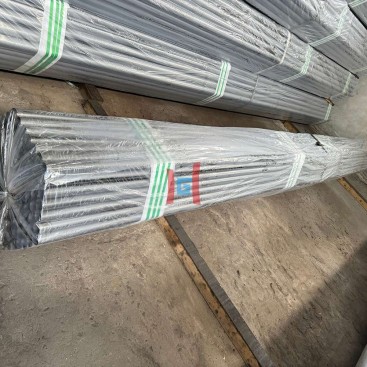
| Pre-shipment inspection | Batch inspection, quantity verification, surface inspection and packing confirmation |
| Factory audit | Production lines, QC facilities, raw-material traceability, records, warehouse and actual capacity |
For a recurring supply program, an initial technical qualification followed by periodic batch inspection can provide a more useful control system than relying solely on a supplier’s country-of-origin statement.
Teda Ganghua: China Supply for Export Projects
Teda Ganghua provides Chinese metal product supply for overseas procurement, with specifications organized around material grade, dimensions, coating requirements, processing, inspection, packaging, and delivery. For buyers sourcing from China, the commercial process can be aligned with the required technical standard and destination-market documentation.
For a new inquiry, buyers can provide the applicable standard, substrate grade, outside diameter, wall thickness, coating designation, length, quantity, testing requirements, destination, and required documents. This gives the supplier a clear basis for evaluating production and export requirements. Review the aluminized steel tube supply from China range and submit the required specification for quotation.
FAQ
What are the main advantages of sourcing aluminized tubes from China?
The Chinese supply ecosystem offers broad specification coverage, multiple manufacturing routes, flexible production quantities, and extensive metal-processing capacity. Actual suitability still needs to be verified against the required specification and inspection criteria.
Which standards can Chinese suppliers provide?
Depending on the supplier and product, Chinese-standard specifications and export-oriented requirements such as JIS G3314, ASTM A463/A463M, and EN 10346 may be available. The exact standard and edition should be confirmed in the purchase specification.
Does a Chinese standard automatically satisfy overseas requirements?
No. The applicable technical standard and destination-country regulatory requirements should be evaluated separately. Additional declarations, certificates, testing, or documentation may be required depending on the market and application.
What should I check besides the coating specification?
Check the substrate grade, OD, wall thickness, tolerances, coating mass, coating adhesion, surface condition, tube-end quality, welding or tube construction, testing requirements, traceability, packaging, and documentation.
How should I specify a China-made product in a purchase order?
Define the applicable standard and grade together with the tube dimensions, coating requirement, tolerances, length, manufacturing method, inspection requirements, packaging, traceability, documents, destination, and delivery terms. Country of origin can then be recorded separately as commercial information.