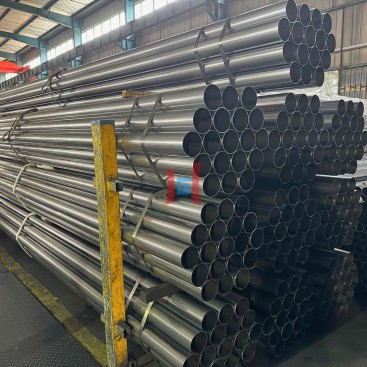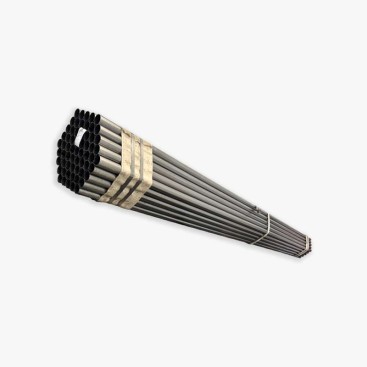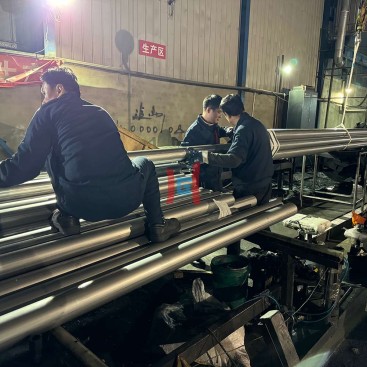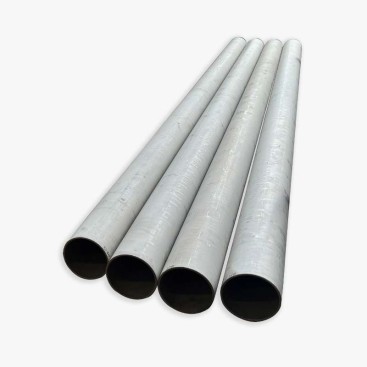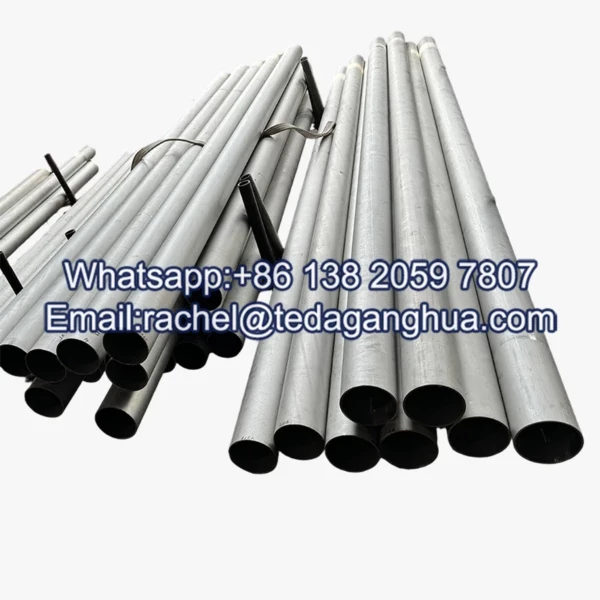
- Description
Description
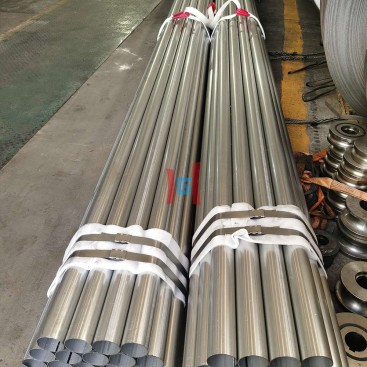
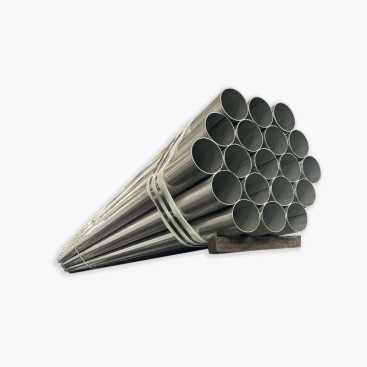
DX53D+AS80 aluminized steel pipe is a practical material combination for components that require demanding forming capability while retaining a standard aluminum-silicon coating specification. DX53D is a drawing-quality steel grade under EN 10346, generally selected for more demanding forming operations than DX51D or DX52D. AS80 identifies a nominal coating-mass category in the relevant coating designation context. Together, they offer a useful starting point for evaluating deep-drawn components where forming performance takes priority over specifying a heavier coating.
The key selection principle is to match the substrate and coating to the manufacturing process. Deep drawing places substantial strain on both the steel and its coating. A drawing-quality substrate can help the component withstand deformation, while a suitable coating mass and forming process help manage the risk of coating cracks, flaking, or local damage. AS80 may be appropriate for some formed parts, but its suitability must be confirmed through the applicable specification and representative forming trials.
1. What DX53D+AS80 Means
The designation contains two separate material requirements: the substrate grade and the coating category. Understanding the distinction helps procurement teams specify the right material without confusing formability with coating protection.
| Designation element | Technical meaning | Selection purpose |
|---|---|---|
| DX53D | Drawing-quality substrate grade within the EN 10346 designation system. | Supports the selection of steel for demanding forming operations, subject to specified properties and process validation. |
| +AS | Aluminum-silicon hot-dip coating designation. | Identifies the coating system, not the substrate’s drawing grade. |
| AS80 | Nominal combined coating mass of 80 g/m² in the relevant designation context. | Provides a defined coating-mass level for balancing forming needs and service protection. |
AS80 normally refers to the nominal coating mass across both sides combined, not 80 g/m² per side. With an even distribution, it corresponds to approximately 40 g/m² per side. Actual coating distribution, tolerances, test methods, and acceptance criteria should be confirmed against the applicable specification.
Standards note
EN 10346 covers continuously hot-dip coated flat steel products. When DX53D+AS80 is ordered as a finished pipe or tube, the buyer should also confirm the tube-manufacturing route, finished dimensions, weld requirements, and product acceptance criteria. The flat-steel designation alone does not define every requirement for the completed tubular component.
2. DX53D: A Substrate for More Demanding Forming
DX53D is generally positioned above DX51D and DX52D in terms of forming demands addressed by the grade hierarchy. It is used where the component needs greater drawing capability than a commercial-grade or less demanding drawing-quality substrate can provide. This makes it a candidate for deep-drawn shells, formed housings, and other parts with more complex geometries.
However, the grade designation should not be treated as a substitute for the applicable mechanical-property tables. Yield strength, tensile strength, elongation, thickness range, and other acceptance requirements must be verified against the current standard and the supplier’s guaranteed values. Actual forming performance also depends on tooling, lubrication, blank geometry, forming speed, and the severity of deformation.
How DX53D Fits into the EN Grade Selection
| Grade | General forming position | Typical selection consideration |
|---|---|---|
| DX51D | Commercial forming | Parts with relatively simple forming requirements. |
| DX52D | Drawing-quality forming | Applications involving moderate drawing or more involved bending. |
| DX53D | More demanding drawing and forming | Components requiring greater drawing capability, subject to the verified material properties. |
| DX54D | More severe drawing applications, depending on the part and specification | Consider when the drawing severity requires a more specialized grade. |
This table is a general selection guide, not a guarantee that one grade will succeed in every forming operation. For complex parts, review the drawing, forming sequence, material certificates, and trial results before finalizing the specification.
3. Why Pair a Deep-Drawing Grade with AS80?
Deep drawing stretches and redistributes material as the blank moves through the die. Depending on the geometry and process, the coating may experience localized tensile strain, compression, sliding friction, and contact pressure. These conditions can affect coating integrity even when the steel substrate itself forms successfully.
A heavier coating is not automatically unsuitable for deep drawing, and AS80 is not guaranteed to prevent cracking. Nevertheless, where coating deformation is a concern, it is sensible to assess a standard or lower coating-mass option before specifying a heavier category such as AS120 or AS150. The coating system, adhesion, microstructure, tooling, and forming severity all influence the outcome.
The selection principle
As forming severity increases, prioritize a substrate with verified formability and choose the coating mass that satisfies the required service performance without creating unnecessary forming risk. A standard coating such as AS80—or a lower category where available and suitable—can be a practical starting point for evaluation.
Formability and Coating Protection Are Different Requirements
DX53D addresses the substrate’s forming requirements. AS80 addresses the coating-mass category. A drawing-quality substrate does not automatically provide better corrosion or oxidation resistance, and a heavier coating does not automatically improve deep-drawing performance.
For this reason, material selection should consider both the manufacturing stage and the service stage. The component must survive forming without unacceptable damage and then provide the coating performance required in operation.
4. Typical Applications for DX53D+AS80
This combination may be considered for formed components where the drawing requirements are substantial but a standard coating-mass category is sufficient for the intended service conditions. Suitability depends on the component design, the actual deformation, and the operating environment.
Deep-Drawn Exhaust Components
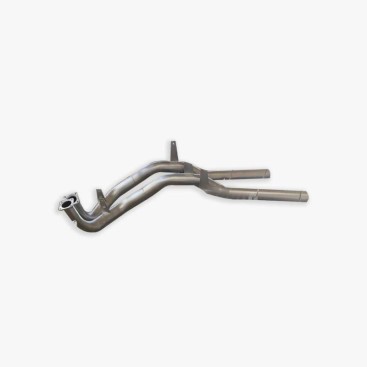
Selected shells, housings, or formed exhaust parts where the drawing grade and coating system are validated for the temperature and atmosphere.
Appliance Housings
Drawn inner shells, covers, and enclosures that need complex geometry and a specified coated surface.
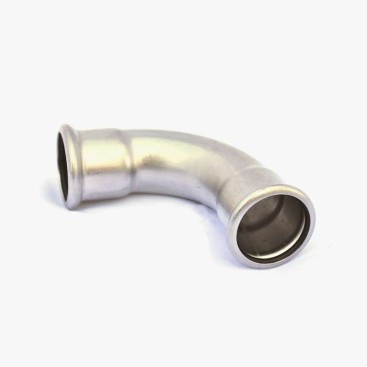
Complex Formed Tubular Parts
Components requiring drawing, flaring, or other substantial deformation, subject to post-forming coating inspection.
Automotive Stamped Parts
Selected stamped components where the material grade, coating, and operating requirements have been qualified together.
For tubular products, clarify whether the strip is coated before tube forming or whether another coating route is used. Welding, flaring, expansion, and subsequent bending may change the coating condition locally. The finished component should be inspected according to the intended application and agreed acceptance criteria.
5. Processing Recommendations for Deep-Drawing Applications
Choosing DX53D is only one part of controlling forming quality. Tooling design, lubrication, surface cleanliness, blank geometry, and the deformation sequence all contribute to the result.
Use Suitable Lubrication
Use a lubricant compatible with the forming process and the coating system. Appropriate lubrication can reduce friction, scoring, and localized damage during drawing. Confirm that any lubricant residue can be removed using a method compatible with downstream welding, coating, or assembly requirements.
Review Die and Punch Radii
Where component design permits, avoid unnecessarily sharp punch and die radii. Suitable radii can help distribute deformation and reduce localized strain concentrations. The required radius depends on material thickness, part geometry, tooling design, and the forming sequence; it should be established through engineering review and trials.
Avoid Sharp Corners and Abrupt Section Changes
Sharp corners and sudden geometry transitions can concentrate strain and increase the risk of wrinkles, tearing, or coating damage. Use gradual transitions where practical, and check high-strain regions after each critical forming stage.
Inspect the Coating After Forming
Assess the finished part for visible cracking, flaking, scratches, exposed substrate, and other defects defined by the purchase specification. If the part operates in a demanding environment, determine whether additional performance testing is required. A visually acceptable coating may still need validation under the actual thermal or corrosive conditions.
6. AS60, AS80, AS120, and AS150: How Should Buyers Compare Them?
AS80 is one possible coating-mass selection, not a universal default for every DX53D component. Lower or higher categories should be evaluated against forming severity, coating integrity, and service requirements.
| Coating category | Nominal combined mass* | What to assess |
|---|---|---|
| AS60 | 60 g/m² | Whether the lower coating-mass category meets the specified service requirement. |
| AS80 | 80 g/m² | A standard coating-mass option to evaluate for formed components. |
| AS120 | 120 g/m² | Whether additional coating mass is required and whether the forming process maintains coating integrity. |
| AS150 | 150 g/m² | Whether the higher coating-mass category is justified by the environment and validated for the forming process. |
*Nominal combined coating mass in the relevant designation context. Confirm the applicable standard, tolerances, coating distribution, and supplier availability before ordering.
For a deeply drawn component, a sensible process is to establish the required substrate grade first, then evaluate coating categories against the service requirement and forming trials. If AS80 cannot meet the necessary durability target, a heavier category or another material system may be needed. The decision should be based on evidence rather than assuming that a lighter coating is always better for forming or that a heavier coating always delivers better overall performance.
7. Procurement Checklist for DX53D+AS80 Aluminized Steel Pipe
To help suppliers quote consistently, provide the following details whenever possible:
- Substrate grade: DX53D and the applicable EN standard or agreed material specification.
- Coating: AS80, coating-mass basis, tolerances, and required inspection method.
- Dimensions: Tube outside diameter, wall thickness, length, and dimensional tolerances.
- Forming process: Drawing depth, bend radius, flaring or expansion requirements, and tooling conditions where relevant.
- Service environment: Operating temperature, atmosphere, moisture, chemical exposure, and required service life.
- Quality requirements: Material certificate, traceability, coating inspection, and acceptance criteria for post-forming defects.
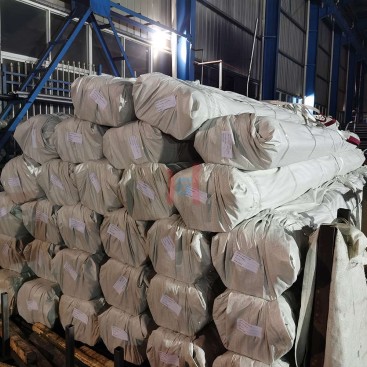
- Delivery requirements: Order quantity, packaging, delivery schedule, and protection against handling damage.
These details help determine whether DX53D+AS80 is suitable for the finished component. They also reduce the risk of receiving quotations that appear comparable but are based on different coating requirements or forming assumptions.
8. Teda Ganghua: Sourcing Support for Aluminized Steel Tubes
Teda Ganghua supports industrial procurement inquiries for coated steel products and tubular materials. For deep-drawing applications, buyers can provide the part drawing, substrate grade, coating category, dimensions, forming requirements, operating conditions, and inspection criteria to help clarify the specification before quotation.
Explore aluminized steel tubes and submit your technical requirements for review. Clear information about drawing severity and coating mass helps the supplier assess the requested configuration and identify any details that require confirmation before production.
For repeat orders, align the substrate specification, coating acceptance criteria, finished-tube dimensions, post-forming inspection, and delivery requirements in the purchase documentation. This provides a stronger basis for consistent quality than relying on the grade designation alone.
Frequently Asked Questions
1. What does DX53D+AS80 mean?
DX53D identifies a drawing-quality substrate grade under EN 10346, while AS80 identifies an aluminum-silicon coating category with a nominal combined coating mass of 80 g/m² in the relevant designation context. The finished pipe may require additional dimensions, manufacturing, and inspection specifications.
2. Why pair a deep-drawing grade with AS80?
The drawing-quality substrate supports more demanding forming, while AS80 provides a defined coating-mass level. This combination can be a practical starting point when the part needs substantial forming but does not require a heavier coating to satisfy its service conditions.
3. Does a heavier coating always crack more easily during deep drawing?
No universal rule applies. Coating damage depends on coating structure, adhesion, substrate properties, tooling, lubrication, and deformation severity. A heavier coating may require additional forming validation, but the actual result should be established through material data and representative trials.
4. Is DX53D more suitable for deep drawing than DX51D or DX52D?
DX53D is generally positioned for more demanding drawing applications than DX51D and DX52D. The appropriate grade depends on the actual part geometry, required material properties, forming process, and applicable specification.
5. Can DX53D+AS80 be used for high-temperature exhaust components?
Potentially, but suitability cannot be determined from the designation alone. Confirm continuous and peak metal temperatures, atmosphere, thermal cycling, coating integrity after forming, and the required service life before approving the material.