- Description
Description
When a component requires more severe drawing, deeper forming, or a more complex geometry than a conventional stamped part, the choice of substrate becomes critical. DX54D+AS80 aluminized steel pipe combines an extra-deep-drawing steel grade with an aluminum-silicon coating designation, but the combination requires careful evaluation of the forming route. DX54D is positioned for more demanding forming applications than DX53D under EN 10346, while AS80 identifies a nominal coating mass. The key purchasing question is not simply whether the material can be formed, but whether the coating system can maintain acceptable integrity throughout forming and subsequent service.
The key distinction
DX54D+AS80 represents a higher-formability substrate with a standard coating target. It is not a guarantee that every deeply drawn, pre-coated component will remain free of coating cracks. The substrate grade, coating structure, forming severity, tooling, lubrication, and production route must be assessed together.
1. What DX54D Adds Beyond DX53D
Within the EN 10346 family of continuously hot-dip-coated flat steel products, DX54D is associated with extra-deep-drawing applications. It is generally selected when the part geometry and deformation demands exceed what a less formable drawing grade can reliably accommodate. DX53D is already intended for demanding drawing operations, but DX54D provides a higher-formability option when the component design calls for more severe deformation.
This distinction matters for procurement managers because grade selection should follow the forming operation rather than the product name alone. A deep cavity, a complex profile, or a component formed in one integrated operation may require a different substrate grade from a shallow stamped cover made with the same nominal thickness.
| Grade | General forming position | Selection consideration |
|---|---|---|
| DX51D | General forming | For applications with relatively moderate forming demands, subject to the required specification. |
| DX52D | Drawing applications | For parts requiring more drawing capability than general forming grades. |
| DX53D | Deep drawing | For more demanding drawing geometries and deformation requirements. |
| DX54D | Extra-deep drawing | For more severe forming where the component design requires additional formability. |
This table is a general selection guide, not a substitute for the current EN 10346 requirements or a supplier’s material certificate. Actual mechanical properties, tolerances, and acceptance criteria must be verified against the applicable edition of the standard and the ordered product specification. No single grade designation guarantees success for every die design or forming sequence.
2. What AS80 Means in the Designation
The AS portion identifies an aluminum-silicon coating system, while the number indicates the nominal coating mass specified for the product. In the usual designation convention, AS80 refers to a nominal total coating mass of 80 g/m² across both sides combined, not 80 g/m² on each side. If the coating is distributed evenly, this corresponds approximately to 40 g/m² per side; the actual distribution and applicable tolerances should be confirmed in the order specification.
The coating designation and the substrate grade describe different properties. DX54D addresses the steel’s forming capability, whereas AS80 describes the coating target. A higher-formability grade does not automatically make the coating more deformable, and a coating mass designation does not establish how well the coating will withstand a specific drawing operation.
| Specification element | What it describes | What it does not guarantee |
|---|---|---|
| DX54D | Extra-deep-drawing substrate grade | Crack-free coating after every forming operation |
| +AS | Aluminum-silicon coating type | Universal resistance to every atmosphere or service temperature |
| AS80 | Nominal combined coating mass of 80 g/m² | A specific service life or guaranteed coating integrity after deep drawing |
3. The Real Boundary: Extra-Deep Drawing With a Pre-Applied Coating
The central challenge in DX54D+AS80 is the interaction between substantial substrate deformation and the coating’s response. Aluminum-silicon coatings contain aluminum-rich and silicon-rich phases, along with intermetallic layers formed during coating production. These structures do not necessarily deform in the same way as the steel substrate. During severe drawing, differences in deformation can contribute to local microcracking, coating damage, or flaking, depending on the coating structure, adhesion, strain distribution, and process conditions.
It would be inaccurate to say that all aluminized coatings will fail during extra-deep drawing. Equally, it would be risky to assume that the higher formability of DX54D eliminates coating-related limitations. A component may pass the substrate’s forming requirements while still showing coating defects that affect appearance, corrosion behavior, or high-temperature performance.
Route A: Form coated material
Use pre-coated DX54D+AS80 when the coating is required before forming. Validate the actual deformation, tool radii, lubrication, surface acceptance criteria, and coating integrity through representative trials.
Route B: Form first, coat later
Consider forming the component before applying a suitable coating where the manufacturing process, geometry, and required coating system permit. This changes the process sequence and requires separate confirmation of coating feasibility and finished-part requirements.
Route C: Evaluate a lower coating mass
Where pre-coated material is necessary, assess a lower coating-mass option if the service environment allows it. A thinner coating may be worth trialing, but it is not a universal solution and must still meet the required protection performance.
These routes are alternatives, not a ranking of universally correct and incorrect methods. The appropriate choice depends on whether the priority is forming feasibility, coating continuity, production efficiency, corrosion resistance, or performance in a high-temperature environment. The coating specification must be selected alongside the manufacturing route rather than after the component design has been finalized.
4. Why AS120 Is Not Automatically the Better Choice
When a component requires more severe drawing, it may be tempting to specify a heavier coating such as AS120 to increase the nominal coating mass. However, coating mass and forming capability are separate design variables. A heavier coating does not make the substrate more formable, and increasing coating mass may change how the coating responds to deformation. Whether it raises the risk of cracking or flaking depends on the coating structure and the actual forming conditions.
For this reason, DX54D+AS80 and DX54D+AS120 should be treated as different material-and-process combinations, not simply as a basic and upgraded version of the same product. If AS120 is needed for service reasons, its compatibility with the intended forming operation should be demonstrated. If AS80 meets the service requirements, a heavier coating should not be specified merely on the assumption that more coating is always better.
| Combination | Primary question | What to validate |
|---|---|---|
| DX54D+AS80 | Can the extra-deep-drawing substrate meet the forming demand while retaining acceptable coating integrity? | Draw severity, coating condition after forming, service environment, and finished-part criteria. |
| DX54D+AS120 | Can the heavier coating meet the service requirement without unacceptable forming-related damage? | Coating integrity under the actual process, specified coating mass, and post-forming inspection results. |
The practical boundary is clear: DX54D addresses a more demanding forming requirement than DX53D, but it does not remove the need to qualify the coating. Selecting a higher coating mass should be justified by service conditions and verified against the forming process.
5. Typical Applications and Their Qualification Needs
DX54D-based material may be considered for components involving complex geometry or substantial plastic deformation. When an aluminum-silicon coating is also required, the finished application and the order of manufacturing operations become especially important.
Complex formed components
Deep cavities, compound profiles, and integrated shapes that require substantial drawing. Qualification should cover the most highly strained areas, not just the visible outer surface.
Automotive stamped parts
Components where forming accuracy and repeatability are important. Confirm the required mechanical properties, dimensional tolerances, coating condition, and any applicable automotive specification.
High-temperature formed parts
Parts that need an aluminum-silicon coating for their intended service environment. Verify operating temperature, atmosphere, thermal cycling, joining method, and coating damage after forming.
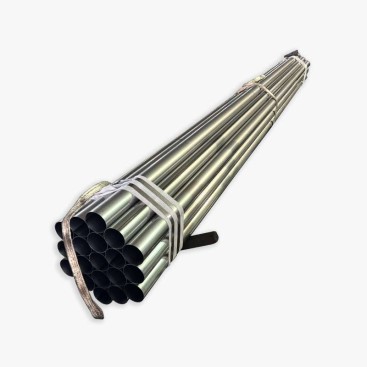
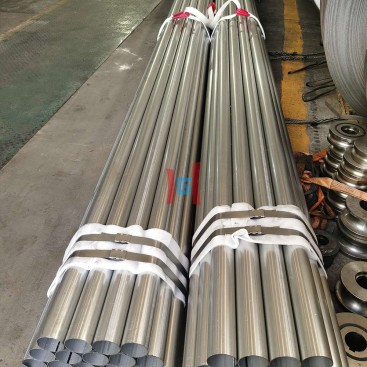
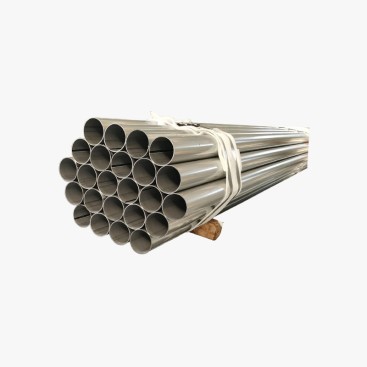
Formed tube components
Tubular products made from coated strip require evaluation of the forming and welding sequence, seam quality, final geometry, and coating condition at edges and weld areas.
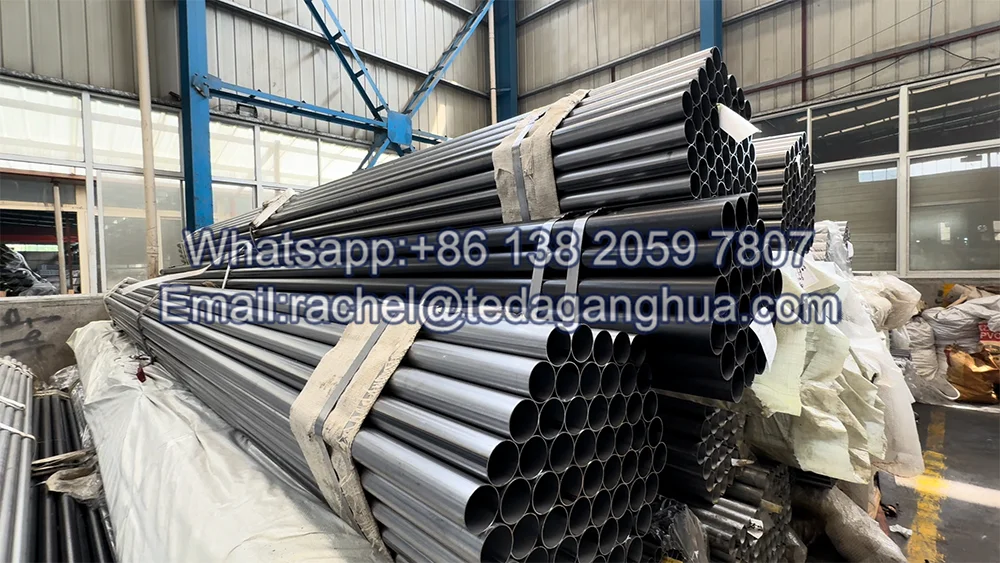
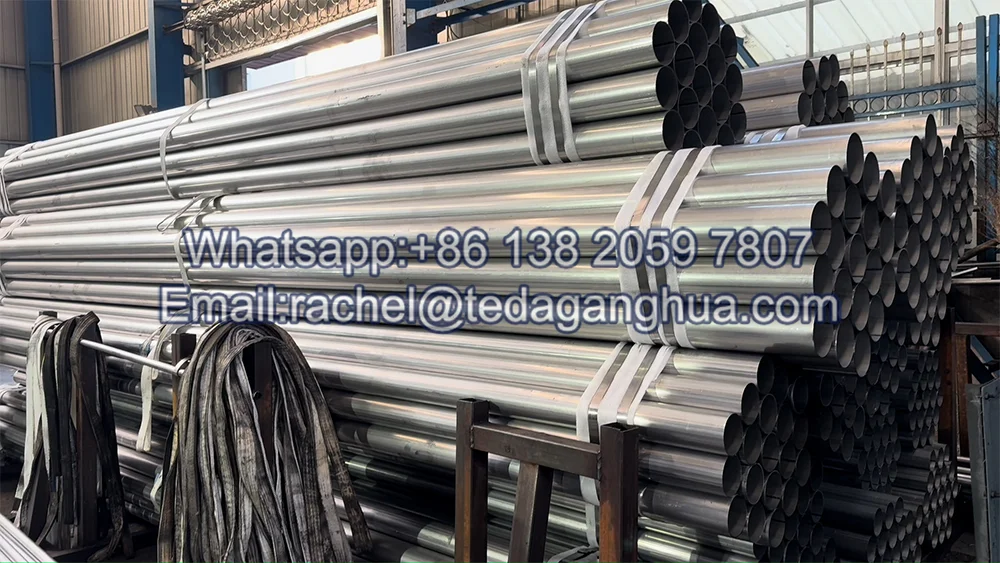
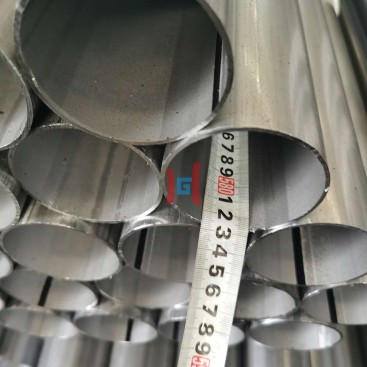
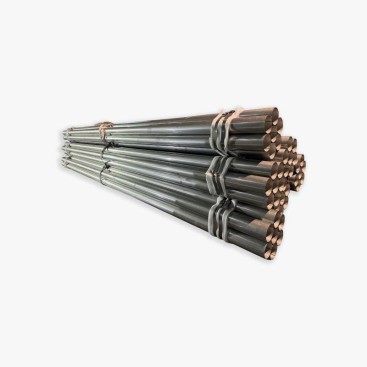
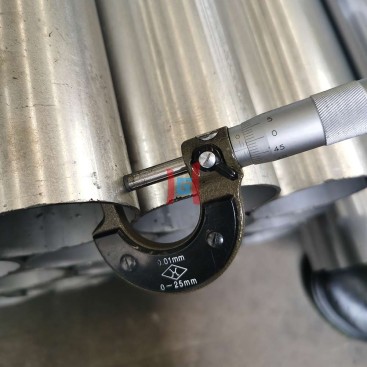
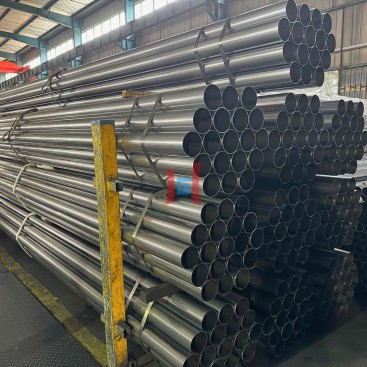
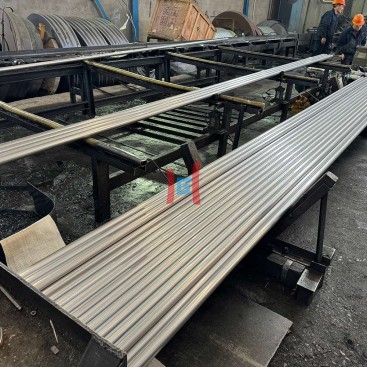
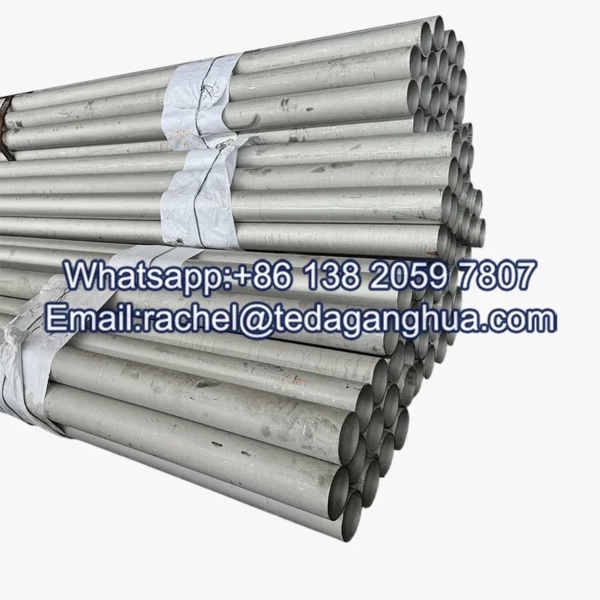
For finished tubes, the designation alone is not a complete purchase specification. EN 10346 covers continuously hot-dip-coated flat steel products; it does not, by itself, establish every requirement for a completed tube. Buyers should specify whether the material is coated strip formed into tube or a finished component coated after forming, and should separately define outside diameter, wall thickness, length, weld requirements, dimensional tolerances, inspection, and service conditions.
6. Processing Controls for Extra-Deep-Drawing Applications
When pre-coated material is used, process control should focus on the areas exposed to the greatest local strain. The following measures can help reduce avoidable damage, but they cannot replace a forming trial using the actual material and tooling.
- Review die and punch radii: Avoid unnecessarily sharp transitions where the design permits. Local strain concentration can make coating damage more likely.
- Control lubrication: Select a lubricant compatible with the coating and downstream operations. Confirm that friction and material flow remain stable during the drawing sequence.
- Check blank-holder conditions: Excessive or insufficient restraint can affect wrinkling, material flow, and local strain distribution.
- Inspect critical regions: Examine corners, draw walls, radii, edges, and other highly deformed areas for cracks, flaking, scratches, or exposed substrate.
- Qualify the complete route: Include forming, trimming, welding or joining, cleaning, and any subsequent coating or finishing steps in the assessment.
Acceptance criteria should be agreed before production. A cosmetic inspection alone may not be sufficient if the coating protects the component in a demanding service environment. Where coating continuity is critical, define the inspection method and any required performance testing with the engineering and quality teams.
7. What Procurement Managers Should Confirm Before Ordering
For a DX54D+AS80 order, a useful specification connects the grade designation to the actual part and manufacturing route. This helps prevent a material that looks correct on paper from failing during production qualification.
| Item to confirm | Information to provide or request |
|---|---|
| Grade and standard | Applicable EN 10346 edition, DX54D designation, and agreed mechanical-property requirements. |
| Coating | AS80 designation, coating-mass convention, tolerances, and any side-specific requirements. |
| Product form | Coated flat strip, tube made from coated strip, or a component coated after forming. |
| Dimensions | Thickness, width or tube dimensions, tolerances, coil or cut length requirements, and edge condition. |
| Forming qualification | Part geometry, deformation severity, tooling conditions, lubrication, trial quantity, and post-forming inspection criteria. |
| Documentation | Material test certificate, traceability, coating documentation, and any agreed inspection or test reports. |
| Service requirements | Operating temperature, atmosphere, thermal cycling, corrosion exposure, and required component life. |
A small production trial is particularly valuable when the component has severe draw depths or tight radii. Confirming both forming feasibility and coating condition before releasing a large order can reduce scrap, rework, and disputes over whether the material or the process caused the failure.
8. Sourcing DX54D+AS80 From Teda Ganghua
Teda Ganghua supports B2B procurement discussions for steel products and coated-steel applications. For buyers evaluating aluminized steel tubes, the most useful inquiry includes the required grade, coating designation, product form, dimensions, quantity, intended operating environment, and forming sequence.
For an extra-deep-drawing component, share a drawing or a clear description of the most demanding forming features whenever possible. The inquiry should distinguish between coated strip that will be formed into a tube or component and a part that will be coated after forming. This makes it easier to assess whether DX54D+AS80 is an appropriate starting specification or whether a different coating mass or manufacturing route needs evaluation.
Prepare a technical inquiry
Include DX54D, the AS80 coating target, thickness and dimensions, required quantity, application, forming severity, and inspection expectations. For demanding drawing operations, request confirmation of the applicable specification and agree on trial and acceptance criteria before mass production.
Frequently Asked Questions
1. Is DX54D more formable than DX53D?
DX54D is positioned for extra-deep-drawing applications and generally offers a higher level of formability than DX53D within the relevant EN 10346 grade family. The exact mechanical properties and suitability for a specific part must be checked against the applicable standard, supplier guarantees, and forming requirements.
2. Does AS80 mean 80 g/m² on each side?
No. Under the usual coating designation convention, AS80 refers to a nominal combined coating mass of 80 g/m² across both sides. An even distribution would be approximately 40 g/m² per side, but the actual distribution and tolerance should be confirmed in the applicable specification.
3. Will DX54D+AS80 remain crack-free during extra-deep drawing?
Not automatically. DX54D improves the substrate’s forming capability, but the coating may still develop microcracks or other damage under severe deformation. Results depend on coating structure, adhesion, geometry, tooling, lubrication, and the actual strain distribution. Representative forming trials are recommended.
4. Should I choose AS120 instead of AS80 for better protection?
Not solely because AS120 has a higher nominal coating mass. A heavier coating may be appropriate for some service requirements, but coating mass does not guarantee better performance in every environment or better behavior during forming. Validate service conditions and forming compatibility together before selecting the coating target.
5. Can DX54D+AS80 be specified directly for a finished steel pipe?
The designation alone is insufficient to define a finished pipe. EN 10346 covers continuously hot-dip-coated flat products, so the buyer must also specify the tube or finished-component requirements, dimensions, welding and inspection criteria, manufacturing route, and service conditions.
The practical value of DX54D+AS80 lies in matching an extra-deep-drawing substrate with a defined aluminum-silicon coating target. The successful specification is the one that meets the part’s forming demands and its service requirements together, supported by clear documentation and production qualification.