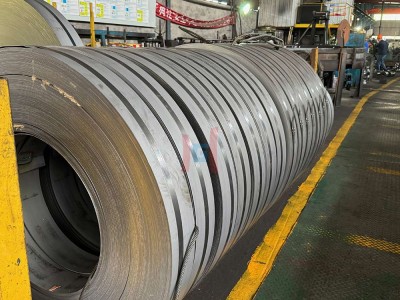
Por que tubos de aço aluminizado são usados em trocadores de calor | Resistência ao Calor & Benefícios de custo
Os trocadores de calor operam sob condições exigentes que combinam temperaturas elevadas, umidade, ciclagem térmica, e gases corrosivos. Material selection directly influences heat transfer efficiency, equipment lifespan, maintenance costs, and overall project economics. For many HVAC, aquecimento industrial, combustion, and process equipment applications, aluminized steel pipes provide an effective balance between heat resistance, proteção contra corrosão, and manufacturing cost.
Por que tubos de aço aluminizado são usados em trocadores de calor
Aluminized steel pipes consist of carbon steel coated with an aluminum-silicon alloy through a hot-dip process. The aluminum layer forms a stable oxide film during service, protecting the steel substrate against oxidation while maintaining excellent thermal conductivity and structural strength.
| Propriedade | Benefit for Heat Exchangers |
|---|---|
| Resistência ao calor | Maintains stable performance during continuous heating cycles. |
| Resistência à oxidação | Protects pipe surfaces from high-temperature scaling. |
| Resistência à corrosão | Improves durability in condensate and humid operating environments. |
| Formabilidade | Suporta flexão, expandindo, soldagem, and tube fabrication. |
| Cost efficiency | Lower material cost than most stainless steel alternatives. |
Material Selection Criteria
Selecting heat exchanger tubing involves evaluating the complete operating environment rather than temperature alone.
| Selection Factor | Engineering Consideration |
|---|---|
| Operating temperature | Continuous and peak temperature determine coating stability. |
| Working medium | Air, combustion gas, steam, or process gas require different corrosion resistance. |
| Condensation | Frequent moisture increases corrosion requirements. |
| Pressure | Wall thickness must satisfy mechanical design standards. |
| Vida útil | Longer design life may justify higher-performance materials. |
Comparison with Other Heat Exchanger Materials
| Material | Resistência ao Calor | Resistência à corrosão | Relative Cost |
|---|---|---|---|
| Aço carbono | Moderado | Baixo | Baixo |
| Aço aluminado | Alto | Alto | Médio |
| 409 aço inoxidável | Alto | Alto | Medium to High |
| 304 aço inoxidável | Alto | Excelente | Alto |
Typical Heat Exchanger Applications
- HVAC heat exchanger tubes
- Industrial air heaters
- Gas-fired furnace heat exchangers
- Boiler heat recovery systems
- Equipamento de secagem
- Industrial combustion systems
- Process gas heating equipment
- Agricultural grain dryers
Industry Application Example
A commercial HVAC equipment manufacturer originally used galvanized tubing for its combustion heat exchanger assemblies. After repeated warranty claims caused by high-temperature oxidation, the manufacturer switched to aluminized steel pipes. Field performance showed significantly improved oxidation resistance, reduced maintenance frequency, and longer equipment service life while maintaining competitive manufacturing costs.
In another industrial air heater project, aluminized steel tubing replaced stainless steel in sections where operating temperatures remained within the coating’s design range. The redesign reduced raw material costs while maintaining required durability and thermal performance.
Manufacturing Advantages
Aluminized steel pipes are compatible with standard manufacturing processes including laser cutting, tube bending, perfilagem, robotic welding, expandindo, and end forming. Their excellent dimensional consistency supports high-volume production with stable product quality.


How Teda Ganghua Supports Heat Exchanger Manufacturers
Teda Ganghua supplies aluminized steel pipes for heat exchanger manufacturing with stable dimensions, qualidade de revestimento consistente, and flexible processing services. Available solutions include custom lengths, tube cutting, pipe fabrication, embalagem de exportação, and bulk supply for OEM manufacturers and industrial equipment producers.
View available specifications at
tubos de aço aluminizados.
Perguntas frequentes
Why are aluminized steel pipes commonly used in heat exchangers?
They offer an excellent balance of oxidation resistance, proteção contra corrosão, resistência ao calor, capacidade de fabricação, and overall cost.
Can aluminized steel replace stainless steel in heat exchangers?
In many moderate-temperature applications, sim. Para corrosão extremamente agressiva ou temperaturas operacionais muito altas, aço inoxidável ainda pode ser necessário.
Os tubos de aço aluminizado são fáceis de fabricar??
Sim. Eles são adequados para cortar, flexão, soldagem, expandindo, e processos de fabricação automatizados.
Quais indústrias comumente usam tubos de trocador de calor de aço aluminizado?
Hvac, aquecimento industrial, caldeiras, fornos, equipamento de secagem agrícola, e sistemas de aquecimento de processo usam frequentemente tubos de aço aluminizado.
A Teda Ganghua fornece serviços de processamento personalizados?
Sim. Teda Ganghua oferece corte personalizado, processamento de tubos, embalagem de exportação, e soluções de fornecimento flexíveis para fabricantes de trocadores de calor industriais.