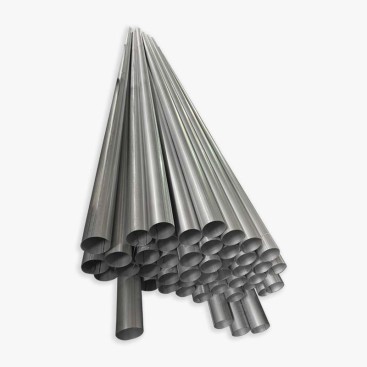
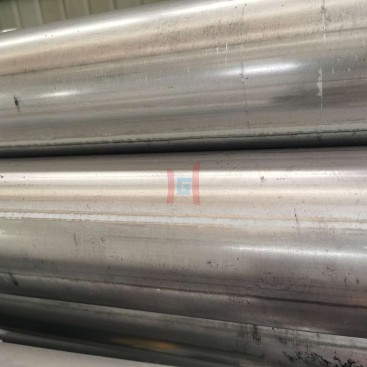
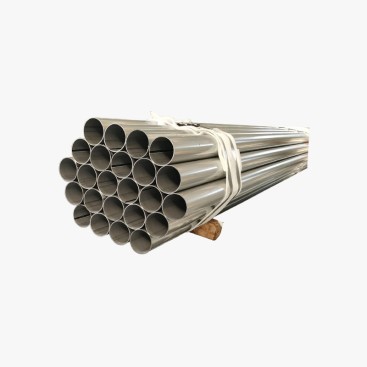
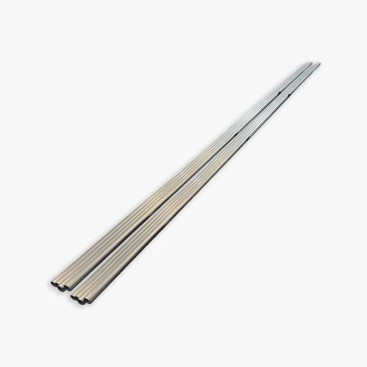
Tubo de aço aluminizado por imersão a quente


- Descrição
Descrição
Hot-Dip Aluminizing Process Demystified: How Steel Pipe Gets Its Aluminum Armor
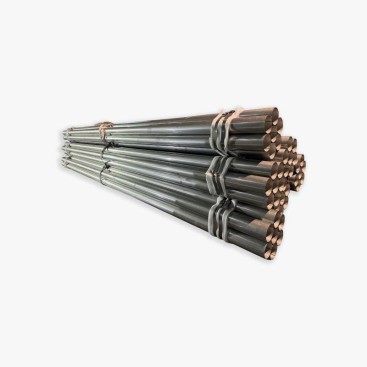
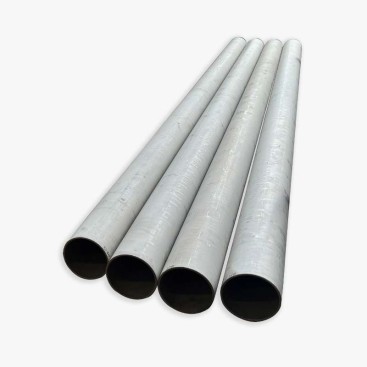
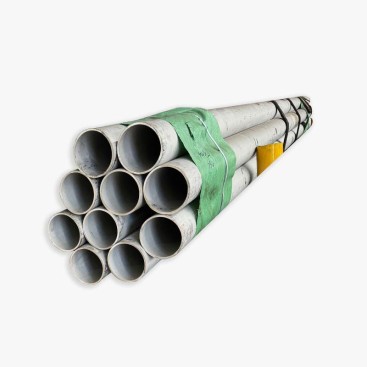
Hot-dip aluminized steel pipe is produced through a controlled metallurgical process that bonds aluminum (or aluminum-silicon alloy) to a steel substrate. This creates a durable protective “armor layer” that significantly improves resistência ao calor, resistência à oxidação, and service life in demanding industrial environments such as automotive exhaust systems, trocadores de calor, and furnace piping.
Unlike painting or coating sprays, hot-dip aluminizing is a metallurgical diffusion process, meaning the coating becomes partially integrated with the steel surface at the atomic level.
1. Full Hot-Dip Aluminizing Process Flow
| Etapa | Process Description |
|---|---|
| 1. Surface Cleaning (Desengordurante) | Removes oil, pó, and surface contaminants from steel pipe |
| 2. Acid Pickling | Removes oxide scale and activates the steel surface for coating |
| 3. Fluxing (助镀处理) | Prevents re-oxidation and improves coating adhesion |
| 4. Hot-Dip Immersion (~680°C) | Steel pipe is immersed into molten aluminum or Al-Si alloy bath |
| 5. Metallurgical Reaction | Iron reacts with aluminum forming Fe-Al intermetallic layers |
| 6. Withdrawal & Resfriamento | Controlled extraction and air cooling to stabilize coating structure |
2. What Happens at 680°C? (Core Science)
| Phenomenon | Resultado |
|---|---|
| Iron-Aluminum Diffusion | Forms intermetallic compound layers (Fe-Al phases) |
| Surface Alloying | Creates strong metallurgical bonding instead of simple adhesion |
| Silicon Addition (Al-Si bath) | Improves coating fluidity and reduces brittle layer formation |
This diffusion reaction is what makes hot-dip aluminized coatings far more durable than conventional paint or electroplating.
3. Estrutura de Revestimento (Cross-Section Model)
| Camada | Função |
|---|---|
| Outer Al-Si Layer | Primary oxidation and corrosion protection barrier |
| Intermetallic Layer | Hard transition zone ensuring bonding strength |
| Steel Substrate | Resistência mecânica e suporte estrutural |
The graded structure prevents peeling and ensures long-term stability under thermal cycling.
4. Why This Process Is Used for Steel Pipe
| Requirement | Benefit of Hot-Dip Aluminizing |
|---|---|
| Exposição a altas temperaturas | Stable performance up to ~800°C |
| Resistência à oxidação | Prevents scaling in exhaust and furnace environments |
| Cost Optimization | Cheaper than stainless steel alternatives |
| Resistência Mecânica | Retains carbon steel’s load-bearing capacity |
5. Aplicações Industriais
| Indústria | Aplicativo |
|---|---|
| Automotivo | Tubos de escape, silenciadores, tubulação do conversor catalítico |
| Heat Exchange Systems | Thermal transfer piping and ducts |
| Industrial Furnaces | Gasodutos de alta temperatura |
| Energy & Hvac | Flue gas and ventilation systems |
6. Por que os compradores escolhem Teda Ganghua
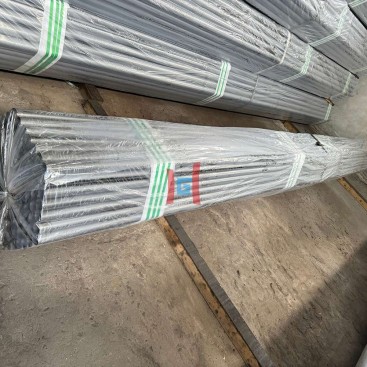
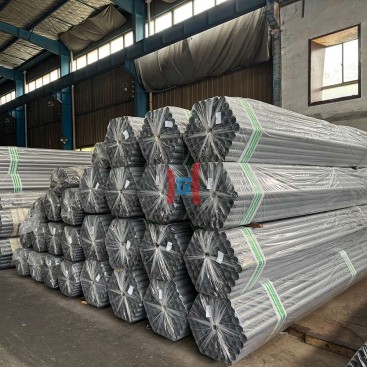
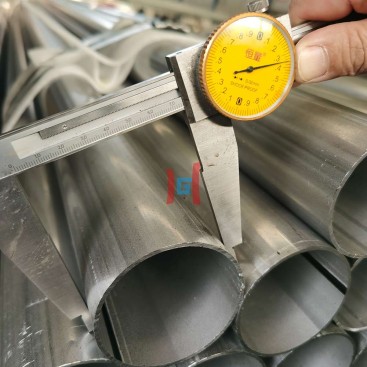
No Teda Ganghua, we supply hot-dip aluminized steel pipes with stable coating thickness, controlled Al-Si composition, and reliable metallurgical bonding for industrial-grade performance.
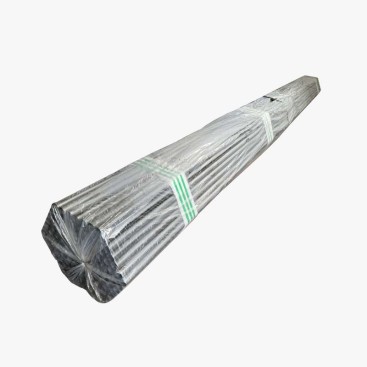
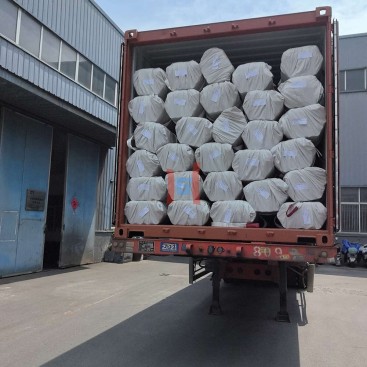
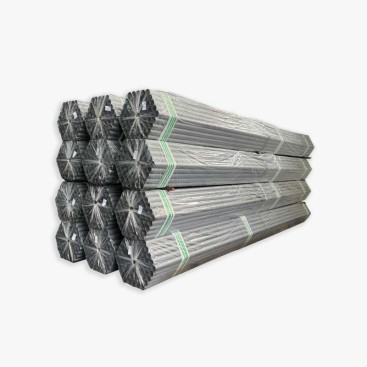
Apoiamos o corte OEM, flexão, e soluções completas de embalagens para exportação para clientes automotivos e industriais globais.
Explore nossos produtos de tubos de aço aluminizado aqui:
Produtos de tubo de aço aluminizado
Conclusão
O processo de aluminização por imersão a quente transforma tubos de aço comuns em um material de alto desempenho com “armadura” de alumínio. Através da limpeza ácida, fluindo, imersão a ~680°C, e resfriamento controlado, é formado um revestimento metalúrgico durável que permite longa vida útil em ambientes extremos.