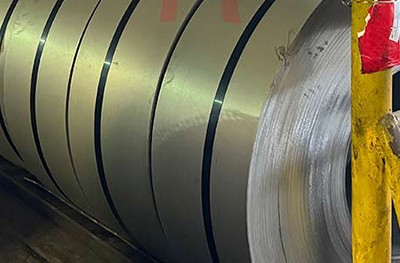
ความล้มเหลวของตะเข็บเชื่อมท่อไอเสียเหล็กอลูมิไนซ์และการควบคุมคุณภาพ
ในระบบท่อไอเสียเหล็กอลูมิไนซ์, the weld seam can become one of the most vulnerable areas long before the surrounding material shows obvious deterioration. การตัด, การขึ้นรูป, การเชื่อม, and joining can alter the original coating, expose the steel substrate, and create local variations in surface protection. During service, ความร้อนและความเย็นซ้ำแล้วซ้ำอีก, exhaust gas exposure, การสั่นสะเทือน, and moisture can accelerate damage around these discontinuities. For exhaust pipe manufacturers and procurement managers, understanding how seams behave is essential to selecting the right material, controlling fabrication quality, and improving component durability.
Why Weld Seams Are Critical in Aluminized Exhaust Systems
Aluminized steel combines a steel substrate with an aluminum-based protective coating. Depending on the coating specification, the aluminum-rich surface can form a protective oxide layer that slows oxidation at elevated temperatures. อย่างไรก็ตาม, this protection depends on coating continuity, การยึดเกาะ, and the ability of the coating system to withstand the component’s service conditions.
During tube manufacturing, a flat strip is formed into a cylindrical shape and joined along a longitudinal seam, commonly by electric resistance welding. The resulting seam region may experience changes in surface condition, microstructure, residual stress, and coating coverage. If the original coating is disrupted or altered during processing, the weld area can behave differently from the unaffected parent material.
Key principle: A coated steel tube should be evaluated as a complete fabricated product, not simply as a piece of coated strip. The seam, heat-affected region, cut edges, and finished joints can determine the actual durability of the exhaust assembly.
Five Mechanisms That Can Initiate Seam Failure
1. Coating Disruption During Welding
Welding generates localized heat that can change or remove portions of an aluminum-based coating near the joint. The extent of this change depends on the welding process, heat input, strip preparation, coating composition, and production controls.
Where the protective layer is damaged, the exposed substrate may oxidize more rapidly than the intact coated surface. This does not mean every weld will fail or that every seam requires the same repair method. It means that seam protection should be considered during process design and verified where the application demands it.
2. Heat-Affected Zones and Local Material Changes
The area adjacent to a weld can experience thermal cycles that modify its microstructure, สภาพพื้นผิว, and residual stress. Depending on the substrate and welding parameters, these changes can influence local mechanical performance and oxidation behavior.
In thin-wall exhaust tubing, the seam and adjacent material may be especially sensitive to inconsistent welding conditions. Excessive heat input, poor fit-up, inadequate fusion, or unstable process parameters can introduce defects that reduce fatigue resistance or create leak paths.
3. Thermal Cycling and Fatigue Cracking
Exhaust systems repeatedly expand during warm-up and contract during cooling. Engine vibration, vehicle movement, mounting constraints, and differences in temperature across the component add mechanical stress to the assembly.
These combined loads can initiate or extend cracks at weld toes, seam discontinuities, วงเล็บ, bends, and joints. The coating itself cannot compensate for poor weld geometry or inadequate fatigue strength. Seam design and manufacturing quality must therefore be considered alongside oxidation resistance.
4. Corrosion at Exposed Edges and Local Defects
Cut edges, coating damage, pores, and discontinuities can expose the steel substrate to oxygen and moisture. During cold starts or shutdown, condensate may collect inside exhaust tubing. External surfaces may also encounter water, เกลือถนน, and other corrosive deposits.
Localized corrosion can progress differently from uniform surface oxidation. A small defect may become a deeper corrosion site, particularly when moisture remains trapped near a joint or when deposits concentrate corrosive species. การระบายน้ำ, joint geometry, ความต่อเนื่องของการเคลือบ, and the operating environment all influence the risk.
5. Joint Design and Assembly Defects
Exhaust systems contain more than longitudinal tube seams. Circumferential welds, flanges, slip joints, clamps, วงเล็บ, and connections to other components introduce additional potential failure locations.
Poor alignment, insufficient weld penetration, excessive gaps, undercut, and unsuitable joint geometry can create stress concentrations or leakage paths. Even a coating system with good oxidation resistance cannot correct a structurally deficient joint. Inspection criteria must address weld integrity and the surrounding protective surface separately.
Where Failure Commonly Starts: A Seam and Joint Comparison
The following table summarizes typical risks in fabricated aluminized exhaust systems. The actual failure mechanism depends on the substrate, ข้อกำหนดการเคลือบ, welding process, design, and operating environment.
| Location | Potential Failure Mechanism | Recommended Control |
|---|---|---|
| Longitudinal tube seam | Coating alteration, weld defects, fatigue cracking | Control forming and welding parameters; inspect seam continuity and integrity |
| Heat-affected zone | Local oxidation, microstructural changes, residual stress | Qualify heat input and evaluate the finished joint under representative conditions |
| Cut edges and formed ends | Exposed substrate, localized corrosion | Assess edge exposure and apply only validated finishing or protection methods |
| Circumferential welds and connections | Leakage, stress concentration, coating damage | Verify joint design, คุณภาพการเชื่อม, alignment, and assembly requirements |
| ที่หนีบ, วงเล็บ, and mounting points | Vibration fatigue, fretting, localized corrosion | Review support spacing, vibration loads, contact surfaces, and drainage |
How Welding Changes the Protective Coating
The performance of an aluminized exhaust tube depends on the interaction between the steel substrate and its coating. Welding introduces a concentrated heat source, and the local temperature can exceed the range in which the original coating retains its initial condition.
Depending on the process, aluminum-rich material near the joint may melt, oxidize, redistribute, or become discontinuous. The steel may then be exposed directly or protected by a surface layer different from the original coating. Post-weld treatment can sometimes improve protection, but its suitability depends on the coating system, component design, and specified performance requirements.
Three distinctions are important when reviewing a finished tube:
- Weld integrity: Determines whether the joint has sufficient structural continuity and resistance to leakage.
- Surface protection: Determines how the seam and adjacent regions resist oxidation and corrosion.
- Service durability: Determines whether the complete assembly withstands thermal cycling, การสั่นสะเทือน, pressure fluctuations, and environmental exposure over its intended life.
Passing one of these assessments does not automatically establish compliance with the others. A leak-tight seam may still require additional oxidation evaluation, while a visually intact coating cannot demonstrate that a weld is free from internal defects.
Practical Quality Control for Aluminized Exhaust Tubes
Effective quality assurance starts before welding and continues through final inspection. The control plan should reflect the tube manufacturing method, ข้อกำหนดการเคลือบ, ความหนาของผนัง, and expected service environment.
Incoming material inspection: Verify substrate grade, ข้อกำหนดการเคลือบ, ความหนา, ความคลาดเคลื่อนมิติ, สภาพพื้นผิว, and material traceability.
Welding process control: Establish suitable parameters for current, ความเร็ว, electrode condition, strip alignment, and other process variables relevant to the selected welding method.
Seam inspection: Check for visible cracks, undercut, inconsistent weld geometry, surface discontinuities, and other defects defined by the applicable acceptance criteria.
Leak and structural testing: Apply appropriate leak testing and weld inspection methods according to component design, production requirements, and relevant specifications.
Coating evaluation: Assess the seam and heat-affected area for coating damage and determine whether a validated post-weld protection method is required.
Durability validation: ในกรณีที่จำเป็น, perform thermal cycling, ออกซิเดชัน, การกัดกร่อน, or vibration testing representative of actual service conditions.
Acceptance criteria should be established before production rather than decided only after a defect appears. For critical exhaust components, a documented combination of process monitoring, การตรวจสอบ, and application-specific testing is more reliable than visual examination alone.
Can Post-Weld Treatment Prevent Seam Failure?
Post-weld protection can help restore or improve corrosion resistance in selected applications, but it is not a universal solution. The method must be compatible with the original coating, วัสดุฐาน, อุณหภูมิในการทำงาน, and exhaust environment.
Possible approaches include qualified coating repair, application-specific protective treatments, or changes to the joining process that reduce coating disruption. Any repair method should be assessed for adhesion, เสถียรภาพทางความร้อน, compatibility with exhaust gases, and durability during repeated heating and cooling.
Where failure is caused by poor fusion, fatigue cracking, or unsuitable joint geometry, coating repair alone will not resolve the underlying problem. Structural defects must be corrected through an appropriate manufacturing or design change.
Selecting the Right Material and Tube Supplier
For exhaust-system manufacturers, material selection and supplier quality are closely connected. A technically suitable coating system can still deliver inconsistent results if incoming material varies, dimensional tolerances are not controlled, or the tube-forming and welding process is poorly managed.
เมื่อเปรียบเทียบ ท่อเหล็กอลูมิไนซ์, procurement managers should confirm the substrate grade, coating type, dimensional range, seam manufacturing method, และข้อกำหนดในการตรวจสอบ. The supplier should be able to clarify which product specifications and quality records are available for the requested configuration.
Teda Ganghua supports industrial buyers with metal product sourcing and processing coordination. For exhaust tube projects, its commercial team can work with buyers to clarify technical requirements, including tube outside diameter, ความหนาของผนัง, ความยาว, ข้อกำหนดการเคลือบ, and applicable documentation. Providing the intended operating temperature and service environment also helps establish whether the requested product needs additional qualification before use.
For demanding applications, buyers should request clear information about material traceability, dimensional inspection, weld quality controls, and any relevant performance testing. Where the application requires validated seam durability, these requirements should be included in the purchasing specification and confirmed before mass production.
คำถามที่พบบ่อย
1. Why is the weld seam often a vulnerable point in aluminized exhaust tubing?
Welding can alter or disrupt the coating and create localized differences in surface protection, residual stress, and microstructure. Thermal cycling, การสั่นสะเทือน, and corrosive exposure may then accelerate degradation if the seam is not properly designed, manufactured, and inspected.
2. Does aluminized steel lose all corrosion resistance after welding?
เลขที่. The degree of coating change depends on the welding method and process conditions. Some protection may remain around the seam, but the finished region must be evaluated rather than assuming that the original coating remains unchanged.
3. Can a post-weld coating repair guarantee long-term durability?
No single repair method guarantees service life under all conditions. The treatment must be compatible with the coating and operating environment, and it cannot correct structural weld defects or eliminate thermal fatigue caused by poor design.
4. Which inspections are most important for exhaust tube seams?
Relevant checks may include visual examination, dimensional verification, suitable weld inspection, leak testing, coating assessment, and application-specific durability testing. The required methods and acceptance criteria depend on the component specification and risk level.
5. What should buyers specify when ordering aluminized exhaust tubes?
Buyers should define the substrate grade, ข้อกำหนดการเคลือบ, ขนาดท่อ, ความคลาดเคลื่อนมิติ, seam requirements, operating environment, applicable standards, เกณฑ์การตรวจสอบ, and material documentation. Clear requirements help suppliers assess product suitability and maintain consistent manufacturing quality.