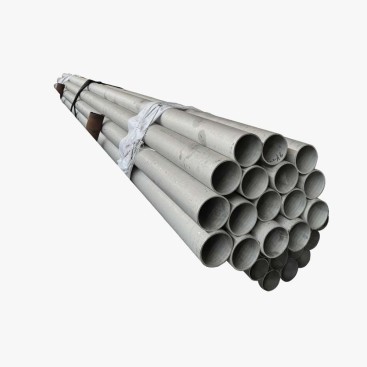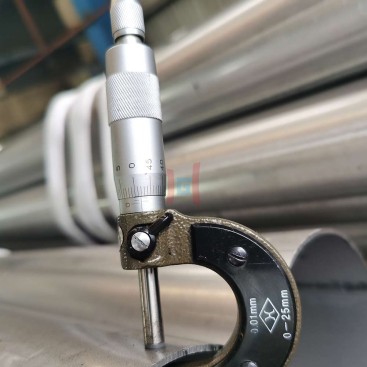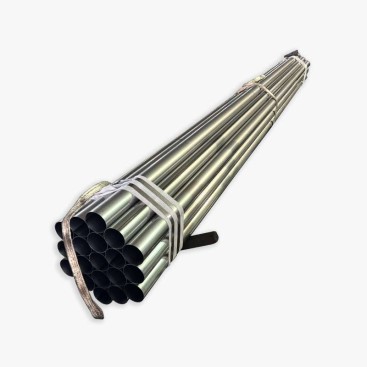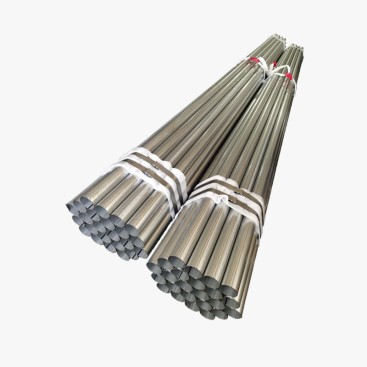
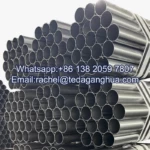
- คำอธิบาย
คำอธิบาย
HFW aluminized steel tube is a product description that combines a welding-process abbreviation with a coated steel tube. อย่างไรก็ตาม, buyers may encounter several related abbreviations in quotations, technical documents, and manufacturing specifications: HFW, HFI, เอ่อ, and EFW. These terms are not interchangeable, and confusing them can lead to misunderstandings about the actual manufacturing process and required inspection.
The key is to recognize that these abbreviations answer two different questions. เอ่อ, HFW, and HFI are associated with resistance-based heating and joining terminology, while EFW describes an electric fusion welding process. The first three are closely related in common pipe-industry usage, but EFW belongs to a different welding family.
For procurement, the safest approach is to specify the actual welding method together with the required inspection items. A product abbreviation alone is not a complete manufacturing or quality specification.
1. Four Abbreviations, Two Different Questions
Before comparing the terms, it helps to separate the two questions behind them:
- How is heat generated at the joint? This is the central distinction behind resistance-based methods and high-frequency heating terminology.
- How are the material edges joined? This distinguishes resistance welding from fusion welding processes that use an electric arc or another fusion heat source.
เอ่อ, HFW, and HFI are related to the first group of terminology. EFW belongs to a different process family because it refers to electric fusion welding.
2. HFW, HFI, เอ่อ, and EFW: The Essential Comparison
| Abbreviation | Full-Term Direction | What It Describes | Common Terminology Confusion |
|---|---|---|---|
| เอ่อ | การเชื่อมความต้านทานไฟฟ้า | A broad resistance-welding category. | Sometimes treated as if it identifies one specific heating arrangement. |
| HFW | High Frequency Welding | A high-frequency heating and welding method. | Sometimes treated as a separate pipe category unrelated to ERW. |
| HFI | High Frequency Induction | The induction-heating approach used to generate current in the material. | Sometimes used interchangeably with HFW without clarifying the process details. |
| EFW | Electric Fusion Welding | An electric fusion welding process family, commonly involving an electric arc. | Sometimes mistaken for an alternative spelling or expansion of ERW. |
The most important distinction is that the first three terms are closely connected to resistance-based heating and joining, while EFW refers to fusion welding. EFW and ERW should not be used as interchangeable descriptions.
3. เอ่อ: The Broad Resistance-Welding Category
ERW stands for Electric Resistance Welding. In common welded-pipe manufacturing, steel strip is continuously formed into a tubular shape, and the adjoining edges are heated through electrical resistance before being pressed together.
The term describes the broader welding category rather than specifying every detail of how electrical current reaches the material.
Different equipment arrangements can be used within resistance-welding production. ตัวอย่างเช่น, current may be introduced through contact electrodes or generated in the material through an induction system.
What ERW Does Not Tell You
- It does not always identify whether contact or induction heating is used.
- It does not specify the exact production equipment or process parameters.
- It does not establish the required weld inspection package.
- It does not explain how an aluminum-based coating is treated around the weld seam.
For this reason, ERW is useful as a broad product or process description, but it should be supported by a more detailed manufacturing statement when the exact welding method matters.
4. HFW: High-Frequency Heating and Welding
HFW stands for High Frequency Welding. In common pipe-industry usage, it describes a high-frequency welding method used to join the edges of continuously formed steel strip.
High-frequency current heats the edges of the strip. The heated edges are then brought together under pressure to create a longitudinal weld seam.
HFW is commonly discussed within the broader ERW context. ดังนั้น, describing a product as high-frequency welded and describing it as resistance-welded are not necessarily conflicting statements. They refer to different levels of process description.
Why Does the Distinction Matter?
If a supplier states only ERW, the buyer may still need to confirm the specific heating arrangement. If the buyer requires high-frequency welding, stating HFW provides a more specific process description.
อย่างไรก็ตาม, the abbreviation should still be supported by the supplier’s manufacturing information and the applicable product specification.
5. HFI: Identifying the Induction Heating Arrangement
HFI generally stands for High Frequency Induction. The term emphasizes how high-frequency current is generated in the steel strip.
An induction coil creates an electromagnetic field that induces electrical current in the material edges. The resulting heat prepares the edges for joining under pressure.
HFI and HFW are closely related terms in many pipe-manufacturing descriptions. HFI places emphasis on induction as the heating mechanism, while HFW is commonly used to describe the high-frequency welding process.
They should not automatically be treated as two unrelated welding families. When the distinction matters to a technical specification, buyers should ask the supplier to explain the actual equipment arrangement and process terminology.
6. EFW: A Different Welding Family
EFW stands for Electric Fusion Welding. Unlike resistance welding, fusion welding uses an electric heat source to melt and join the material edges. In pipe manufacturing terminology, EFW is commonly associated with electric arc fusion processes.
This is a fundamental process distinction. ERW relies on resistance heating and pressure to form the joint, while EFW uses a fusion welding mechanism.
Because the joining mechanism is different, the process may produce different weld characteristics and potential discontinuities. The appropriate inspection methods should therefore follow the actual EFW manufacturing procedure and governing product specification.
Important distinction: EFW and ERW are different welding process families. EFW should not be treated as a spelling variation of ERW or substituted for it in a purchase specification.
7. How the Four Terms Relate to Weld Inspection
The purpose of identifying the welding method is not simply to make the product description technically precise. It helps buyers select inspection requirements that correspond to the manufacturing process.
Different welding processes can have different potential discontinuities. A test suitable for one process may not provide sufficient information for another.
| Process Description | Potential Inspection Focus | Possible Inspection Methods |
|---|---|---|
| เอ่อ / HFW / HFI | Bonding along the longitudinal seam, edge preparation, and process consistency. | Visual examination, applicable nondestructive examination, flattening or flaring tests, and pressure or leak testing where required. |
| EFW | Fusion quality, weld-metal integrity, penetration, and possible fusion-related discontinuities. | Visual examination, suitable nondestructive examination, and mechanical or pressure tests as required by the specification. |
The table is a general selection guide, not a universal test prescription. The required tests, sampling frequency, and acceptance criteria depend on the pipe standard, ขนาด, เงื่อนไขการให้บริการ, and purchase agreement.
8. The Additional Inspection Issue for Aluminized Steel Tube
For HFW aluminized steel tube made from pre-coated strip, weld integrity is only one part of finished-product acceptance.
During tube forming and welding, the original aluminum-based coating is interrupted at the strip edges. Heat generated during welding can also affect the coating near the seam. ดังนั้น, buyers should separately define how the weld-area coating is treated.
Two inspection questions should be kept separate:
Weld Inspection
Does the joining seam meet the required mechanical, ความดัน, or leakage acceptance criteria?
Coating Inspection
Is the coating interruption or heat-affected area treated and accepted according to the agreed requirements?
A satisfactory weld inspection does not automatically prove that the coating around the seam is acceptable. The repair method, coverage, appearance, and any additional testing should be stated in the purchase order.
9. What Should Buyers Write Instead of Only Using Abbreviations?
Abbreviations can vary in use across markets, suppliers, and technical documents. To avoid ambiguity, buyers should write the process name and required inspection items directly into the order.
| Purchase Order Section | Recommended Information |
|---|---|
| Welding method | Full process description, such as high-frequency induction resistance welding, confirmed by the manufacturer. |
| Applicable standard | The governing pipe or product standard and its applicable edition. |
| Weld inspection | Required visual, mechanical, nondestructive, ความดัน, or leak tests and acceptance criteria. |
| Coating requirements | ประเภทการเคลือบ, coating mass, adhesion requirements, and weld-area treatment. |
| Documentation | Material test certificates and agreed inspection records. |
ตัวอย่างเช่น, instead of writing only HFW aluminized steel tube, a buyer can request a high-frequency welded tube and ask the supplier to confirm the precise process description, governing standard, ข้อกำหนดการตรวจสอบการเชื่อม, and coating treatment at the seam.
This approach avoids relying on abbreviations that may be interpreted differently by different suppliers.
10. เทดากังฮวาโลหะ: Technical Specification and Supply Support
Teda Ganghua Metal is a steel stockist based in Tianjin TEDA, กับ 20 years of stockist and export experience. The company supports international industrial buyers with material sourcing, specification coordination, and export supply services.
For aluminized steel tube orders, confirming the actual welding process is an important step before production. Teda Ganghua Metal can help coordinate discussions about substrate grade, ขนาดท่อ, coating type, welding terminology, weld inspection, and coating treatment requirements.
Supply documentation can include material test certificates and agreed inspection records. Third-party inspection arrangements can also be coordinated according to the contract. Buyers are welcome to arrange inspections to verify the supplied products against the confirmed specifications.
Explore our ท่อเหล็กอลูมิไนซ์ product category to discuss product specifications, manufacturing requirements, and inspection arrangements.
Our focus is on clear technical communication and measurable acceptance requirements. Identifying the welding method and its corresponding inspection items helps buyers and suppliers avoid confusion before production and shipment.
คำถามที่พบบ่อย
1. What is the difference between HFW and ERW?
ERW describes a broad electric resistance welding category, while HFW describes a high-frequency welding method commonly used within that category. They are related terms, but they describe different levels of process detail.
2. What is the difference between HFI and HFW?
HFI emphasizes high-frequency induction as the method of generating current in the material. HFW is commonly used to describe the high-frequency welding process. Their usage can overlap in pipe-industry documents, so the manufacturer’s process description should be checked.
3. Is EFW the same as ERW?
เลขที่. EFW means Electric Fusion Welding, while ERW means Electric Resistance Welding. They describe different joining mechanisms and should not be used interchangeably in technical documents or purchase orders.
4. Why should buyers write the full welding method in an order?
Abbreviations may be interpreted differently across markets and suppliers. A full process description, รวมกับข้อกำหนดมาตรฐานและการตรวจสอบที่เกี่ยวข้อง, ช่วยให้ทั้งสองฝ่ายมีพื้นฐานการผลิตและการยอมรับที่ชัดเจนยิ่งขึ้น.
5. ท่อเหล็กอลูมิไนซ์ HFW จำเป็นต้องมีการตรวจสอบการเคลือบแยกต่างหากหรือไม่?
ใช่, โดยที่เส้นทางการผลิตขัดขวางหรือส่งผลกระทบต่อการเคลือบเดิม. ความสมบูรณ์ของการเชื่อมและสภาพการเคลือบเป็นปัญหาการยอมรับที่แยกจากกัน. ผู้ซื้อควรระบุข้อกำหนดการตรวจสอบพื้นที่เชื่อมและการตรวจสอบการเคลือบอย่างอิสระ.