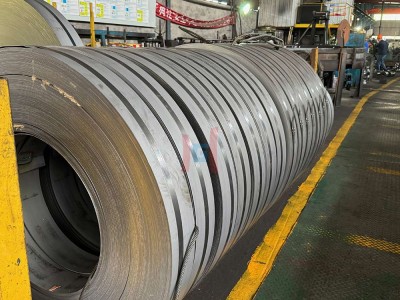
Thép Aluminized và thép không gỉ Ferritic cho hệ thống xả
Choosing between aluminized steel and ferritic stainless steel for an exhaust system is not simply a comparison of material prices or maximum operating temperatures. The real decision involves the full lifecycle cost, including material procurement, hình thành, hàn, chống oxy hóa, phơi nhiễm ăn mòn, maintenance, and replacement frequency. Aluminized carbon steel can provide an economical solution for many exhaust components operating within its temperature and environmental limits, while ferritic stainless steel grades may offer advantages where thermal cycling, corrosion severity, or long-term durability justify the additional material investment.
The most effective selection method is to evaluate each material against the actual temperature profile, condensate chemistry, road-salt exposure, component geometry, và tuổi thọ sử dụng cần thiết. A material that performs well in a hot, dry exhaust section may behave very differently in a cold-end component exposed to acidic condensate and external moisture.
1. Understanding the Two Material Options
Thép aluminized
Aluminized steel typically consists of a carbon steel substrate with an aluminum-silicon coating applied through a continuous hot-dip process. The coating provides oxidation resistance at elevated temperatures and helps protect the substrate in suitable environments. Its performance depends on coating integrity, nhiệt độ, exposure conditions, and the condition of fabricated areas.
It is often considered for exhaust pipes, bộ giảm thanh, resonators, and other components where a balance between thermal performance and material cost is important. Tuy nhiên, cắt, hàn, grinding, and severe mechanical damage can expose the underlying steel, requiring appropriate process control and coating repair.
Ferritic stainless steel
Ferritic stainless steels contain chromium as their primary corrosion-resisting alloying element and have a ferritic microstructure. Common exhaust-system grades include 409 Và 439, although the appropriate grade depends on the application and specification. Titanium or niobium stabilization may improve resistance to certain fabrication-related problems, depending on the grade and processing conditions.
Unlike coated carbon steel, ferritic stainless steel relies on its alloy composition to form a protective chromium-rich passive oxide film. It does not depend on an external aluminum-silicon coating for its primary corrosion resistance. Nevertheless, stainless steel is not immune to corrosion, especially under chloride exposure, aggressive condensate conditions, or unsuitable welding and fabrication practices.
The fundamental difference
Aluminized steel obtains much of its oxidation and corrosion protection from its metallic coating, whereas ferritic stainless steel relies primarily on the chromium-containing alloy itself. This distinction becomes especially important at cut edges, welds, scratched surfaces, and locations exposed to corrosive condensate.
2. Temperature and Oxidation Resistance
Exhaust systems experience a wide range of temperatures. The manifold or nearby hot section may operate under severe thermal conditions, while downstream pipes and mufflers can experience lower temperatures, sưởi ấm và làm mát lặp đi lặp lại, and periods of condensation. Material selection must account for continuous operating temperature, transient peaks, đạp xe nhiệt, and local temperature gradients.
Aluminized carbon steel is commonly considered for applications operating around 650–700°C, depending on the coating system, atmosphere, thời gian phơi sáng, and component design. This range is a preliminary screening reference rather than a universal continuous-use rating. The specific coating and substrate must be qualified for the actual duty cycle.
Ferritic stainless steel grades can also be suitable for exhaust service, but their capabilities differ. Cấp 409 is commonly used for automotive exhaust components because of its combination of oxidation resistance, khả năng định hình, and cost. Higher-chromium ferritic grades, bao gồm 439, may be preferred where improved corrosion performance is needed. Neither grade should be assigned a single universal temperature limit without considering the relevant material specification and service conditions.
| Selection factor | Thép aluminized | Ferritic stainless steel |
|---|---|---|
| Protection mechanism | Aluminum-silicon coating over carbon steel | Chromium-containing alloy with a protective oxide film |
| High-temperature oxidation | Often effective within the qualified coating and temperature limits | Depends on grade, chromium content, stabilization, and thermal exposure |
| Thermal cycling | Coating condition and local damage require evaluation | Oxidation resistance and thermal fatigue depend on grade and component design |
| Cut-edge protection | Exposed substrate may require a specified protective treatment | The alloy retains its corrosion-resistant composition, although heat tint and contamination may impair local performance |
| Weld-area considerations | Coating damage and restoration are important | Heat tint, quá trình oxy hóa, weld procedure, and surface condition must be controlled |
| Lifecycle cost drivers | Initial material cost, coating damage, phơi nhiễm ăn mòn, and replacement intervals | Alloy cost, chế tạo, chống ăn mòn, and achievable service life |
The table provides a qualitative comparison rather than a universal performance ranking. Actual service life must be established using the material specification, representative operating conditions, and appropriate validation data.
3. Corrosion Resistance in Hot and Cold Exhaust Sections
Temperature alone does not determine which material will last longer. Exhaust systems can experience several different corrosion mechanisms, and their severity changes along the exhaust path.
Hot sections: oxidation and thermal damage
Near the engine, elevated temperatures promote oxidation and repeated thermal expansion. Aluminized steel can be effective where its coating remains intact and the duty cycle stays within the qualified operating envelope. Ferritic stainless steel may be advantageous where the selected grade provides better resistance to the specific thermal conditions or where coating damage would be difficult to manage.
Cold sections: condensate and external corrosion
Downstream components may cool below the exhaust gas dew point during shutdown or short trips. Condensation can combine with combustion by-products to form corrosive liquids. External surfaces may also be exposed to rain, muối đường, bùn, and moisture trapped around clamps or brackets.
In these conditions, the grade’s resistance to wet corrosion and the component’s ability to drain are often more important than its maximum oxidation temperature. Ferritic stainless steel may offer a durability advantage in some cold-end applications, but performance depends on the grade, tiếp xúc với clorua, condensate chemistry, and design. Aluminized steel may remain suitable where exposure is moderate and coating integrity is maintained.
A practical selection rule
For hot sections, evaluate oxidation resistance and thermal cycling first. For cold-end components, give greater weight to condensate corrosion, road-salt exposure, drainage, and the condition of welds and cut edges. Do not use one temperature rating as a substitute for a complete corrosion assessment.
4. Chế tạo, hàn, and Repair Requirements
Material cost is only one part of the manufacturing equation. Cắt, uốn cong, hình thành, hàn, finishing, and inspection can change the economics of an exhaust component.
Aluminized steel fabrication
- Cắt: The cut edge exposes the steel substrate, so edge protection may be required depending on the exposure and product specification.
- hàn: Coating removal in the joint area may be necessary for a qualified welding procedure. Welding fumes must be controlled through appropriate ventilation and occupational safeguards.
- mài: Excessive finishing can remove additional coating and reduce the tube wall thickness.
- Post-weld repair: The repair material must be compatible with the original coating and the service temperature.
Ferritic stainless steel fabrication
- Welding procedure: Heat input, filler selection, joint design, and the chosen grade should be assessed together.
- Heat tint: Weld discoloration and associated oxide layers may require removal or post-weld treatment when corrosion performance demands it.
- Surface contamination: Embedded carbon steel particles, unsuitable abrasives, and chloride residues can compromise corrosion performance.
- Dimensional control: Thermal distortion and forming springback should be considered in production planning.
Neither material eliminates the need for sound manufacturing practice. Aluminized steel places additional emphasis on preserving and restoring the coating, while stainless steel requires attention to alloy-specific welding behavior and surface condition. The correct comparison should include the actual labor, consumables, điều tra, and rejection rates associated with the intended production route.
5. Building a Full Lifecycle Cost Model
A useful lifecycle assessment compares the total expected cost over a defined service period rather than evaluating material cost alone. The analysis should use the same component geometry, duty cycle, production volume, and target service life for both alternatives.
Lifecycle cost framework
Total lifecycle cost =
- Initial material and procurement cost
- Cắt, hình thành, hàn, and finishing cost
- Inspection and quality-control cost
- Coating repair or other protective treatment
- Maintenance and downtime
- Expected replacement and disposal cost
Where costs occur at different times, a discounted cash-flow model can be used to compare their present values. The analysis should also account for uncertainty in service life and corrosion-related failure rates rather than assuming that either material has a guaranteed replacement interval.
Illustrative comparison of lifecycle cost drivers
| Cost category | Thép aluminized | Ferritic stainless steel |
|---|---|---|
| Initial material | Often attractive for cost-sensitive, high-volume components | May require a higher initial material budget |
| Chế tạo | Includes coating-aware cutting, hàn, and repair controls | Includes grade-specific welding and surface-finishing controls |
| Corrosion maintenance | Sensitive to coating damage and exposed-steel corrosion | Sensitive to grade selection, chlorides, ngưng tụ, and fabrication condition |
| Replacement risk | Depends on coating durability and environmental severity | Depends on alloy suitability, đạp xe nhiệt, and corrosion exposure |
| Best economic case | Suitable service conditions with controlled fabrication and acceptable replacement risk | Applications where improved durability can justify the higher initial investment |
This comparison is qualitative. Actual cost differences depend on regional material availability, manufacturing capability, production scale, component design, and field performance. A lifecycle model should use verified project data wherever possible.

6. Which Material Is Better for Different Exhaust Components?
The exhaust system should not necessarily be treated as one uniform material-selection zone. Nhiệt độ, phơi nhiễm ăn mòn, and fabrication requirements vary by component, allowing different materials to be considered for different sections where design, joining, and durability requirements permit.
| Component or service condition | Material-selection priority | Evaluation direction |
|---|---|---|
| Hot exhaust tubing | Oxidation resistance and thermal cycling | Compare coating performance and the oxidation capability of the selected stainless grade. |
| Mufflers and resonators | Condensate, ăn mòn bên ngoài, and fabrication cost | Evaluate wet-service exposure, drainage, and expected replacement interval. |
| Cold-end pipes | Condensate and road-salt resistance | Give greater weight to corrosion performance and cut-edge or seam condition. |
| High-volume, cost-sensitive systems | Manufacturing consistency and total ownership cost | Compare production cost, coating repair needs, and validated field life. |
| Severe or specialized service | Verified performance under actual conditions | Qualify the material using representative exposure, thermal, and mechanical testing. |
For severe thermal exposure, neither a general-purpose aluminized coating nor a generic ferritic stainless designation should be selected solely from a headline temperature value. Where service conditions are uncertain, testing or engineering validation is preferable to assuming a longer service life based on material category alone.
7. Sourcing Aluminized Steel Tubes for Exhaust Applications
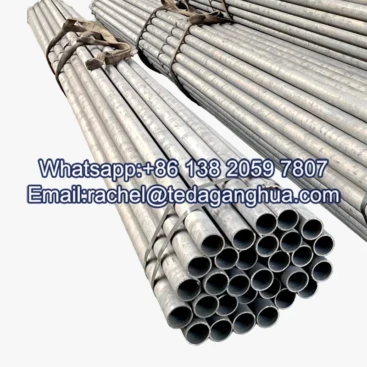
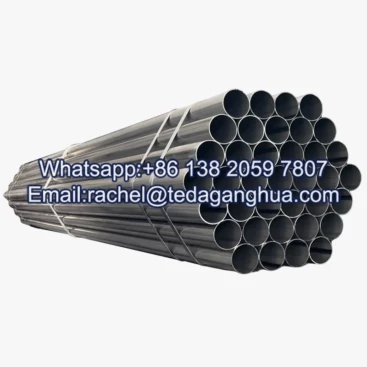
For procurement managers, material selection should begin with a complete technical specification. Kích thước ống, mác thép, yêu cầu lớp phủ, forming operations, welding method, nhiệt độ hoạt động, and corrosion environment all affect suitability and downstream manufacturing costs.
Teda Ganghua supports buyers evaluating ống thép tráng nhôm for industrial and automotive-related applications. Providing the intended exhaust-system position and expected service conditions helps clarify which material and coating requirements need to be evaluated before an order is confirmed.
To support a meaningful technical review, bao gồm:
- Required steel grade and applicable product standard.
- Outside diameter, độ dày của tường, chiều dài, and dimensional tolerances.
- Coating designation and any specific coating acceptance requirements.
- Continuous operating temperature, nhiệt độ cao nhất, and thermal cycling pattern.
- Expected exposure to condensate, chlorides, độ ẩm, and other corrosive substances.
- hàn, cắt, uốn cong, điều tra, and post-processing requirements.
The final decision should balance material cost against fabrication complexity, corrosion risk, and expected service life. Aluminized steel is often a strong candidate when coating performance meets the operating requirements and the cost advantage remains meaningful. Ferritic stainless steel becomes more attractive when the specific grade delivers a measurable durability or process benefit that offsets its additional initial cost.
Câu hỏi thường gặp
1. Is aluminized steel always cheaper over the full exhaust-system lifecycle?
KHÔNG. It may offer a lower initial material cost, but the total lifecycle cost depends on fabrication, coating repair, phơi nhiễm ăn mòn, maintenance, and replacement frequency. A more expensive stainless grade can be economical if its verified service life reduces total ownership cost.
2. Is ferritic stainless steel always better at high temperatures?
KHÔNG. High-temperature performance depends on the specific grade, hệ thống sơn, atmosphere, đạp xe nhiệt, and exposure duration. The selected material must be qualified for the actual operating conditions rather than chosen by category alone.
3. Why can aluminized steel rust around welds and cut edges?
hàn, cắt, and grinding can remove or damage the protective coating and expose the steel substrate. Appropriate joint preparation, controlled finishing, and compatible coating restoration help reduce localized corrosion.
4. Is grade 409 stainless steel suitable for exhaust tubing?
Cấp 409 is widely used for exhaust applications, nhưng sự phù hợp phụ thuộc vào vị trí thành phần, điều kiện nhiệt, phơi nhiễm ăn mòn, và tuổi thọ sử dụng cần thiết. Môi trường đòi hỏi khắt khe hơn có thể biện minh cho việc đánh giá các lớp khác.
5. Thông tin nào là quan trọng nhất khi yêu cầu báo giá ống?
Chỉ định lớp, kích thước, yêu cầu lớp phủ, nhiệt độ hoạt động, môi trường ăn mòn, và quy trình chế tạo dự định. Những chi tiết này hỗ trợ đánh giá chính xác hơn về sự phù hợp của vật liệu và các yêu cầu sản xuất tiếp theo.