Cắt cạnh và bảo vệ hy sinh trong thép tráng
Các cạnh cắt và vết xước bề mặt là một trong những khu vực dễ bị tổn thương nhất của sản phẩm thép mạ. Although the coating may remain intact across most of the surface, even a small discontinuity can expose the underlying steel to moisture, oxygen, muối, and other corrosive substances. Understanding how sacrificial protection works—and why the continuity of the metallic coating matters—is essential when evaluating corrosion resistance, fabrication quality, and long-term service performance.
Tuy nhiên, not all metallic coatings provide the same level of electrochemical protection. Zinc-based coatings can offer active sacrificial protection to exposed steel, while aluminum-based and aluminum-silicon coatings rely more heavily on their stable oxide layer and barrier performance. This distinction is particularly important when selecting aluminized steel for exhaust systems, thiết bị nhiệt, and fabricated tubing.
1. What Happens When a Coating Is Broken?
A metallic coating protects steel by separating the substrate from the surrounding environment. When a sheet or tube is cut, scratched, drilled, or mechanically damaged, the protective layer becomes discontinuous and the exposed steel can participate in an electrochemical corrosion process.
The corrosion process involves three essential elements:
- Anode: The metal area that loses electrons through oxidation.
- Cathode: The area where a reduction reaction takes place.
- Electrolyte: Moisture or another conductive liquid that allows ionic movement between the two areas.
When an electrically connected coating is more electrochemically active than the steel substrate, the coating may act as a sacrificial anode. It corrodes preferentially, supplying electrons that help keep the exposed steel cathodic and reduce its tendency to dissolve as iron ions.
Once the coating is consumed, electrically disconnected, or unable to provide sufficient protective current, the exposed steel can begin to corrode. Vì thế, the protective effect depends not simply on whether a coating is present, but also on its electrochemical properties, remaining thickness, sự liên tục, and surrounding service conditions.
2. Why Sacrificial Anode Continuity Matters
Sacrificial protection requires an effective electrical connection between the coating and the exposed steel. The coating must also remain in contact with an electrolyte so that the electrochemical circuit can operate. If the metallic layer is completely separated from the substrate, the damaged area cannot benefit from the intended galvanic protection.
2.1 Electrical continuity maintains the protective circuit
On a properly coated steel surface, the metallic layer is bonded to the steel substrate. When a small defect exposes the base metal, the adjacent sacrificial coating can supply protective current through the metallic connection. This allows the coating to corrode preferentially instead of the exposed steel.
Tuy nhiên, continuity does not mean that every coating automatically provides unlimited protection. The available sacrificial material is finite, and the protective current depends on the coating composition, defect geometry, electrolyte conductivity, and relative anode-to-cathode area.
2.2 A larger exposed area increases the protection demand
A narrow scratch generally exposes less steel than a deep gouge or a wide cut edge. When the exposed steel area becomes large relative to the surrounding sacrificial coating, the coating may not supply enough protective current to maintain effective cathodic protection.
This is particularly relevant to cut-to-length products, slit strips, drilled components, and fabricated tubing. Each additional cutting or machining operation can create new exposed areas that need to be considered during corrosion assessment.
2.3 Coating thickness determines the available protection reserve
A thicker sacrificial coating generally provides a larger reserve of material for electrochemical consumption. Tuy nhiên, coating thickness alone cannot guarantee performance. A coating with unsuitable electrochemical characteristics or poor adhesion may fail to protect the substrate effectively, even when its nominal thickness is relatively high.
Engineering principle
Effective protection = electrical connection + suitable electrochemical behavior + sufficient coating reserve + an appropriate service environment.
3. Zinc Coatings vs. Aluminum-Silicon Coatings: An Important Difference
One of the most common mistakes in coating evaluation is assuming that all metallic coatings protect exposed steel through the same electrochemical mechanism. In reality, zinc-based coatings and aluminum-silicon coatings have different corrosion protection characteristics.
Zinc generally provides effective galvanic protection because it is more electrochemically active than steel. Aluminum-based coatings, mặt khác, develop a stable aluminum oxide film that provides a strong physical barrier. Their ability to provide cathodic protection depends on the coating microstructure, surface condition, and corrosive environment.
| Evaluation Factor | Zinc-Based Coating | Aluminum-Silicon Coating |
|---|---|---|
| Primary protection | Barrier and sacrificial protection | Primarily barrier protection |
| Electrochemical behavior | Generally anodic to steel | Depends on coating phases and environment |
| Scratch protection | Can protect small exposed steel areas through galvanic action | Limited and condition-dependent galvanic protection |
| Cut-edge behavior | Adjacent zinc can protect exposed steel | Protection relies more heavily on barrier integrity and environmental conditions |
| Surface passivation | Forms protective zinc corrosion products | Forms a stable aluminum oxide layer |
| Ứng dụng điển hình | Sự thi công, automotive components, and general fabrication | Hệ thống xả, thiết bị nhiệt, và các bộ phận chịu nhiệt |
For aluminized steel, it is particularly important to distinguish between the outer aluminum-rich layer and the inner iron-aluminum interdiffusion layers. Electrochemical studies have shown that the outer free aluminum layer can provide cathodic protection under certain conditions, whereas the inner interdiffusion layers do not necessarily provide the same protection to the steel substrate.
In chloride-containing environments, aluminum-silicon coatings may exhibit sacrificial behavior. In sulfate-containing environments, the coating can remain passive and show little or no sacrificial activity. Vì thế, the presence of aluminum in a coating should not automatically be interpreted as equivalent to the galvanic protection offered by zinc.
4. How Cut Edges Become Corrosion Initiation Points
Cut edges are particularly important because the cutting process exposes the cross-section of the steel substrate and interrupts the original coating layer. Unlike an intact surface, the exposed edge contains both the substrate and the remaining coating near the interface.
4.1 Shearing and slitting damage
Mechanical shearing and slitting can create exposed steel edges, burrs, local coating deformation, and small cracks. Poor blade condition, excessive clearance, or unsuitable processing parameters may increase edge defects.
These defects can retain moisture and contaminants, especially when the finished material is stored in humid warehouses or exposed to outdoor conditions before installation.
4.2 Drilling and punching damage
Drilled holes and punched openings introduce additional exposed surfaces. If components are assembled without appropriate edge protection, water can accumulate around these areas and accelerate localized corrosion.
For tubular products, drilling, cắt, and end preparation require particular attention because both internal and external surfaces may be exposed. The corrosion risk can increase when the tube operates in environments containing condensation, road salts, or corrosive process fluids.
4.3 Deep scratches and coating delamination
Not all scratches have the same severity. Superficial marks that affect only the outer surface may leave the underlying metallic coating intact. Deeper scratches that penetrate the complete coating layer expose the steel substrate directly.
Coating delamination is another concern. When the coating loses adhesion, the protective layer may become locally disconnected from the substrate. This can compromise both barrier performance and any electrochemical protection that depends on metallic contact.
5. Key Factors Affecting Corrosion Protection at Damaged Areas
Evaluating a coating only through its appearance or nominal coating mass is insufficient. Several interacting factors determine whether a damaged area remains protected during actual service.
| Factor | Potential Effect | Inspection Focus |
|---|---|---|
| Coating thickness | Determines the available protective material and barrier reserve | Measure coating thickness at representative locations |
| Electrical continuity | Determines whether galvanic protection can operate | Check coating adhesion, separation, and substrate contact |
| Defect width and depth | Changes the exposed steel area and protection demand | Inspect scratches, cut edges, and drilled openings |
| Coating composition | Influences electrochemical potential and passivation behavior | Verify coating type and material specifications |
| Chloride concentration | Can disrupt passive films and accelerate localized corrosion | Assess exposure to salt, marine air, and de-icing chemicals |
| Moisture exposure | Creates electrolyte conditions for electrochemical reactions | Evaluate condensation, drainage, and wet-dry cycles |
6. Practical Inspection and Quality Control for Cut Edges
Preventing coating-related failures requires inspection at several stages, from incoming material verification to final fabrication. Procurement teams and quality engineers should establish acceptance criteria according to the intended application rather than relying on general visual descriptions.
6.1 Verify coating specifications before processing
Confirm the coating type, coating mass or thickness, lớp nền, and applicable material standard. For aluminum-silicon coated products, the chemical composition and coating structure should be consistent with the specified product requirements.
6.2 Inspect the cutting process
Check the condition of cutting blades, độ chính xác chiều, edge burrs, and visible coating damage. Cutting parameters should be appropriate for the substrate thickness and product geometry.
Where the application has strict corrosion requirements, evaluate whether the exposed edges need sealing or additional protective treatment. Suitable repair methods must be compatible with the original coating and the intended operating temperature.
6.3 Conduct appropriate corrosion testing
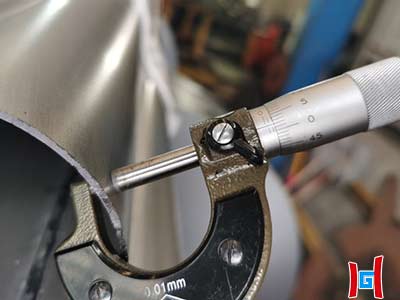
Visual inspection alone cannot establish long-term corrosion performance. Tùy thuộc vào ứng dụng, quality verification may include neutral salt spray testing, cyclic corrosion testing, coating adhesion evaluation, and microscopic examination of damaged cross-sections.
Salt spray testing can help compare material behavior under controlled conditions, but it should not be treated as a direct prediction of actual service life. The test method, thời gian phơi sáng, chuẩn bị mẫu vật, and edge treatment must be specified consistently.
6.4 Protect exposed areas during storage and transportation
Fabricated products should be kept dry and protected from prolonged condensation. Avoid direct contact with incompatible metals, accumulated salts, and standing water. Proper packaging, thông gió, and drainage can reduce unnecessary corrosion risks before installation.
Recommended quality control checklist
- Confirm the specified coating composition and thickness.
- Inspect the surface for scratches, cracks, and coating separation.
- Check cut edges for burrs and exposed substrate.
- Verify that repair treatments are compatible with the coating.
- Review corrosion test requirements for the intended environment.
- Record inspection results and retain material traceability documents.
7. Why Cut-Edge Integrity Matters for Aluminized Steel Tubes
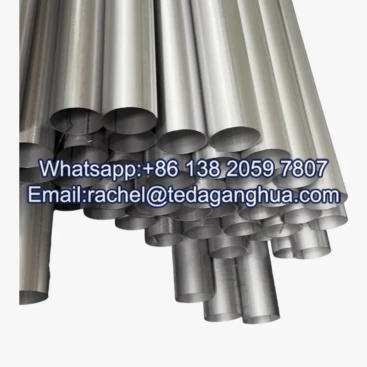
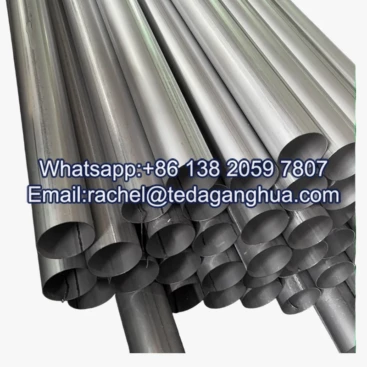
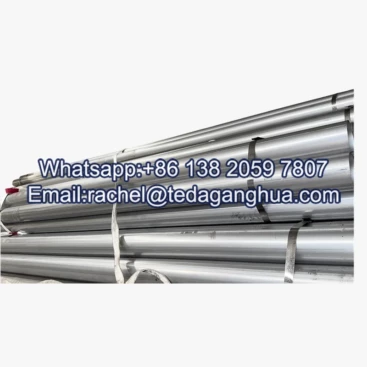
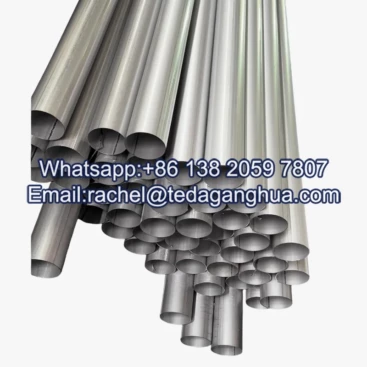
For tubular products, corrosion protection must be evaluated across the complete component rather than only on the visible external surface. Cắt ống, sự hình thành cuối cùng, hàn, drilling, and assembly can all introduce areas where the original coating is interrupted.
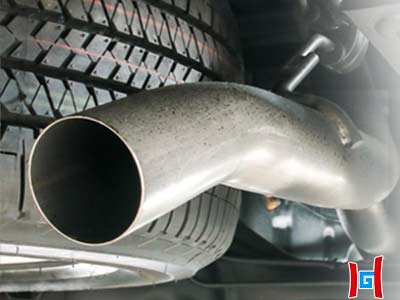
In exhaust systems and other elevated-temperature applications, aluminum-silicon coatings are valued for their heat resistance and oxidation protection. Nevertheless, their performance at cut edges and coating defects depends on the coating structure, môi trường hoạt động, and fabrication quality.
When purchasing coated tubing, procurement managers should specify the following information:
- Kích thước ống: Outside diameter, độ dày của tường, and required length.
- chất nền: Steel grade and applicable material standard.
- Lớp phủ: Aluminum or aluminum-silicon composition and coating requirements.
- Chế tạo: Welded or other specified production route, together with end-processing requirements.
- Ứng dụng: Operating temperature, tiếp xúc với độ ẩm, tiếp xúc với clorua, and expected service conditions.
- Điều tra: Coating thickness, surface condition, dung sai chiều, and applicable corrosion testing.
Teda Ganghua provides metal material sourcing and processing support for industrial buyers, including specifications review, dimensional customization, quality inspection coordination, và tài liệu vật chất. For projects involving ống thép tráng nhôm, buyers can communicate their required outside diameter, độ dày của tường, thông số kỹ thuật lớp phủ, and application conditions to support more accurate material selection.
Rather than evaluating corrosion resistance solely by coating appearance, Teda Ganghua emphasizes the importance of matching material specifications and processing requirements with the actual operating environment. This helps procurement teams assess coating performance more systematically and reduce avoidable quality risks during fabrication and service.
8. Phần kết luận: Coating Continuity Is More Than a Surface Quality Issue
Cut edges and scratches are critical locations in coated steel because they interrupt the protective barrier and expose the substrate to potentially corrosive conditions. For zinc-based materials, adjacent coating can provide sacrificial protection through galvanic action, provided that sufficient material and electrical continuity remain available.
For aluminum-silicon coated steel, the situation is more complex. Its corrosion resistance depends primarily on barrier protection and the stability of the aluminum-rich surface layer. Sacrificial behavior can occur under certain chloride-containing conditions, but it should not be assumed to provide the same level of protection as a zinc coating.
For manufacturers and procurement professionals, the practical priority is to verify coating composition, độ bám dính, độ dày, edge quality, and environmental compatibility. A properly selected coating combined with controlled cutting, suitable edge treatment, and systematic inspection provides a more reliable approach to managing corrosion risks throughout the product lifecycle.
Câu hỏi thường gặp
1. Why are cut edges more vulnerable to corrosion than coated surfaces?
Cutting exposes the steel substrate and interrupts the original protective layer. Độ ẩm, oxygen, and dissolved salts can reach the exposed metal, initiating electrochemical corrosion. The severity depends on coating composition, remaining coating material, edge geometry, và điều kiện môi trường.
2. Does aluminum-silicon coating provide sacrificial protection like zinc?
Not consistently. Aluminum-silicon coatings primarily protect steel through a stable oxide barrier. Research indicates that their sacrificial behavior depends on the coating structure and electrolyte. Chloride-containing environments can activate localized sacrificial reactions, whereas sulfate environments may maintain coating passivation.
3. Can a small scratch cause corrosion on coated steel?
Đúng. A superficial scratch that does not penetrate the metallic coating may have limited consequences. Tuy nhiên, a deep scratch exposing the substrate can initiate localized corrosion. The risk depends on the coating system, scratch dimensions, tiếp xúc với độ ẩm, and surrounding corrosive substances.
4. How can manufacturers reduce corrosion risks at cut edges?
Manufacturers can control cutting parameters, maintain sharp cutting tools, minimize burrs, inspect coating damage, and apply compatible edge protection where required. Appropriate corrosion testing and proper storage conditions also help improve product reliability.
5. What should buyers check when purchasing aluminized steel tubes?
Buyers should verify the steel grade, kích thước ống, coating composition, coating thickness, surface integrity, quá trình sản xuất, and applicable inspection requirements. The intended operating temperature and exposure to moisture or chlorides should also be considered when determining whether the selected coating is suitable.