Welded Steel Pipes: Types, Applications, and Measurement
Overview
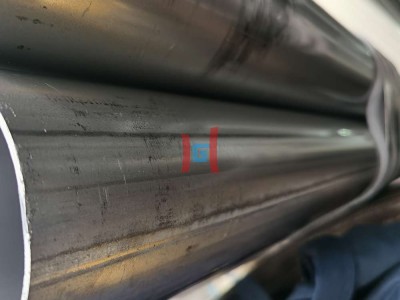
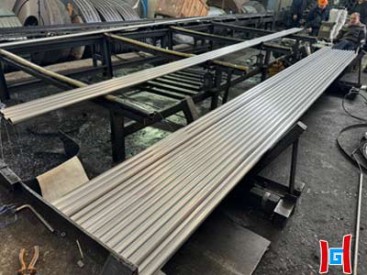
Welded pipes, also known as welded steel pipes, are made by shaping steel plates into round or square tubes and then welding the seams. They are widely used in water conservancy projects, municipal drainage, and tap water transportation. Many steel suppliers provide these pipes for various industrial applications.
Types of Welded Steel Pipes
Welded pipes are classified based on the welding method into straight seam welded pipes and spiral welded pipes.
Straight Seam Welded Pipe
- Typically used for small and medium-sized pipes with nominal diameters ranging from DN15 (4-inch) to DN150 (6-inch).
- The welding process is simpler and more cost-effective compared to spiral welding.
- High production efficiency but lower compressive strength due to the weld being in a straight line.
- Mainly used for applications requiring smaller pipe sizes.
Spiral Welded Pipe
- Commonly used for large-diameter pipes with nominal diameters from DN200 (8-inch) to DN600 (24-inch).
- Allows the production of various diameters using steel plates of the same width.
- The welding process is more complex, leading to higher production costs and lower efficiency.
- The spiral weld seam is longer, but it provides higher compressive strength, making it suitable for large-diameter pipes.
To ensure high-quality manufacturing, a China steel factory follows strict alloy steel processes, including cutting, welding, and heat treatment, to enhance the durability and performance of steel pipes and steel tubes.
Measurement Methods
The weight of welded pipes is determined by weighing or calculation.
Weighing Method: Pipes are physically weighed using a scale.
Calculation Method: Theoretical weight is determined using the formula:
Weight per meter (kg) = (Outer diameter mm – Wall thickness mm) × Wall thickness mm × 0.02466