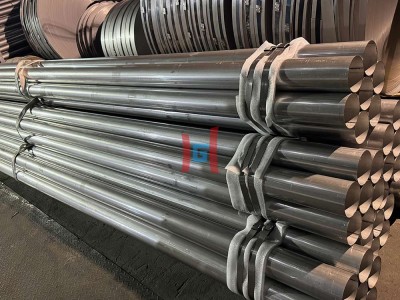
What is the allowable deviation of wall thickness of seamless steel pipe?
What Is Dimensional Tolerance?
Before deciding how many millimeters to reserve for machining allowance, it is important to understand dimensional tolerance.
Dimensional tolerance refers to the permitted variation in a product’s actual size.
Due to factors like equipment, materials, environment, and techniques, perfectly identical sizes cannot be achieved.
Instead, a controlled range of variation is accepted.
Purpose: Tolerances ensure that product dimensions remain within an acceptable range to support proper interchangeability and fit between parts.
Why Tolerances Matter in Machining Allowance
Tolerances vary depending on:
The purpose of the steel pipe
The manufacturing method
The equipment used
The skill level of the technicians
Therefore, machining allowance should be based on the actual performance and tolerance of the product.
Tip: Always confirm dimensional tolerance details with the manufacturer before deciding on a machining allowance.
Recommended Machining Allowance by Pipe Type
1. Precision Seamless Steel Pipes
Typical tolerance: ±0.1 mm
Special tolerance: ±0.025 mm
Suggested machining allowance: ≥0.2 mm for grinding
Allowance should be adjusted based on actual tolerance values.
It is recommended that the processing allowance be confirmed through communication with the factory.
2. Ordinary Hot-Rolled Seamless Steel Pipes
These pipes are commonly used for mechanical structures and machined parts, based on GB/T 8162-2018 standards.
Outer diameter tends to be on the high side
Inner diameter tends to be on the low side
Example:
A pipe marked as 133mm × 83mm
May actually be 133.5mm outer and 82.5mm inner diameter
Recommended machining allowance: ≥0.7 mm per side
A larger machining allowance is needed due to the wider tolerance range in hot-rolled processes. This ensures that the final size meets application requirements after processing.
3. General Advice
Machining allowance selection is not fixed. It depends on:
Actual production tolerances
Required precision
Specific usage conditions
A machining allowance should be chosen case by case.
It is strongly recommended to coordinate with the manufacturer, analyze actual data, and then determine the most suitable allowance.
Conclusion
The reservation of machining allowance for seamless steel pipes is a technical decision.
It should be based on:
Actual production tolerances
Type of steel pipe
Processing method
Final application needs
For best results, full communication with the factory is necessary to avoid processing issues later.