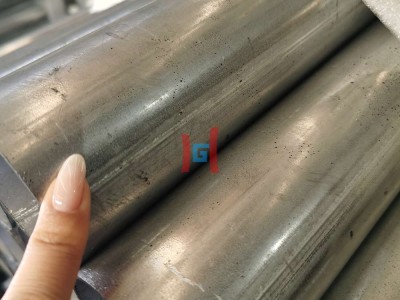
409 不锈钢自愈保护: Cr2O₃ 钝化膜解释
409 不锈钢 has a unique corrosion protection mechanism hidden at its surface. Unlike ordinary carbon steel that forms loose and unstable rust layers, 409 stainless steel uses chromium to create a dense chromium oxide (Cr₂O₃) passive film. This invisible protective layer can automatically rebuild after minor scratches, allowing the material to maintain corrosion resistance during long-term service.
The self-healing ability of this passive film comes from the chemical activity of chromium. When the surface is damaged, fresh chromium atoms inside the alloy react with oxygen in the environment and quickly generate a new Cr₂O₃ layer. This process allows 409 stainless steel to recover surface protection without requiring external coatings.
How the Cr₂O₃ Passive Film Creates Self-Healing Protection
The corrosion resistance of stainless steel does not depend on a thick protective coating. 反而, it comes from a naturally formed oxide film only several nanometers thick. Although extremely thin, the Cr₂O₃ layer is highly stable and prevents oxygen, water, and corrosive ions from continuously reaching the metal surface.
When scratches occur during transportation, installation, or operation, the exposed area temporarily loses protection. 然而, the surrounding chromium atoms immediately react with oxygen and rebuild the passive film. This regeneration process is the reason stainless steel can maintain long-term durability after minor surface damage.
Self-Recovery Process of Chromium Oxide Film
| Stage | 表面状况 | Protection Result |
|---|---|---|
| Before damage | Continuous Cr₂O₃ passive film covers the surface | 耐腐蚀性强 |
| After scratching | Fresh alloy surface becomes exposed | Temporary reduction of local protection |
| Self-repair | Chromium reacts with oxygen | New passive layer restores protection |
Why Cr₂O₃ Is More Effective Than Ordinary Rust
The major difference between stainless steel and carbon steel is the structure of their oxide layers. Iron oxide formed on carbon steel is porous and unstable, allowing moisture and oxygen to continue penetrating into the metal.
In comparison, chromium oxide is compact, strongly attached, and chemically stable. It blocks corrosion reactions by creating a protective barrier between the metal surface and the surrounding environment.
| Oxide Type | 结构 | 腐蚀行为 |
|---|---|---|
| Iron oxide | Loose and porous | Allows continuous corrosion |
| Chromium oxide | Dense and stable | Provides passive protection |
为什么 409 Stainless Steel Uses Chromium Protection
409 stainless steel is a ferritic stainless grade developed for applications requiring corrosion resistance, 耐热性, and reliable performance under thermal cycling. Its titanium stabilization improves resistance to sensitization during welding and high-temperature exposure.
This makes it widely used in exhaust systems, 工业设备, heat-related components, and structural applications where continuous oxidation resistance is required.
优点 409 Stainless Steel Passive Protection
| 特征 | Performance Benefit |
|---|---|
| Self-regenerating film | Recovers protection after minor scratches |
| Chromium oxide stability | Reduces oxidation and corrosion reactions |
| Titanium stabilization | Improves welding and heat resistance |
Limitations of the Self-Healing Mechanism
Although the Cr₂O₃ passive film can regenerate, its protection is not unlimited. Extremely aggressive environments containing high chloride concentration, strong acids, or low oxygen conditions may damage the passive layer faster than it can recover.
Surface contamination, deposits, and improper maintenance can also reduce the stability of the protective film. Proper material selection remains important for applications exposed to severe corrosion conditions.
409 Stainless Steel Compared with Coated Steel Protection
The protection mechanism of 409 stainless steel is different from coated steel materials. Stainless steel relies on internal alloy chemistry, while coated steel depends on the integrity of the external protective layer.
| Protection Method | Main Advantage | Typical Application |
|---|---|---|
| Cr₂O₃ passive film | Self-regeneration after minor damage | Exhaust systems and industrial components |
| Aluminum protective coating | 高温抗氧化性 | Heat-resistant steel applications |
Teda Ganghua Metal Material Solutions
Teda Ganghua provides metal material solutions for industries requiring corrosion resistance, 耐热性, and reliable fabrication performance. Through professional supply and processing support, customers can select suitable materials for automotive components, 工业设备, 和高温应用. More related product information is available through the 镀铝钢卷 category.
FAQ About 409 不锈钢自愈保护
1. Why can 409 stainless steel repair scratches?
The exposed chromium reacts with oxygen and forms a new Cr₂O₃ passive film that restores surface protection.
2. Is chromium oxide a coating applied during production?
不. It is a naturally formed protective layer generated by chromium in the stainless steel alloy.
3. 能 409 stainless steel resist all corrosion environments?
不. Severe chloride exposure and aggressive chemical environments can damage the passive film.
4. Why is 409 stainless steel used in exhaust systems?
它提供良好的抗氧化性, 热稳定性, 反复加热循环下性能可靠.
5. 钝化膜如何保护?
正确清洁, 合适的操作条件, 正确的材料选择有助于保持钝化膜的稳定性.