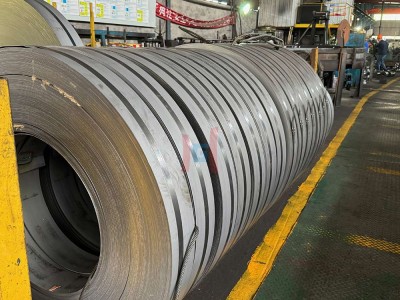
Aluminized Steel Tube vs 409 Stainless vs Galvanized Tube
Exhaust systems operate in a difficult thermal environment. Hot exhaust gas, repeated heating and cooling, condensation, road salt, and vibration can all attack the material. For this reason, the choice between aluminized steel tube, 409 stainless steel, and galvanized tube should be based on the actual temperature range and corrosion conditions.
These three materials are not simply three versions of the same solution. Their coating systems, alloy chemistry, oxidation resistance, and temperature limits are different. Understanding those differences makes material selection much easier.
The Three Materials at a Glance
| Material | Main Protection | High-Temperature Strength | Typical Exhaust-System Position |
|---|---|---|---|
| Aluminized steel tube | Aluminum-based barrier and protective oxide | Strong | Common choice for exhaust components where cost and oxidation resistance must be balanced |
| 409 stainless steel | Chromium-rich passive oxide film | Strong | Exhaust tubing, pipes, mufflers, and related components |
| Galvanized tube | Zinc barrier and sacrificial protection | Limited for sustained hot service | Lower-temperature sections and general corrosion applications |
The exact temperature boundary cannot be reduced to one universal number. Exhaust systems experience different temperatures at the manifold, front pipe, catalytic converter area, muffler, and tailpipe. Therefore, the material should be selected according to the temperature at the actual component location.
1. Aluminized Steel Tube: The Cost-Effective Heat-Resistant Option
Aluminized steel combines a steel substrate with an aluminum-based coating. In common aluminum-silicon coating systems, the surface can form an aluminum-oxide-rich layer when heated in air.
This oxide layer is important because it slows further oxidation. As a result, the coating can provide useful protection in exhaust environments where temperatures are much higher than those normally encountered by galvanized steel.
The main advantage is the balance between cost, formability, corrosion resistance, and high-temperature oxidation resistance. It can therefore be attractive for mass-produced exhaust components.
Why Aluminum Helps at High Temperature
When aluminum is exposed to oxygen at elevated temperature, it reacts to form aluminum oxide:
4Al + 3O₂ → 2Al₂O₃
The resulting oxide film can act as a diffusion barrier. Oxygen has more difficulty reaching the metal beneath the protective scale. This is fundamentally different from the sacrificial protection mechanism of zinc.
For this reason, aluminized steel is often considered when an exhaust component must withstand both corrosive road conditions and elevated-temperature oxidation.
2. 409 Stainless Steel: The Alloy-Based Solution
409 stainless steel is a ferritic stainless steel developed for applications where heat resistance and corrosion resistance are required without the cost of higher-alloy austenitic grades.
Its chromium content allows a protective chromium-rich oxide film to form on the surface. Unlike a separate metallic coating, the corrosion-resistant layer is generated from the stainless steel itself.
This makes 409 particularly useful for exhaust-system components such as exhaust tubing, pipes, catalytic converter components, mufflers, and heat-related automotive parts.
Why 409 Is Used Instead of More Expensive Stainless Grades
409 contains much less nickel than common 304 stainless steel. Its ferritic structure and chromium-based corrosion resistance provide a practical combination for automotive exhaust applications.
It is not intended to deliver the same appearance or general corrosion resistance as 304. However, exhaust components are usually designed around high-temperature oxidation, thermal cycling, fabrication, and cost rather than decorative surface appearance.


3. Galvanized Tube: Why Zinc Has a Clear Temperature Limit
Galvanized steel uses zinc as the protective coating. Zinc provides excellent atmospheric corrosion protection because it can act both as a physical barrier and as a sacrificial anode.
The problem begins when the material is exposed to sustained high temperatures. Zinc melts at approximately 419.5°C. More importantly, coating degradation can become significant before the melting point is reached because oxidation, diffusion, and coating-structure changes accelerate with temperature.
Therefore, the fact that a specific exhaust location is below 419°C does not automatically make galvanized tube suitable for continuous service there.
Key rule: 419°C is the melting point of pure zinc, not a universal operating-temperature limit for every galvanized product. For exhaust applications, sustained temperature and exposure duration must be evaluated together.
The Exhaust System Has Different Temperature Zones
An exhaust system does not operate at one fixed temperature. The hottest components are generally located close to the engine and after-treatment equipment. Temperature usually decreases toward the rear of the system.
| Exhaust Location | Thermal Condition | Material Selection Consideration |
|---|---|---|
| Near engine / manifold | Very high temperature and rapid thermal cycling | High-temperature stainless or specially designed heat-resistant material is often preferred |
| Catalytic converter area | High temperature; strong oxidation exposure | Oxidation resistance becomes a major design factor |
| Middle exhaust section | Moderate to high temperature | Aluminized steel or 409 may be evaluated according to design requirements |
| Muffler / rear section | Lower than the front section but exposed to condensation and road salt | Corrosion resistance and cost become increasingly important |
| Tailpipe | Generally cooler, but condensation can be severe | Atmospheric and internal condensation corrosion should be considered |
These zones are conceptual rather than fixed temperature specifications. Actual exhaust temperature varies with engine type, load, fuel, emission-control system, vehicle design, and operating conditions.
Temperature Boundary: Which Material Fits Which Zone?
A practical comparison can be made by looking at the dominant failure mechanism rather than assigning an artificial single temperature limit.
| Material | Low / Moderate Temperature | Elevated Temperature | Main Limitation |
|---|---|---|---|
| Galvanized tube | Good atmospheric corrosion protection | Increasingly unsuitable for sustained hot exhaust exposure | Zinc oxidation, diffusion, softening, and melting |
| Aluminized steel tube | Good corrosion protection | Good potential for elevated-temperature oxidation resistance | Coating consumption, thermal cycling, and severe service conditions |
| 409 stainless steel | Good general corrosion resistance for exhaust applications | Strong high-temperature capability | Surface appearance, weld behavior, and application-specific oxidation limits |
Aluminized Steel vs 409 Stainless: Where Is the Real Difference?
These two materials can both be used for exhaust components, but they achieve protection differently.
Aluminized steel relies on its aluminum-based coating. If the coating is damaged, its remaining protective material and local coating condition become important.
409 stainless steel obtains its corrosion resistance from its alloy chemistry. There is no separate zinc or aluminum coating that must be maintained. This can be advantageous for components exposed to repeated forming, welding, and thermal cycling.
On the other hand, aluminized steel can offer a strong cost advantage for high-volume exhaust fabrication. The best choice therefore depends on the required service life, temperature, forming process, corrosion environment, and target cost.
Why Exhaust Condensation Matters as Much as Heat
High temperature is only one side of exhaust corrosion. When the exhaust system cools, water vapor can condense inside the pipe and muffler. The condensate can contain acidic compounds and other corrosive species.
External surfaces are also exposed to water, salt, dirt, and road chemicals. Therefore, an exhaust material must survive both hot oxidation during operation and wet corrosion during shutdown.
This is one reason material selection cannot be based only on a maximum exhaust temperature.
Fabrication Is Part of the Material Decision
Exhaust tubes are often bent, cut, welded, expanded, and formed. These processes can change the local coating or microstructure.
- Tube forming: Check whether the coating or stainless surface can withstand the required bending radius.
- Welding: Consider heat-affected areas and coating loss at welded regions.
- Cutting: Inspect cut edges and determine whether additional protection is required.
- Thermal cycling: Evaluate repeated expansion and contraction during engine start-up and shutdown.
- Surface condition: Confirm whether appearance, scale, or coating uniformity matters.
A Simple Selection Guide
Choose galvanized tube when: atmospheric corrosion protection and low cost are the main priorities and the service temperature is suitable for zinc coating.
Consider aluminized steel tube when: good corrosion resistance, elevated-temperature oxidation resistance, formability, and cost balance are required.
Consider 409 stainless steel when: the exhaust component requires alloy-based corrosion and heat resistance with no separate metallic coating.
No material should be selected solely from a generic temperature chart. The actual exhaust gas temperature, tube-wall temperature, operating cycle, corrosion environment, and expected service life should be confirmed first.
Teda Ganghua Aluminized Steel Supply
Teda Ganghua supplies coated steel for industrial and automotive-related applications, with material specifications matched to thickness, width, coating requirements, processing, inspection, and delivery needs.
For exhaust and thermal applications, buyers can review the aluminized steel coil range when aluminum-based coating performance is required. For quotation, it is recommended to provide the substrate grade, thickness, coating specification, width, quantity, forming or welding process, and expected operating temperature.
FAQs
Which is better for exhaust systems, aluminized steel or 409 stainless?
Neither is universally better. Aluminized steel can provide a strong balance of cost and high-temperature oxidation resistance, while 409 stainless provides corrosion and heat resistance through its alloy chemistry. The correct choice depends on service temperature, corrosion conditions, fabrication, and required service life.
Can galvanized tube be used for an exhaust system?
It may be suitable for lower-temperature sections in some applications, but conventional zinc coatings are not generally preferred for sustained high-temperature exhaust service. Zinc melts at about 419.5°C, and coating degradation can begin well before melting.
Why is aluminized steel commonly used for exhaust components?
Its aluminum-based coating can form a protective oxide-rich surface at elevated temperature. It also offers a practical balance of corrosion resistance, heat resistance, formability, and cost.
Is 409 stainless steel heat resistant?
Yes. 409 is a ferritic stainless steel commonly used in automotive exhaust applications because its chromium-containing chemistry provides useful oxidation and corrosion resistance at elevated temperature.
What should be checked before choosing exhaust tube material?
Check the actual tube-wall temperature, peak temperature, exposure duration, thermal cycling, internal condensation, external road-salt exposure, forming, welding, required service life, and target cost. These factors provide a more reliable basis for material selection than a single nominal temperature limit.