
DX54D + AS درجة الأنبوب أو الفولاذ المسطح المطلي? دليل المواصفات
DX54D+AS ليس درجة أنبوبية بحد ذاتها. It is a designation for a continuously hot-dip coated flat steel product under EN 10346, where DX54D defines a special deep-drawing steel substrate and +AS identifies an aluminium-silicon coating. The confusion starts when this flat product is later slit, formed and welded into a tube. At that point, the material designation and the finished tube specification are no longer the same thing.
This distinction matters when preparing a purchasing specification. A coil or sheet can be ordered to EN 10346 as DX54D+AS, but a finished tube needs its own requirements for outside diameter, سمك الجدار, weld condition, التحمل الأبعاد, surface condition, forming process and applicable tube standard. Calling the finished product simply “DX54D+AS tube” can therefore leave important technical requirements undefined.
The short answer: DX54D+AS describes the coated flat steel used as the starting material. It does not, on its own, define a complete finished tube specification.
1. What DX54D Actually Defines
في 10346 classifies DX54D among low-carbon steels for cold forming. The “DX” family is organized according to forming performance, with DX54D positioned as a special deep-drawing grade. The “D” identifies flat steel intended for cold forming, while the numerical designation identifies the particular grade within that system.
لDX54D, published EN 10346 data give a typical yield-strength range of 120–220 MPa, tensile strength of 260–350 MPa and minimum elongation values that depend on the coating system and applicable specification. The grade is therefore defined primarily by the substrate’s chemical composition and mechanical properties, rather than by a tube geometry.
| Designation element | What it identifies | What it does not define |
|---|---|---|
| DX54D | Cold-forming steel grade and substrate requirements | Finished tube diameter, لحام, length or tube tolerance |
| +مثل | Aluminium-silicon coating designation | Finished tube coating uniformity after forming and welding |
| في 10346 | Technical delivery requirements for continuously hot-dip coated flat products | A complete specification for every type of fabricated tube |
2. What “+AS” Means
The suffix +مثل refers to an aluminium-silicon coating. It is a coating designation attached to the steel grade; it is not a tube-forming designation.
This is an important boundary because EN 10346 covers continuously hot-dip coated flat products. Published technical data list DX54D+AS together with other coated flat-steel grades and provide flat-product dimensions such as thickness and width. على سبيل المثال, published product data show a thickness range of 0.30 to below 3.00 mm and widths within a defined flat-product range for this grade and coating combination.
Procurement rule:
If the purchase document describes only the steel grade and coating, you have specified the material input. You have not yet specified the complete finished tube.
3. Where the Flat Product Ends and the Tube Begins
The manufacturing route explains the boundary clearly:
- Flat steel production: steel is produced and continuously coated to obtain the specified substrate and coating system.
- Flat-product delivery: the material is supplied as coil, strip or sheet within the applicable flat-product dimensions and tolerances.
- Slitting or blank preparation: the flat material may be slit to the width required for tube forming.
- Tube forming: the strip is progressively formed into a circular, oval or other cross-section.
- Longitudinal welding: depending on the manufacturing route, the formed strip is joined to create a tubular section.
- التشطيب: التحجيم, قطع, straightening, end preparation, inspection and other operations establish the finished tube condition.
The material designation travels through this manufacturing chain as information about the substrate and coating, but it does not automatically become a complete tube standard. The finished product needs additional specifications created by the tube-making process.
4. Why Calling It a “Tube Grade” Creates Problems
Consider a purchasing request that says only: “DX54D+AS tube, 1.5 mm wall.”
This identifies useful information, but several questions remain unanswered:
- What is the outside diameter?
- What is the finished length?
- What dimensional tolerance applies to diameter and wall thickness?
- What welding process is required?
- Is the internal weld bead controlled or removed?
- How is the welded area inspected?
- What coating condition is acceptable after forming?
- Are bending, إحراق, flattening or other tube tests required?
- Which tube product standard governs the finished component?
These requirements cannot be derived simply from the DX54D material designation. A tube supplier and a procurement engineer therefore need to separate the substrate specification from the tube specification.
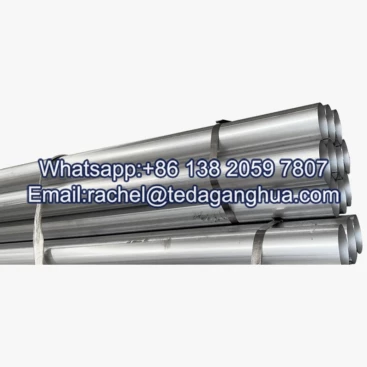
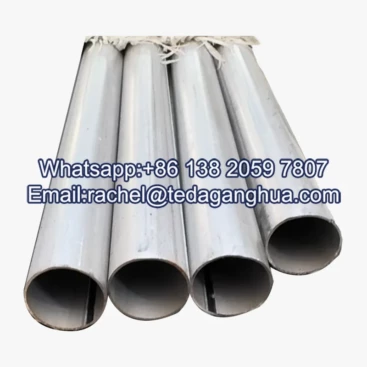
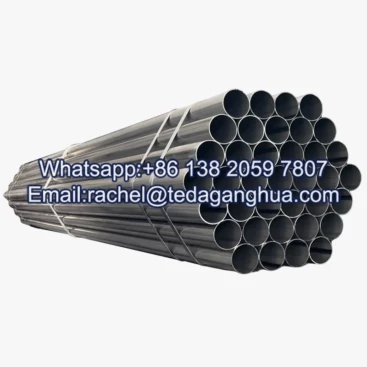
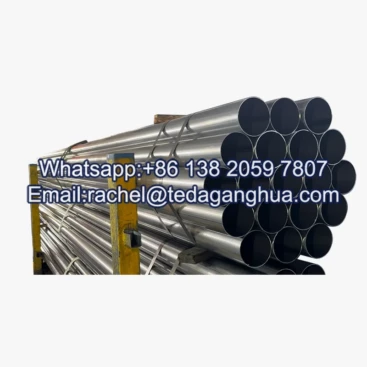
5. Flat Product Specification vs Finished Tube Specification
| Procurement item | Flat coated steel | Finished tube |
|---|---|---|
| درجة الصلب | Specified by the flat-product standard | Should identify the actual substrate used |
| طلاء | Specified by coating designation and agreed requirements | Must also consider forming and welding effects |
| سماكة | Coil or sheet thickness | Finished wall thickness |
| عرض / القطر | Strip or sheet width | Outside diameter, inside diameter or section dimensions |
| تشكيل | Cold-forming performance | Tube-forming and sizing requirements |
| Joining | Normally not a finished-tube requirement | Weld method, weld quality and inspection may be required |
| Inspection | Flat-product mechanical, dimensional and coating checks | Tube dimensional, weld and functional checks as specified |
6. Does Forming the Strip Change the Material Grade?
ليس تلقائيا. If a tube manufacturer forms and welds a strip originally supplied to a particular coated-flat-steel specification, the substrate remains traceable to that original material designation. لكن, the manufacturing process can change the condition of the finished product.
Tube forming introduces bending and local deformation. Welding introduces a localized thermal cycle. Sizing and straightening can also affect geometry and residual stress. In addition, the coating around the weld zone may behave differently from the undisturbed coating on the original strip.
For this reason, it is technically more accurate to say that the tube is manufactured from flat steel of the specified grade and coating rather than treating the original flat-product designation as a complete tube standard.
7. How Procurement Should Write the Specification
A clear purchasing specification can use a two-layer structure.
Identify the steel grade, تسمية طلاء, سماكة, coating mass or other agreed coating requirement, surface condition, mechanical requirements and applicable flat-product standard.
Identify tube outside diameter, سمك الجدار, طول, التحمل الأبعاد, متطلبات اللحام, end condition, متطلبات السطح, testing, inspection and the standard applicable to the finished tube.
This structure prevents a common specification error: using a flat-product material designation as if it automatically defines every property of the fabricated tube.
8. What a Tube Buyer Should Confirm Before Ordering
For exhaust, ducting, thermal equipment and other applications using coated steel tubing, the following checklist is more useful than simply asking for a “tube grade”:
| Question | Why it matters |
|---|---|
| What is the substrate grade? | Controls forming and mechanical characteristics. |
| What coating system is required? | Defines the surface protection system rather than the tube geometry. |
| What are OD and wall thickness? | These are finished-tube dimensions and require tube-specific control. |
| How is the tube welded? | The joining process affects the weld zone and finished condition. |
| What inspection is required? | Ensures the finished tube meets dimensional and application requirements. |
| What is the service environment? | درجة حرارة, atmosphere, vibration and corrosion exposure can affect material selection. |
9. تيدا جانجوا: From Coated Strip to Application-Specific Tube
For procurement teams that need coated steel tubes rather than simply coils or sheets, Teda Ganghua can support the specification from material selection through tube production. The practical focus is to distinguish the substrate grade and coating from the finished tube dimensions, forming route and application requirements.
When requesting أنابيب الصلب بالألمنيوم, buyers can provide the required outside diameter, سمك الجدار, طول, متطلبات الطلاء, forming geometry, bend configuration and service temperature. This gives the supplier enough information to evaluate the material together with the finished tube rather than treating the flat-product grade as the entire specification.
For a technical inquiry, specify both:
1) the substrate and coating requirement, و 2) the finished tube requirement. This two-part description makes quotation, production review and incoming inspection much easier to align.
10. Final Boundary: Material Designation vs Tube Specification
The cleanest way to understand the issue is simple:
في 10346 defines the coated flat steel. The designation identifies the substrate grade and coating system, together with the relevant flat-product delivery requirements. It does not automatically define a welded tube’s geometry, جودة اللحام, dimensional tolerances or finished-product testing. Published standards and technical data consistently place DX54D+AS within the continuously hot-dip coated flat-product framework.
The tube is a subsequent manufactured product. Once strip is formed and joined into a tube, the purchasing specification must address the finished geometry, manufacturing route and performance requirements separately.
لذلك, the most accurate procurement wording is not simply “DX54D+AS tube.” A clearer specification is: tube manufactured from the specified coated flat steel grade, with separately defined tube dimensions, التسامح, weld requirements and applicable finished-product standard.
التعليمات
Is DX54D+AS a tube grade?
لا. It identifies a cold-forming coated flat steel grade and coating system under EN 10346. A finished tube requires additional product-specific requirements.
Can DX54D+AS flat steel be used to make tubes?
نعم. Its cold-forming characteristics can make it suitable as a tube-forming input for appropriate applications, but the tube manufacturer must verify forming, لحام, dimensional and service requirements.
Does +AS mean the tube is automatically aluminized after welding?
لا. The +AS designation describes the coating applied to the flat steel. Tube production can affect the coating locally, especially around the formed and welded area, so the finished condition should be separately specified and inspected.
What should I write on a tube purchase order?
Specify the substrate grade and coating, then separately state outside diameter, سمك الجدار, طول, التسامح, متطلبات اللحام, surface condition, inspection requirements and the applicable finished-tube standard.
Why is this distinction important for procurement?
لأن تعيين المادة وحده لا يخبر الشركة المصنعة للأنبوب بكل ما يلزم لإنتاج أو فحص المكون النهائي. يؤدي فصل مواصفات المنتج المسطح عن مواصفات الأنبوب إلى تقليل الغموض وتسهيل مقارنة عروض الأسعار الفنية.

