シートコイルおよびチューブのアルミメッキ鋼仕様ガイド
A request stating only “1.5 mm aluminized steel sheet” is not a complete purchasing specification. It identifies a nominal thickness and a general coating description, but leaves several essential questions unanswered: What product form is required? Which steel grade and standard apply? Is the coating Type 1 またはタイプ 2? What coating designation, 寸法, and tolerances are expected? Without these details, suppliers cannot reliably confirm technical compliance or prepare an accurate quotation.
A practical inquiry should follow a four-part specification structure: product form, material standard and grade, coating designation, and dimensional requirements. These four elements turn a general product description into a specification that procurement teams and suppliers can evaluate consistently.
1. Part One: Identify the Product Form
The first specification element is the actual product form. A buyer may need flat sheet, coil, slit strip, or a finished tube. These products are not interchangeable, even when they originate from similar coated steel materials.
For flat products, the inquiry should identify whether the material will be supplied in coils or cut lengths. For tubular products, it should specify the required profile, such as round, 四角, or rectangular, together with the relevant manufacturing requirements.
Procurement point: Do not use a sheet thickness description as a substitute for a tube specification. A finished tube requires its own dimensional and product-standard requirements, including outside diameter or section dimensions, 壁の厚さ, and length.
2. Part Two: Specify the Steel Grade and Applicable Standard
The second element identifies the substrate and the technical standard governing the product. The phrase “aluminized steel” describes a coated material category, not a complete steel grade.
For hot-dip aluminum-coated flat steel, ASTM A463/A463M is a relevant product specification. It covers aluminum-coated steel sheet supplied in coils and cut lengths, with two coating types and multiple coating designations. The standard also addresses substrate categories and applicable mechanical, コーティング, and testing requirements.
しかし, a buyer should not assume that every product made from aluminum-coated sheet is automatically covered by the same product standard. Finished tubular products may require a different standard. The inquiry should therefore state the standard applicable to the product being purchased, not simply the standard associated with its raw material.
3. Part Three: Define the Coating Type and Designation
The word “aluminized” does not identify the exact coating system. Under ASTM A463/A463M, タイプ 1 とタイプ 2 have different coating compositions and intended applications. Buyers should specify the required coating type rather than leaving the selection to assumption.
| Specification item | タイプ 1 | タイプ 2 |
|---|---|---|
| Coating composition | Aluminum-silicon alloy | Commercially pure aluminum |
| シリコン含有量 | Typically 5–11% in the coating bath | No intentional silicon alloy addition as the defining coating composition |
| Primary application focus | Heat resistance and oxidation-related service | 耐食性 |
| Typical selection consideration | Elevated-temperature exposure | Atmospheric corrosion protection |
The coating designation is also important. ASTM A463/A463M provides multiple coating designations with specified coating-mass requirements. A buyer should identify the required designation instead of assuming that the word “Type 1” or “Type 2” defines the complete coating quantity.
塗布量, test method, and whether the specified value applies to both sides should be checked against the applicable standard and ordering requirements. These details can affect material suitability and inspection acceptance.
4. Part Four: Complete the Dimensions and Tolerance Requirements
Thickness is only one part of the dimensional specification. あ 1.5 mm requirement does not tell the supplier the required width, 長さ, coil configuration, or permissible dimensional variation.
There is another important question: does 1.5 mm refer to the nominal base steel thickness or the total coated thickness? The measurement basis should be confirmed in the purchase specification. Otherwise, the buyer and supplier may interpret the same nominal value differently.
| Product form | Required dimensional information | Additional clarification |
|---|---|---|
| Sheet | Thickness × width × length | Thickness basis and tolerances |
| Coil | Thickness × width × coil weight | Inside diameter, 外径, and maximum coil weight |
| Round tube | Outside diameter × wall thickness × length | Dimensional tolerances and applicable tube standard |
| Square or rectangular tube | Section width × height × wall thickness × length | Corner radius, profile tolerance, and section requirements |
For customized orders, buyers should also clarify the required surface condition, edge condition, 梱包, 検査書類, and delivery quantity. These details may not all belong in the four-part material code, but they help complete the commercial inquiry.
5. How to Turn an Incomplete Description into a Quotable Specification
Consider the difference between these two inquiries:
Incomplete inquiry
アルミめっき鋼板, 1.5 mm.
More complete inquiry
Product form: Hot-dip aluminum-coated steel sheet in coil
Material standard and grade: ASTM A463/A463M, specified steel grade
コーティング: タイプ 1, specified coating designation
Dimensions: 1.5 mm nominal thickness × specified width
Thickness basis: Confirm base-metal or total coated thickness
Delivery requirements: Coil dimensions, 量, 検査書類, そして目的地
The second inquiry gives the supplier a clearer technical basis for checking material availability, standard compliance, および処理要件. If the buyer has not yet selected a grade or coating designation, the inquiry should state the intended operating environment and application so that the supplier can help identify the appropriate specification.
6. Common Specification Mistakes That Delay Quotations
- Giving thickness without product form: A sheet, coil, and finished tube require different specification details.
- Leaving out the material standard: A general coating description does not define the substrate grade or applicable acceptance requirements.
- Omitting the coating type: タイプ 1 とタイプ 2 are intended for different service priorities.
- Using coating type as a substitute for coating mass: The coating designation must also be identified where required.
- Not defining the thickness basis: Buyers should clarify whether the nominal value refers to the base steel or the coated product.
- Ignoring tolerances and delivery details: 幅, 長さ, coil dimensions, 量, and inspection requirements can all affect order confirmation.
7. 泰達江華: Support for Clearer Coated Steel Procurement
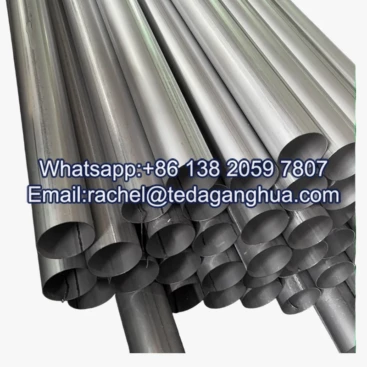
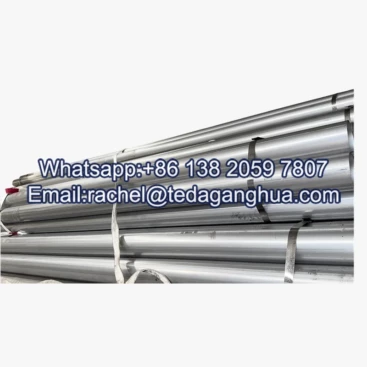
Teda Ganghua provides metal material sourcing and export coordination for international procurement projects. For buyers evaluating coated steel materials, our team can review the product form, 適用規格, 基板グレード, coating designation, 寸法, and inspection requirements before quotation.
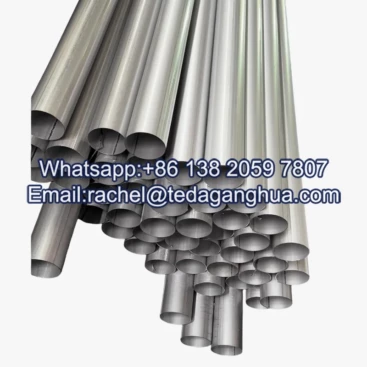
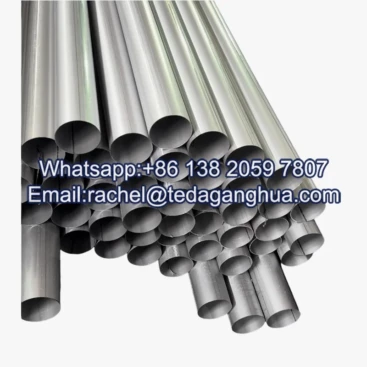
For tubular applications, the specification review should also distinguish between the coating requirements of the original sheet and the requirements of the finished tube, including welding-related areas where applicable. This helps buyers avoid treating a raw-material description as a complete finished-product specification.
When sourcing アルミメッキ鋼管, procurement teams can submit drawings, technical standards, required dimensions, 量, and intended service conditions to Teda Ganghua for review. A clearly defined inquiry makes it easier to assess the material requirements and coordinate a suitable supply proposal.
よくある質問
1. Is “1.5 mm aluminized steel sheet” enough information for a quotation?
いいえ. It gives the nominal thickness and a general material description, but does not identify the product form, 鋼グレード, 適用規格, coating type, coating designation, or dimensional tolerances. Additional information is needed for a technically meaningful quotation.
2. What is the difference between Type 1 とタイプ 2 コーティング?
タイプ 1 is an aluminum-silicon alloy coating containing approximately 5–11% silicon in the coating bath and is intended principally for heat-resisting applications. タイプ 2 is commercially pure aluminum and is intended principally for applications requiring corrosion resistance.
3. Does a coating type automatically define the coating mass?
いいえ. The coating type identifies the coating composition and intended application category. The applicable coating designation must also be specified to define the required coating-mass level under the selected standard.
4. Should 1.5 mm refer to the base steel thickness or total coated thickness?
The purchase specification should state the measurement basis explicitly. Buyers should confirm whether the nominal thickness refers to the base metal or the finished coated product and identify the applicable tolerance requirements.
5. What information should buyers provide when requesting a quotation for coated steel tubes?
Provide the tube profile, applicable product standard and grade, コーティング要件, outside diameter or section dimensions, 壁の厚さ, 長さ, 公差, 量, 検査書類, and intended application. Drawings or a technical specification sheet can help clarify customized requirements.