Оцинкованная и алюминизированная сталь при 200°C: Руководство по выбору температуры
200°C — полезная практическая граница при сравнении оцинкованной и алюминизированной стали., but it should not be treated as a universal failure temperature. The right choice depends on continuous operating temperature, пиковая температура, exposure time, термоциклирование, atmosphere, спецификация покрытия, и требуемый срок службы. For procurement managers, a temperature-based decision table is a faster starting point than selecting a coating based only on room-temperature corrosion performance.
Quick rule: Below about 200°C, galvanized steel can remain a practical option for many applications when the service environment is compatible. As operating temperature moves above 200°C, aluminized steel becomes increasingly attractive because its aluminum-silicon coating is designed for better high-temperature oxidation resistance. Above 250°C, continuous service deserves a more deliberate material review rather than relying on conventional galvanizing.
200°C Temperature Table: Galvanized or Aluminized?
The following table provides a practical first-pass selection guide. It is intended for procurement screening, not as a substitute for the applicable material standard or engineering qualification.
| Рабочая температура | Preferred Direction | Почему | Procurement Check |
|---|---|---|---|
| Below 100°C | Galvanized steel often practical | Strong atmospheric corrosion-protection capability | Humidity, outdoor exposure and coating mass |
| 100–150°C | Galvanized can still be considered | Temperature is elevated but often manageable depending on exposure | Continuous time at temperature and thermal cycling |
| 150–200°C | Compare both systems | Long-term thermal exposure becomes increasingly important | Coating durability and actual temperature profile |
| 200–250°C | Aluminized increasingly attractive | Al-Si coating offers better resistance to high-temperature oxidation | Continuous temperature, atmosphere and thermal cycling |
| Above 250°C sustained | Review aluminized or stainless solutions | Zinc coating limitations become increasingly significant | Exact grade, покрытие, gas chemistry and service life |
| High-temperature corrosive atmosphere | Engineering evaluation required | Temperature alone cannot predict corrosion behavior | Gas composition, condensate and oxidation conditions |
Why 200°C Is a Useful Decision Point
Galvanized steel relies on a zinc coating to protect the underlying steel. Zinc coatings are highly effective for many atmospheric environments, but elevated temperature changes the coating’s behavior. Oxidation becomes more important as temperature increases, and prolonged exposure can progressively reduce the coating’s ability to provide the same protection expected at ordinary temperatures.
Aluminized steel uses an aluminum-silicon coating. Its aluminum-rich surface develops a protective oxide layer when exposed to elevated temperatures, giving the coating system a different high-temperature protection mechanism.
Поэтому, 200°C is best understood as a material-selection checkpoint. It is not a universal temperature at which galvanized steel suddenly stops working.
Оцинкованная сталь
Strong choice for many ordinary corrosion-control applications, particularly where service temperatures remain moderate.
Алюминированная сталь
More attractive as temperature and oxidation exposure increase, particularly for exhaust and heat-management applications.
Нержавеющая сталь
Consider when high temperature combines with demanding corrosion, cleanliness, thermal cycling or service-life requirements.
Temperature Alone Does Not Decide the Coating
A temperature chart is useful only when combined with exposure time and environmental conditions. A component exposed to 230°C for several minutes is not equivalent to another component operating continuously at 230°C for thousands of hours.
Procurement teams should therefore distinguish three temperature values: normal operating temperature, maximum continuous temperature, and peak temperature. Start-up and shutdown cycles should also be included because repeated expansion and contraction can influence coating durability.
| Factor | Low Concern | Higher Concern |
|---|---|---|
| Температура | Moderate and stable | High or continuously elevated |
| Exposure duration | Short-duration peaks | Continuous long-term service |
| Thermal cycling | Rare temperature changes | Frequent heating and cooling |
| Atmosphere | Чистый, dry air | Combustion gas, влага, chlorides or sulfur compounds |
| Condensation | No significant condensate | Repeated wet/dry or dew-point exposure |
Оцинкованная и алюминизированная сталь: Coating Mechanism
The most important difference is not simply that one coating is “better.” The two systems protect steel through different mechanisms and are therefore suited to different service conditions.
| Characteristic | Оцинкованная сталь | Алюминированная сталь |
|---|---|---|
| Основное покрытие | Цинк | Алюминий-кремний |
| Main strength | Atmospheric corrosion protection | Устойчивость к высокотемпературному окислению |
| Moderate-temperature use | Often highly practical | Can be used when its additional thermal capability is beneficial |
| Elevated-temperature use | Requires increasing scrutiny | Generally more attractive for compatible applications |
| Thermal cycling | Evaluate coating durability | Evaluate coating integrity and joint areas |
| Типичные применения | Building products, ventilation and general fabrication | Выхлоп, heat-management and selected high-temperature components |
When to Choose Galvanized Steel
Galvanized steel remains a strong option when the component operates at moderate temperatures and the primary requirement is atmospheric corrosion protection. It can be particularly practical for structural parts, general ventilation, outdoor housings and other applications where high-temperature oxidation is not the dominant concern.
If the temperature occasionally rises but the exposure is brief, the application should be evaluated according to the complete thermal profile rather than automatically switching materials. The coating specification, coating mass, substrate and applicable standard should all be considered.
Galvanized steel may be appropriate when:
- Operating temperature is moderate.
- High-temperature exposure is short or occasional.
- Atmospheric corrosion is the main design concern.
- The component is not exposed to sustained hot exhaust gas.
- The coating remains within the limits specified for the intended application.
When to Choose Aluminized Steel
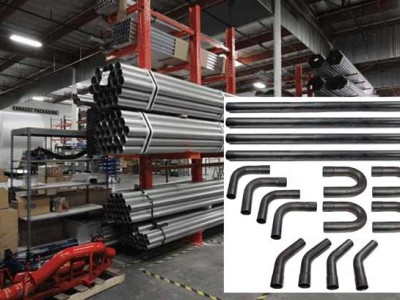
As temperature rises, the aluminum-silicon coating of aluminized steel becomes increasingly relevant. The material is commonly considered for exhaust systems, отопительное оборудование, воздуховоды горячего воздуха, heat shields and other components where oxidation resistance at elevated temperature is important.
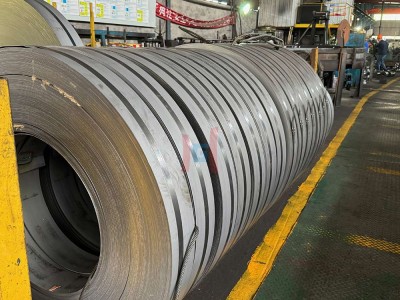
Aluminized steel can also be supplied in coil form, making it useful for manufacturers that produce formed panels, duct sections, housings and other components from continuous strip material.
Aluminized steel becomes increasingly attractive when:
- Continuous temperature moves above the moderate range.
- Oxidation resistance is more important than ordinary atmospheric corrosion protection.
- The component is exposed to hot air or exhaust gases.
- Thermal cycling is part of normal operation.
- The required service life justifies a high-temperature coating system.
Why Aluminized Steel Coil Is Useful for Manufacturers
For manufacturers producing large volumes of oven panels, компоненты выхлопа, тепловые экраны, ducts or formed covers, coil supply can simplify production. Continuous coil allows slitting, выравнивание, blanking and forming to be integrated into a production line while maintaining consistent material specifications across batches.
When buying aluminized coil, the coating designation should be specified together with the substrate. An AS coating designation alone does not completely define the material; the base steel grade, coating mass, dimensions and applicable standard also need to be confirmed.
| Coil Inquiry Item | Why It Matters |
|---|---|
| Substrate grade | Determines mechanical and forming characteristics |
| Coating designation | Defines the required coating level |
| Толщина | Affects forming, strength and heat transfer |
| Ширина | Must match slitting or forming equipment |
| Coil ID/OD | Important for production-line compatibility |
| Состояние поверхности | Influences appearance, forming and downstream processing |
| Mechanical properties | Important for stamping, bending and forming |
A Simple Decision Tree for Procurement
Шаг 1 — Is the operating temperature below 150°C?
Galvanized steel may be a practical starting point if the atmosphere and coating specification are compatible.
Шаг 2 — Is the temperature between 150°C and 200°C?
Compare both coating systems based on exposure duration, thermal cycling and service-life requirements.
Шаг 3 — Is continuous temperature above 200°C?
Give aluminized steel serious consideration, particularly where oxidation resistance is important.
Шаг 4 — Is continuous temperature above 250°C?
Do not rely on ordinary galvanizing by default. Evaluate aluminized steel, stainless steel or another heat-resistant solution according to the actual environment.
Шаг 5 — Is the atmosphere chemically aggressive?
Temperature alone is insufficient. Check gas chemistry, влага, condensate, chlorides, sulfur compounds and particulate erosion.


Теда Ганхуа: Commercial Supply of Aluminized Steel Coil
Teda Ganghua supports international procurement teams sourcing coated steel materials for industrial heating, exhaust, ventilation and equipment manufacturing. For coil applications, buyers can specify the substrate grade, aluminum-silicon coating designation, толщина, ширина, coil dimensions, mechanical requirements and quantity so the supply specification can be matched to the downstream forming process.
Our supply and processing support can be coordinated around leveling, резка, dimensional requirements, inspection documentation and export packaging. Для высокотемпературных приложений, procurement managers are encouraged to provide the actual continuous temperature, peak temperature and operating atmosphere instead of selecting the coating only by product name.
For manufacturers evaluating катушка из алюминизированной стали, включать substrate + обозначение покрытия + толщина + ширина + coil ID/OD + механические требования + рабочая температура + приложение + количество + требования к инспекции in the inquiry.
Supply reminder: A coating grade should always be paired with its substrate and intended service condition. This is especially important when comparing different AS coating levels or replacing galvanized steel in a high-temperature application.
Часто задаваемые вопросы: 200°C Galvanized vs Aluminized Steel Selection
Is 200°C the exact limit for galvanized steel?
Нет. 200°C is a practical material-selection checkpoint, not a universal failure temperature. Actual performance depends on exposure time, спецификация покрытия, термоциклирование, atmosphere and required service life.
Why is aluminized steel preferred as temperature increases?
Its aluminum-silicon coating develops an aluminum-rich oxide layer that provides improved resistance to high-temperature oxidation compared with conventional zinc coating. This makes it attractive for many exhaust and heat-management applications.
Should I always replace galvanized steel with aluminized steel above 200°C?
Не автоматически. The actual temperature profile, atmosphere, термоциклирование, coating specification and service-life requirement should be reviewed. Some applications may require stainless steel or another heat-resistant material instead.
Is aluminized steel coil suitable for high-temperature forming applications?
It can be suitable for many formed components such as heat-management panels, ducts and equipment parts when the substrate, coating and forming process are correctly specified. Радиус изгиба, оснастка, coating integrity and final service temperature should be evaluated.
What information should I provide when comparing galvanized and aluminized steel?
Provide the continuous temperature, пиковая температура, thermal-cycle frequency, atmosphere, moisture or condensate conditions, требуемый срок службы, сорт субстрата, coating requirement, толщина, width and downstream forming or welding process. These details allow a meaningful material comparison.