600°C เหล็กอลูมิไนซ์ เทียบกับ 409 สแตนเลส: ขีดจำกัดอุณหภูมิสูง
600การต่อสู้ขีดจำกัดอุณหภูมิสูง°C: ความล้มเหลวในการแพร่กระจายของการเคลือบอลูมิไนซ์เทียบกับ 409 Stainless Oxidation Limit
Aluminized steel vs 409 stainless steel at 600°C is a critical comparison for engineers selecting materials for exhaust systems, เครื่องแลกเปลี่ยนความร้อน, and high-temperature components. Although both materials provide oxidation resistance, their protection mechanisms are completely different. Aluminized steel depends on an aluminum-rich protective layer, ในขณะที่ 409 stainless steel relies on a chromium oxide passive film.
At around 600°C, the performance gap becomes more obvious. The key question is not simply which material survives higher temperatures, but how each protection system changes during long-term thermal exposure.
Different Protection Mechanisms at High Temperature
Aluminized steel uses an aluminum-silicon coating applied on a steel substrate. During heating, aluminum reacts with oxygen and forms a dense aluminum oxide (อัล₂O₃) layer. This oxide layer slows further oxidation and protects the steel base.
409 stainless steel belongs to the ferritic stainless family. Its corrosion resistance mainly comes from chromium content, which forms a chromium oxide (Cr₂O₃) protective film during oxidation.
| Protection System | Main Oxide Layer | Failure Mechanism |
|---|---|---|
| เหล็กอลูมิไนซ์ | Al₂O₃ aluminum oxide | Aluminum diffusion and coating depletion |
| 409 สแตนเลส | Cr₂O₃ chromium oxide | Chromium consumption and oxide scale growth |
Why 600°C Becomes a Critical Temperature Point
Around 600°C, aluminized steel enters a stage where coating diffusion becomes increasingly important. Aluminum atoms gradually migrate into the steel substrate, creating an intermetallic diffusion zone. This process improves bonding but also reduces the available aluminum reservoir over long service periods.
The coating does not fail immediately at 600°C. อย่างไรก็ตาม, continuous exposure, repeated thermal cycling, and mechanical deformation can accelerate aluminum consumption and reduce the remaining protective thickness.
สำหรับ 409 สแตนเลส, 600°C is also an important operating boundary. The chromium oxide layer can provide protection, but oxidation rates increase as temperature rises. Long-term exposure may cause oxide scale growth and reduce high-temperature strength.
เหล็กอลูมิเนตเทียบกับ 409 Stainless Steel Performance Comparison
| รายการ | เหล็กอลูมิไนซ์ | 409 สแตนเลส |
|---|---|---|
| Protection Principle | Aluminum oxide coating protection | Chromium oxide passive protection |
| 600°C Performance | Good oxidation resistance, monitor coating consumption | Stable oxidation resistance, strength gradually decreases |
| ข้อได้เปรียบหลัก | Excellent heat reflection and oxidation protection | Integrated corrosion resistance without coating dependency |
| การใช้งานทั่วไป | ระบบท่อไอเสีย, เตาหลอม, แผ่นกันความร้อน | ส่วนประกอบท่อไอเสียรถยนต์, วงเล็บ, ท่อ |
Thermal Cycling: The Real Challenge Beyond Temperature
In practical applications, thermal cycling is often more damaging than a single high-temperature exposure. Exhaust components may repeatedly experience heating and cooling cycles, which create expansion differences between coating and substrate.
Aluminized steel requires good coating adhesion because cracking or peeling of the aluminum layer can expose the steel substrate. 409 stainless steel avoids coating damage issues but must maintain sufficient chromium content to support oxide regeneration.


How to Select Between Aluminized Steel and 409
- Choose aluminized steel when cost efficiency, heat reflection, and oxidation resistance are the main requirements.
- Choose 409 สแตนเลส when long-term corrosion resistance and coating-free performance are preferred.
- Choose based on actual temperature cycle instead of maximum temperature only.
- Consider coating thickness and service environment for aluminized applications.
Teda Ganghua Aluminized Steel Coil Supply Solution
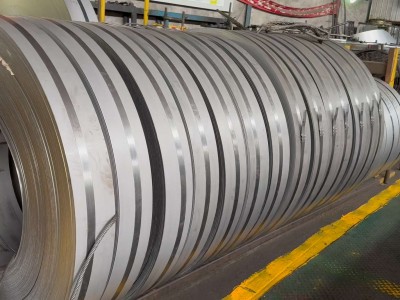
Teda Ganghua supplies aluminized steel coil solutions for high-temperature applications including automotive exhaust systems, อุปกรณ์อุตสาหกรรม, และส่วนประกอบทนความร้อน. The company supports different specifications, ข้อกำหนดในการประมวลผล, and export supply services.
Customers can learn more about aluminized steel coil products, ข้อกำหนด, and processing options through:
ขดลวดเหล็กอลูมิไนซ์.
บทสรุป
The 600°C range represents a performance transition point rather than an absolute failure temperature. Aluminized steel may gradually lose protection through aluminum diffusion, ในขณะที่ 409 stainless steel faces oxidation and chromium consumption limits. The best choice depends on service temperature, การปั่นจักรยานด้วยความร้อน, สภาพแวดล้อมการกัดกร่อน, และต้องมีอายุการใช้งาน.