
Ống thép Aluminized là gì? Hướng dẫn đầy đủ về lớp phủ, Của cải, Ứng dụng & Tiêu chuẩn
Ống thép Aluminized đã trở thành vật liệu quan trọng trong các ngành công nghiệp có yêu cầu ngày càng khắt khe về độ bền cơ học, khả năng chịu nhiệt, và kháng ăn mòn. Made from a steel substrate coated with a protective aluminum-silicon layer, aluminized steel tubes offer an effective balance of durability, hiệu suất nhiệt, and service life. They are widely used in automotive exhaust systems, lò công nghiệp, Trao đổi nhiệt, and high-temperature ventilation systems.
What Are Aluminized Steel Tubes?
Aluminized steel tubes are carbon steel tubes coated with an aluminum-based alloy through a hot-dip aluminizing process. The coating forms a metallurgical bond with the steel substrate, creating a highly protective outer layer.
Their core value lies in combining:
- The structural strength of steel
- The corrosion resistance of aluminum
- Excellent heat resistance and thermal reflectivity
Steel Core: The Substrate
The substrate plays a crucial role in determining the final performance of aluminized steel tubes. Common steel grades include:
| Tiêu chuẩn | Common Grade | Main Application |
|---|---|---|
| ASTM | A53 | General-purpose structural tubing |
| ASTM | A106 | Dịch vụ nhiệt độ cao |
| ASTM | A36 | Structural fabrication |
| DIN | St37 | Industrial tubing |
| GB | Q235 | General-purpose steel applications |
The chemical composition, carbon content, and wall thickness uniformity of the steel all affect coating adhesion and long-term performance.
Trước khi phủ, the substrate typically undergoes the following treatments:
- dưa chua
- Flux treatment
- Drying and preheating
Aluminum-Silicon Alloy Coating
What distinguishes these tubes is their aluminized coating. A typical Type 1 aluminized coating contains:
- Nhôm: approximately 90%
- Silicon: 9–10% [Vai trò của Silicon trong Thép Aluminized: Why 9–10% Silicon Content Matters]
- Trace amounts of iron
Silicon plays a crucial role in controlling the growth of brittle iron-aluminum intermetallic compounds.
Cấu trúc lớp phủ
Outer pure aluminum layer
↓
Aluminum-silicon alloy layer
↓
Lớp khuếch tán Fe-Al[The Fe-Al Intermetallic Layer in Aluminized Steel: sự hình thành, Kiểm soát độ dày, and Quality]
↓
Nền thép
How the Coating Bonds to Steel
The hot-dip aluminizing process includes:
- Preheating the steel tube[How to Weld Aluminized Steel Pipe Without Damaging the Aluminum Coating]
- Immersion in a molten aluminum bath at 680–720°C
- Controlled withdrawal[Forming and Bending Aluminized Steel Tubes Without Coating Damage]
- Cooling and solidification
During immersion, iron and aluminum atoms diffuse at high temperatures, forming a strong metallurgical bonding layer.[Aluminized Steel Coating Repair: Post-Processing Repair Methods and Solutions]
The main intermetallic compounds include:
- FeAl₃
- Fe₂Al₅
Controlling the thickness of these layers is essential to prevent excessive embrittlement.[Quá trình Aluminizing nhúng nóng: Ống thép Aluminized được sản xuất như thế nào]
Kiểu 1 vs. Kiểu 2 Thép Aluminized
| Tài sản | Kiểu 1 | Kiểu 2 |
|---|---|---|
| Coating composition | Silicon content of 8–11% | More than 99% nhôm |
| Main advantage | Điện trở nhiệt | Chống ăn mòn khí quyển |
| Typical application | Hệ thống xả | Roofing and architectural panels |
Thuộc tính chính
| Tài sản | Hiệu suất |
|---|---|
| Điện trở nhiệt | Withstands temperatures of up to 700–800°C (Kiểu 1)[Kiểu 1 vs. Kiểu 2 Thép Aluminized: Sự khác biệt về lớp phủ, Khả năng chịu nhiệt, and Application Guide] |
| Chống ăn mòn | Superior to galvanized steel in high-temperature environments |
| Thermal reflectivity | More than 80% |
| Mechanical strength | Retains the strength of the substrate |
[Thử nghiệm phun muối ASTM B117 cho thép Aluminized: A Detailed Look at Corrosion Performance]
[Thử nghiệm phun muối ASTM B117 cho thép Aluminized: Test Duration, Hiệu suất, and Corrosion Comparison]
Aluminized, Mạ kẽm, and Stainless Steel Tubes
| Tài sản | Thép Aluminized | Thép mạ kẽm | thép không gỉ |
|---|---|---|---|
| Điện trở nhiệt | Xuất sắc | Nghèo | Xuất sắc |
| Chống ăn mòn | Cao | Vừa phải | Rất cao |
| Tính hàn | Tốt | Vừa phải | Tốt |
| Tuổi thọ sử dụng | Dài | Vừa phải | Very long |
Đọc thêm:[Thép aluminized vs. Thép mạ kẽm: Cái nào hoạt động tốt hơn trong các ứng dụng nhiệt độ cao?]
[Thép Aluminized, 409 thép không gỉ, Và 304 Ống xả bằng thép không gỉ: A Guide to Cost, Cuộc sống phục vụ, và Hiệu suất]
[Cách nhận biết thép Aluminized từ 409 thép không gỉ]


Ứng dụng phổ biến
- Hệ thống xả ô tô[Tại sao các nhà sản xuất ô tô chọn thép Aluminized cho hệ thống xả | Heat Resistance and Corrosion Protection]
- Ống lò công nghiệp
- Bộ trao đổi nhiệt[Why Aluminized Steel Tubes Are Used in Heat Exchangers | Heat Resistance and Cost Efficiency]
- Ventilation and chimney systems[Why Aluminized Steel Tubes Are Ideal for Industrial Chimneys and Flue Systems]
- Thiết bị sấy nông sản
Standards and Specifications
- ASTM A929
- ASTM A463 / A463M
- Ngài G3314
- TRONG 10346
- GB/T standards
Buying Guide
How to Evaluate Coating Quality
- Bend testing to evaluate adhesion performance
- Metallographic analysis
- Đo độ dày lớp phủ
Common Defects
- Pinholes
- Coating blisters
- Overly brittle alloy layers
[Common Defects in Aluminized Steel Tubes: Causes, Điều tra, and Prevention Guide]
Key Purchasing Parameters
[Aluminized Steel Tube Quality Inspection: 5 Tests Buyers Should Know]
Be sure to specify:
- Outside diameter
- Độ dày của tường
- Coating thickness
- Kiểu 1 hoặc Loại 2
- Required standard
Professional Supply and Processing Support
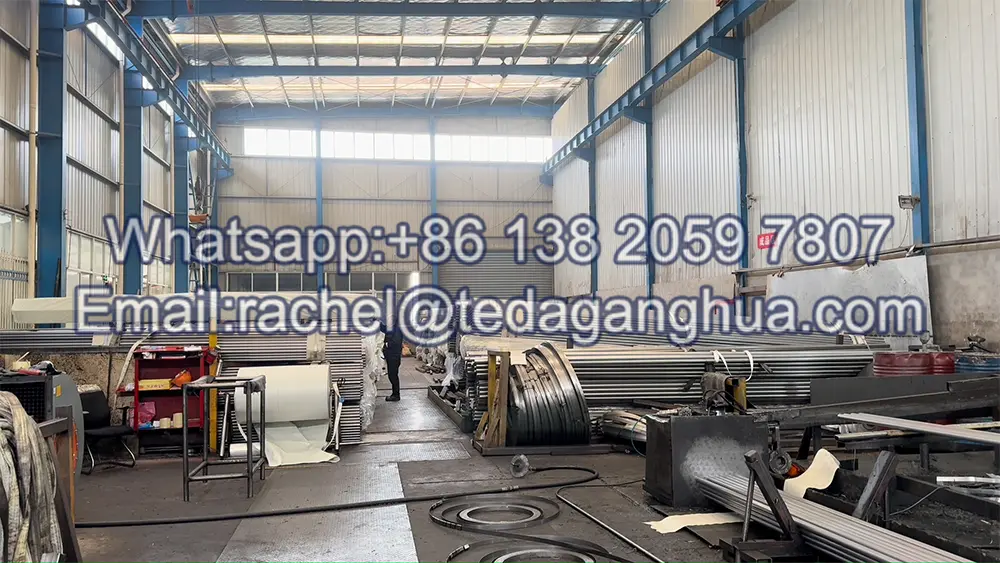
Teda Ganghua supplies high-quality aluminized steel tubes for a wide range of industrial and commercial applications. With advanced processing capabilities, kiểm soát chất lượng nghiêm ngặt, and extensive global export experience, Teda Ganghua provides customized dimensions, cắt, chế tạo, and logistics solutions to meet customer requirements.
Click here to explore more products:
Ống thép Aluminized
Câu hỏi thường gặp
1. Are aluminized steel tubes suitable for outdoor use?
Đúng. Kiểu 2 aluminized steel is particularly suitable because it offers excellent resistance to atmospheric corrosion.
2. Can aluminized steel tubes withstand high temperatures?
Đúng. Kiểu 1 aluminized steel can typically withstand temperatures of up to 700–800°C. [Tại sao OEM ưa thích 409 Thép không gỉ cho hệ thống xả]
3. Thép aluminized có tốt hơn thép mạ kẽm cho hệ thống ống xả không?
Đúng. Thép Aluminized hoạt động tốt hơn đáng kể trong các ứng dụng xả nhiệt độ cao.[Vật liệu thải: 439 vs 441 vs 409 & Aluminized 409]
4. What is the main benefit of silicon in the coating?
Silicon helps control the growth of the intermetallic layer and reduces coating brittleness.
5. Which industries use aluminized steel tubes most extensively?
The automotive, sưởi ấm công nghiệp, thông gió, and heat exchanger manufacturing sectors are the main users. [Ống thép Aluminized cho ống xả xe thương mại]
[2025 Aluminized Steel Tube Price Guide: Factors That Affect Cost]
