
镀铝 409 汽车排气系统用不锈钢
镀铝 409 不锈钢是一种专门用于需要平衡抗氧化性的汽车排气部件的材料选择, thermal durability, and controlled manufacturing costs. 然而, its suitability depends on more than the presence of an aluminum-based coating. The performance of the complete material system is determined by the ferritic stainless steel substrate, 涂料组合物, 涂层附着力, 工作温度, exhaust chemistry, 和热循环. For emission-system manufacturers, the key question is not whether aluminized 409 is suitable for high-temperature service in general, but where its performance advantages remain reliable and where a different material specification is necessary.
What Is Aluminized 409 不锈钢?
类型 409 stainless steel is a ferritic chromium-containing stainless steel commonly used in automotive exhaust systems. Its chromium content supports the formation of a protective oxide layer, while its ferritic structure offers useful thermal expansion and fabrication characteristics for exhaust applications. Compared with more highly alloyed stainless steels, grade 409 is often selected for applications where its combination of performance and material economy meets the design requirements.
镀铝 409 combines a 409 stainless steel substrate with an aluminum-rich surface coating. Depending on the coating process and specification, the surface may form protective aluminum oxide during exposure to elevated temperatures. This layer can reduce oxidation and improve resistance to certain forms of high-temperature surface degradation.
Nevertheless, the coating does not transform the substrate into a higher-alloy stainless steel. The substrate retains its own mechanical, thermal, and corrosion characteristics, while the coating introduces an additional protective mechanism that must remain sufficiently continuous and adherent during service.
Engineering distinction: 镀铝 409 is a coated ferritic stainless steel system, not a substitute for evaluating the base alloy and coating independently. Its suitability must be confirmed against the component’s actual thermal profile, oxidation exposure, and durability requirements.
Why It Is Used in Automotive Emission Systems
Oxidation Protection at Elevated Temperatures
Exhaust components experience prolonged exposure to hot gases, oxygen, water vapor, and combustion products. An aluminum-rich coating can form an alumina-based protective scale that slows further oxidation when the coating system is properly designed for the operating conditions.
This additional protection can be valuable in exhaust sections exposed to repeated heating, especially where conventional surface oxidation would otherwise shorten component life. Actual performance, 然而, depends on coating thickness, uniformity, process control, and the temperature and duration of exposure.
Compatibility with Exhaust Component Manufacturing
Ferritic stainless steel is used for exhaust pipes, formed sections, and related components because of its practical combination of thermal properties, 耐腐蚀性, 和可制造性. 镀铝 409 may be considered when a design requires additional surface protection without moving directly to a substantially more highly alloyed substrate.
成型, 切割, joining, and welding must still be assessed for the finished component. Severe forming can damage a coating, while welding creates locally altered surfaces and heat-affected regions. The manufacturing route should therefore be qualified alongside the material selection.
Potential for Longer Component Service Life
When the operating environment matches the material’s capabilities, the coating may help reduce oxidation-related deterioration and support longer service life. 然而, overall exhaust durability also depends on vibration, condensate corrosion, 路盐, mechanical fatigue, joint design, and local temperature gradients. Coating performance alone cannot predict the life of a complete emission-system component.
The Application Boundaries of Aluminized 409
The main limitation is that coating protection and substrate capability are not interchangeable. A coating may improve resistance to surface oxidation, but it does not automatically increase the base steel’s creep strength, eliminate thermal fatigue, or provide universal resistance to aggressive exhaust chemistry.
| Operating Condition | Potential Suitability | Key Limitation to Verify |
|---|---|---|
| Moderate to elevated exhaust temperatures within a qualified service envelope | May be suitable where additional oxidation protection is beneficial | Long-term coating stability and substrate oxidation resistance |
| Frequent engine start-stop cycles | Potentially suitable after thermal-cycle validation | Coating cracking, adhesion loss, and thermal fatigue |
| Localized extreme-temperature exposure | Requires careful qualification; another alloy may be necessary | Substrate strength, scale stability, and accelerated oxidation |
| Severe condensate or salt-related corrosion | Depends on the corrosive environment and component design | Localized corrosion, coating defects, and exposed edges |
| High mechanical stress or sustained loading at elevated temperature | Requires grade-specific mechanical assessment | Creep, 形变, weld performance, and fatigue life |
These categories are qualitative engineering guidance rather than universal approval ratings. A component that performs well under one duty cycle may fail under another because peak temperature, 曝光时间, 气体成分, coating damage, and mechanical loading can differ substantially.
Temperature Limits: What the Numbers Actually Mean
Temperature ratings for coated stainless steel must be interpreted according to the specific product specification and test conditions. 例如, certain commercially available aluminized 409 products specify oxidation resistance up to approximately 843°C (1,550°F). This is a product-specific performance figure, not a universal guarantee of continuous service life for every exhaust component.
Three temperature concepts should be distinguished during material selection:
| Temperature Parameter | Engineering Meaning | Procurement Implication |
|---|---|---|
| Oxidation resistance temperature | Temperature at which a material or coating demonstrates a specified level of oxidation performance under defined conditions | Confirm the test method, 曝光时间, and acceptance criteria |
| Continuous service temperature | Temperature maintained during sustained operation within the manufacturer’s defined service conditions | Verify long-term substrate strength, coating stability, and allowable degradation |
| Peak or transient temperature | Short-duration temperature excursions during acceleration, regeneration, or unusual operating conditions | Evaluate thermal shock, repeated cycling, and localized hot spots |
A material that survives a brief oxidation test at a particular temperature may not retain adequate performance after thousands of heating and cooling cycles. Engineers should therefore assess both maximum exposure and cumulative thermal damage before approving the material for an emission-system component.
When Should Manufacturers Consider a Higher-Alloy Grade?
镀铝 409 should not be selected solely because the component belongs to an exhaust system. The appropriate alternative depends on the limiting failure mechanism.
- Higher oxidation demand: If the component experiences temperatures or exposure durations beyond the qualified capability of the proposed material, evaluate higher-alloy ferritic or other heat-resistant grades.
- Severe condensate or road-salt exposure: Assess the complete corrosion environment, including external surfaces, joints, welds, and regions where moisture can accumulate. A higher-chromium grade may provide additional protection where the application requires it.
- High mechanical loading: Where sustained stress, 振动, or deformation is a major concern, compare high-temperature mechanical properties and fatigue performance rather than relying on oxidation ratings.
- Strict emissions-system durability requirements: Components near turbochargers, close-coupled catalytic converters, or high-temperature after-treatment equipment may require application-specific validation or a different material specification.
For many applications, the best material is not necessarily the grade with the highest alloy content. It is the grade and coating combination that meets the required service life, manufacturing tolerances, environmental resistance, and applicable validation criteria.
Quality Checks Before Ordering Aluminized 409
Procurement managers should verify the complete material specification rather than relying on a product description that states only the grade and coating type. The following checks help reduce uncertainty during sourcing and production approval.
基材: Confirm the exact grade, 适用标准, chemical composition requirements, 和机械性能.
Coating specification: Establish coating composition, coating mass or thickness where specified, coverage, adhesion requirements, and relevant test methods.
Dimensional accuracy: Specify sheet or strip thickness, width, 公差, flatness, edge quality, and coil requirements according to the intended manufacturing process.
Fabrication compatibility: Validate bending, tube forming, 焊接, 切割, and any post-processing that could affect the coating or heat-affected zones.
Traceability and validation: Request the applicable material test certificate, batch identification, inspection records, and evidence of performance against the agreed qualification requirements.
For welded exhaust tubing, special attention should be given to the weld seam and heat-affected zone. The coating may change during fabrication, and the final component can contain exposed edges or locally altered surfaces. The finished assembly should therefore be evaluated for the actual corrosion and thermal conditions it will encounter.
Teda Ganghua: Material Sourcing for Exhaust Tube Applications
Teda Ganghua supports industrial procurement teams with metal product sourcing and processing coordination for applications requiring clearly defined material and dimensional specifications. For exhaust-system manufacturers comparing coated steel and stainless steel solutions, the selection process should begin with the operating environment, 要求的使用寿命, and fabrication route.
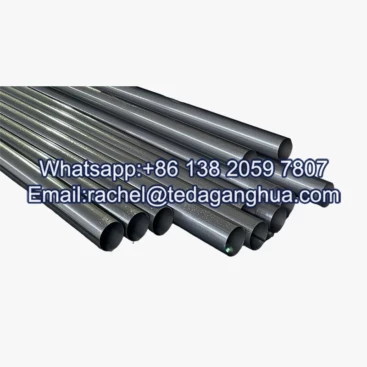
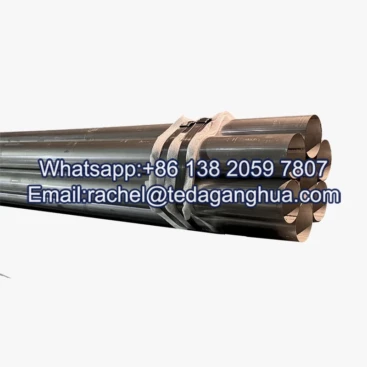
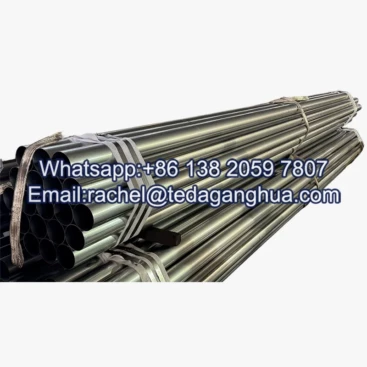
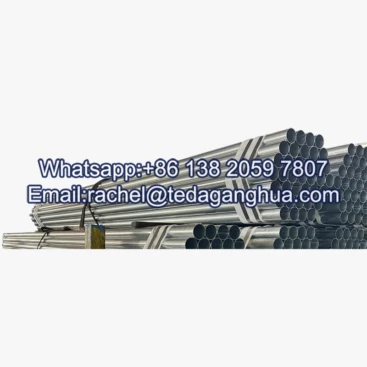
When sourcing 渗铝钢管, buyers should confirm whether the requested product is intended for the relevant temperature range and whether its coating specification is compatible with tube forming and welding. Where aluminized 409 or another coated stainless configuration is under consideration, the base grade, coating details, 方面, and required inspection documents should be clearly identified before an order is placed.
Teda Ganghua’s commercial team can help buyers clarify product requirements and coordinate sourcing discussions around the specified application. Providing the operating temperature, tube outside diameter, 壁厚, 长度, 涂层要求, 适用标准, and expected service environment helps establish a more accurate technical basis for material selection.
The objective is to match the material to the component’s actual duty cycle—not to assume that a coating or stainless steel designation alone guarantees long-term durability.
常见问题
1. What is the main advantage of aluminized 409 不锈钢?
Its aluminum-rich coating can improve oxidation resistance and help protect exhaust components against certain forms of high-temperature surface degradation, condensate attack, and road-salt exposure. Performance depends on the specific coating system and service conditions.
2. Is aluminized 409 suitable for every emission-system component?
不. Its suitability depends on continuous and peak temperatures, 热循环, mechanical loading, 腐蚀暴露, 和制造要求. Components exposed to extreme temperatures or unusually demanding durability conditions may require another grade or a different material system.
3. Does an oxidation resistance rating indicate the maximum continuous operating temperature?
未必. An oxidation rating is meaningful only in the context of its test method and exposure conditions. Continuous service capability must also account for substrate strength, coating stability, thermal fatigue, and the expected operating cycle.
4. Can aluminized 409 be welded and formed into exhaust tubes?
Many products are designed for conventional forming and fabrication, but the permitted process depends on the coating specification and product condition. Forming severity, weld parameters, coating damage, and the final component’s corrosion requirements should be evaluated before production.
5. What information is needed to source aluminized 409 for an exhaust application?
Buyers should provide the exact substrate grade and standard, 涂层要求, 厚度, width or tube dimensions, 公差, 工作温度, exposure environment, 制作方法, 以及所需的质量文件. 这些详细信息有助于确定提议的产品是否适合预期应用.


