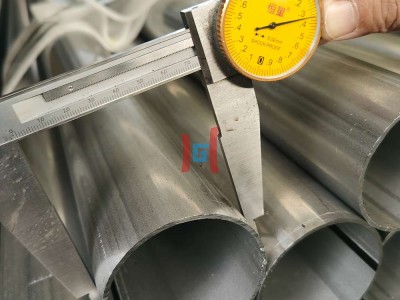
Common Defects in Aluminized Steel Pipe: Causes, 检查 & Prevention Guide
Common Defects in Aluminized Steel Pipe and How to Avoid Them: A Complete Defect Identification Guide
Aluminized steel pipe defects can directly affect corrosion resistance, 耐热性, 使用寿命, and fabrication performance. Although aluminized steel provides excellent protection through an aluminum-silicon coating layer, defects during surface preparation, 热浸铝化, 冷却, or handling may reduce coating performance.
Understanding common defects such as pinholes, coating skips, aluminum lumps, excessive alloy layer growth, and oxidation discoloration helps buyers and fabricators select higher-quality aluminized steel pipes and prevent premature failure.
Common Aluminized Steel Pipe Defects Overview
| Defect | 外貌 | Main Cause | Impact |
|---|---|---|---|
| Pinholes | Small exposed spots or tiny holes in coating | Surface contamination, gas trapped during coating | Local corrosion risk |
| Coating Skip / Bare Spots | Steel substrate exposed without aluminum coating | Poor surface cleaning or insufficient coating coverage | Reduced corrosion protection |
| Aluminum Lumps | Raised aluminum particles or bumps | Excess aluminum adhesion during dipping | Affects appearance and fabrication |
| Excessive Alloy Layer | Hard and thick intermetallic layer | Improper dipping temperature or time | Brittleness and reduced bending performance |
| Oxidation Color | 黄色的, 灰色的, or dark surface discoloration | High-temperature oxidation after coating | Appearance defects |
1. Pinholes in Aluminized Steel Pipe
Pinholes are small discontinuities in the aluminum coating where the steel substrate may become partially exposed. They are usually caused by poor surface preparation before aluminizing.
Common reasons include:
- 油, rust, or oxide residue remaining on the steel surface
- Improper pickling or cleaning process
- Gas bubbles trapped during immersion coating
- Uneven coating solidification
How to avoid pinholes:
- Improve steel surface cleaning before aluminizing
- Control pickling parameters
- Maintain stable molten aluminum temperature
- Perform coating thickness inspection after production
2. Coating Skip and Aluminum Leakage Areas
Coating skip refers to areas where aluminum coating coverage is incomplete. These areas expose the steel surface and become potential corrosion initiation points.
The main causes include:
- Insufficient immersion time
- Uneven molten aluminum flow
- Surface contamination before coating
- Improper withdrawal speed
Quality aluminized steel pipe should have continuous coating coverage around the entire pipe surface, especially at weld seams and edges where defects are more likely to occur.
3. Aluminum Lumps on Surface
Aluminum lumps appear as raised particles or uneven coating areas. They are usually caused by excessive aluminum adhesion during hot-dip coating.
| Cause | Solution |
|---|---|
| Unstable aluminum bath condition | Control bath temperature and composition |
| Excess aluminum pickup | Optimize withdrawal speed |
| Impurities in molten aluminum | Improve bath maintenance |
Small surface variations may not affect performance, but large aluminum lumps can influence pipe fitting, 焊接, and dimensional accuracy.
4. Excessively Thick Aluminum-Iron Alloy Layer
The alloy layer between steel and aluminum provides strong metallurgical bonding. 然而, if this intermetallic layer becomes too thick, it may become brittle.
An excessively thick alloy layer can cause:
- Reduced bending ability
- Cracking during fabrication
- Lower impact resistance
The alloy layer thickness is mainly influenced by:
- Aluminizing temperature
- Immersion duration
- Steel chemical composition
Proper process control keeps the alloy layer strong while maintaining good mechanical performance.


5. Surface Oxidation Color After Aluminizing
Oxidation discoloration appears as yellow, 灰色的, or dark areas on the aluminum coating. It is often related to high-temperature exposure after coating.
Possible causes include:
- Slow cooling after aluminizing
- Long exposure to oxygen at high temperature
- Improper storage conditions
Although slight discoloration may not always affect corrosion resistance, severe oxidation can indicate coating quality issues.
如何检验渗铝钢管质量
| 检查项目 | 目的 |
|---|---|
| Visual inspection | Check coating uniformity and surface defects |
| Coating thickness test | Confirm aluminum coating weight |
| Bend test | Evaluate coating flexibility |
| Adhesion test | Verify coating bonding strength |
| Chemical analysis | Confirm steel and coating composition |
泰达钢华如何帮助预防渗铝钢管缺陷
Teda Ganghua 供应镀铝钢管,从原钢检验到最终涂层评估均进行严格的质量控制. 检查每批涂层的均匀性, 表面状况, 尺寸精度, 和机械性能.
拥有渗铝钢制品经验, 泰达钢华支持定制尺寸, 制造要求, 并出口汽车排气系统等应用的供应解决方案, 热交换器, 工业设备, 和高温部件.
了解渗铝钢管产品及规格:
https://www.tedametal.com/product-category/aluminized-steel-tubes/