Colorimeter vs. Spectrophotometer: Understanding the Critical Differences in Color Measurement
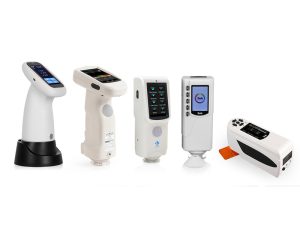 Color measurement tools are indispensable in industries ranging from textiles and plastics to food and pharmaceuticals, ensuring consistency, quality, and compliance. Two primary instruments dominate this space: colorimeters and spectrophotometers. While both assess color, their underlying technologies, capabilities, and applications differ significantly. This guide breaks down their critical distinctions to help you choose the right tool for your needs.
1. Core Technology: How They Measure Color
At their core, colorimeters and spectrophotometers quantify color, but their methods of capturing and analyzing light differ fundamentally.
Colorimeter: Filter-Based Measurement
A colorimeter uses predefined filters to measure light reflected or transmitted by a sample. These filters are designed to mimic the sensitivity of the human eye’s three color receptors (cones), which detect red, green, and blue (RGB) wavelengths.
1. Process:
- A light source illuminates the sample.
- Reflected/transmitted light passes through red, green, and blue filters.
- The device calculates the intensity of light passing through each filter, converting these values into a color reading (often in standard color spaces like CIELAB or RGB).
2.Limitation: Filters only capture specific wavelength ranges, missing subtle variations in other parts of the spectrum.
Spectrophotometer: Full-Spectrum Analysis
A spectrophotometer measures every wavelength of light in the visible spectrum (typically 360–780 nm) individually. Instead of filters, it uses a diffraction grating or prism to split light into its component wavelengths, then quantifies the intensity of each.
1.Process:
- Light illuminates the sample, and reflected/transmitted light is split into a spectrum.
- A detector measures the intensity of light at each wavelength (e.g., 400 nm, 401 nm, etc.).
- Software reconstructs the full spectral curve and converts it into color values (e.g., CIELAB, Lab*) or other color spaces.
2.Advantage: Captures the complete “fingerprint” of a sample’s color, enabling precise analysis of complex or unique hues.
2. Accuracy and Precision
The choice between these tools often hinges on how precise your color measurements need to be.
| Metric | Colorimeter | Spectrophotometer |
| Accuracy | Moderate. Relies on RGB filters, which may not account for subtle spectral shifts (e.g., metamerism). | High. Full-spectrum data captures nuanced differences, even between colors that look identical to the human eye. |
| Precision | Good for consistent, high-volume applications (e.g., batch checks) but limited by filter sensitivity. | Excellent. Repeats measurements with minimal variation, critical for strict quality control (e.g., automotive paints). |
| Metamerism Detection | Poor. Cannot distinguish between “metamers”—colors that match visually but have different spectral compositions. | Excellent. Identifies metamerism by comparing full spectral curves, preventing mismatches under different light sources. |
3. Color Space Compatibility
Color spaces (e.g., CIELAB, RGB, CMYK) define how color is numerically represented. The instrument’s ability to support these spaces affects its versatility.
- Colorimeter: Typically limited to basic color spaces(e.g., CIELAB, RGB, Hunter Lab) due to its filter-based design. It calculates color values using simplified equations derived from the RGB data.
- Spectrophotometer: Supports all standard color spaces(CIELAB, CIEXYZ, Munsell, etc.) and can generate custom color models. Its full spectral data allows precise conversion between spaces, making it ideal for cross-industry color matching.
4. Applications: When to Use Each Tool
Their technical differences make colorimeters and spectrophotometers suited to distinct use cases.
Colorimeter: Best for Simple, High-Volume Tasks
1.Industries: Food and beverage (e.g., measuring juice color), cosmetics (e.g., lipstick shades), printing (e.g., basic ink checks).
2.Use Cases:
- Routine quality control for uniform, non-metallic samples.
- Quick batch-to-batch comparisons where minor variations are acceptable.
- Budget-sensitive applications (colorimeters are generally cheaper).
Example: A snack factory using a colorimeter to ensure potato chips have consistent golden-brown coloring.

Spectrophotometer: Best for Complex, Precision-Driven Tasks
1.Industries: Automotive (e.g., metallic paint matching), textiles (e.g., fabric dyeing), plastics (e.g., pearlescent finishes), pharmaceuticals (e.g., pill coating uniformity).
2.Use Cases:
- Analyzing samples with special effects (metallic, fluorescent, iridescent).
- Detecting metamerism (critical for products viewed under different light sources).
- Creating custom color formulations or matching legacy colors.
Example: An auto manufacturer using a spectrophotometer to ensure a car’s bumper and body panel match under sunlight, LED, and fluorescent lighting.
5. Cost and Portability
- Cost: Colorimeters are more affordable, with prices ranging from $500 to $5,000. Spectrophotometers, especially high-precision models, cost $3,000 to $50,000+.
- Portability: Both come in portable (handheld) and benchtop models, but portable colorimeters are lighter and more compact, making them ideal for on-site testing (e.g., factory floors). Portable spectrophotometers, while bulkier, offer lab-grade precision in field settings.
6. Key Takeaway: Choosing the Right Tool
- Use a colorimeterif you need simplicity, speed, and cost-effectiveness for routine, low-complexity color checks.
- Use a spectrophotometerif you require precision, full spectral data, or need to handle complex samples (metallics, fluorescents) or strict quality standards.
In short, colorimeters are “color checkers,” while spectrophotometers are “color analysts”—each excels in its role, but neither is a replacement for the other. Understanding their differences ensures you invest in a tool that aligns with your industry’s unique demands.
3nh’s Color Solutions: Choosing the Right Colorimeter or Spectrophotometer
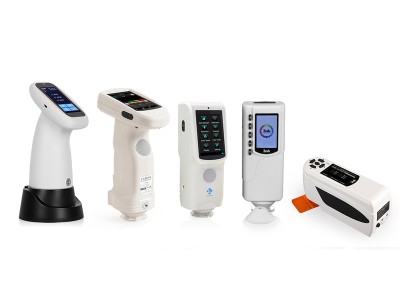
As a Chinese colorimeter manufacturer, 3nh designs and manufactures a wide range of precision colorimeters, portable colorimeters, and spectrophotometers to meet different industry needs. Whether you require a compact and lightweight portable colorimeter for on-site measurements or a precision colorimeter for high-accuracy laboratory testing, 3nh offers products that ensure accurate color measurement. From cost-effective devices for simple tasks to advanced spectrophotometers for complex color analysis, we have the right solution for you. Contact us to learn more about how we can support your color measurement requirements.