Dx54d As120
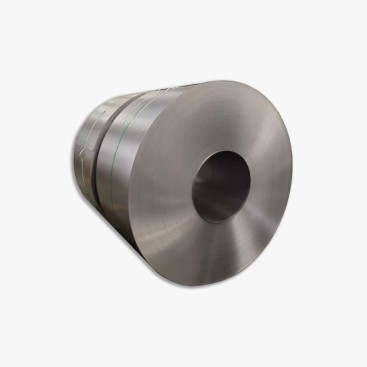
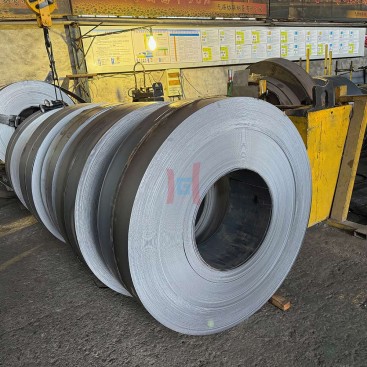
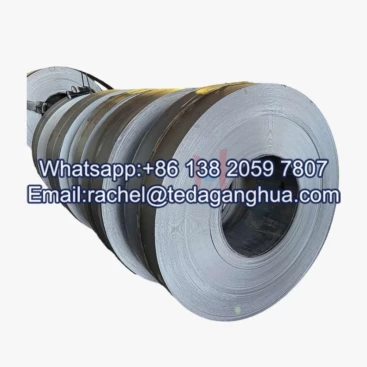
DX54D AS120 is a high-performance coated steel combining:
- Deep drawing steel DX54D substrate
- Aluminum-silicon alloy coating (AS120)
Its main advantages include:
- Excellent high-temperature resistance
- Strong oxidation protection
- Good formability for complex shaping
- Stable coating structure under thermal cycling
- Description
Description
DX54D AS120 is a deep-drawing quality steel with an aluminum-silicon (Al–Si) hot-dip coating mass of approximately 120 g/m². It belongs to the EN 10346 coated steel family and is designed for applications requiring excellent formability, high-temperature resistance, and oxidation protection.
Compared with zinc-coated steels (such as Z100 or Z275), AS-coated steels are specifically optimized for heat resistance environments, especially automotive exhaust and thermal system components.
1. What Does DX54D AS120 Mean?
- DX54D → deep drawing quality steel with very high ductility
- AS → Aluminum-Silicon hot-dip coating
- 120 → coating mass ≈ 120 g/m²
DX54D steel is the base material, while the AS coating provides thermal and oxidation resistance.
2. Base Steel Chemical Composition (DX54D Core)
The substrate is a low-carbon steel optimized for forming:
| Element | Content (%) | Function |
|---|---|---|
| Carbon (C) | ≤ 0.12 | Maintains ductility and formability |
| Silicon (Si) | ≤ 0.50 | Controls structure stability |
| Manganese (Mn) | ≤ 0.60 | Improves toughness |
| Phosphorus (P) | ≤ 0.10 | Limits impurities |
| Sulfur (S) | ≤ 0.045 | Controls machinability |
| Aluminum (Al) | ≥ 0.015 | Deoxidation and grain refinement |
| Nitrogen (N) | ≤ 0.012 | Stabilizes microstructure |
👉 This composition ensures high elongation and excellent deep drawing performance.
3. Aluminum-Silicon Coating Composition (AS120)
The coating is a metallurgical alloy layer formed during hot-dip process:
| Component | Content (%) | Function |
|---|---|---|
| Aluminum (Al) | ~88–92% | Oxidation resistance and heat protection |
| Silicon (Si) | ~8–12% | Controls intermetallic layer growth |
| Iron (Fe) | Trace | Diffusion from steel substrate |
The silicon is essential to prevent excessive brittle Fe–Al intermetallic layer formation.
4. Coating Structure
aluminized steel typically has a multi-layer structure:
- Outer Al–Si protective layer
- Intermetallic Fe–Al diffusion layer
- Steel substrate (DX54D)
This structure ensures strong bonding and high thermal stability.
5. Mechanical Properties of DX54D
| Property | Value |
|---|---|
| Tensile Strength | 260 – 350 MPa |
| Yield Strength | 120 – 220 MPa |
| Elongation | ≥ 34 – 36% |
| Hardness | ~80 – 120 HB |
| Elastic Modulus | ~210 GPa |
👉 Key feature: excellent deep drawing ability with low yield strength and high elongation
6. Key Performance Characteristics
Excellent High-Temperature Resistance
- Stable up to ~600–700°C
- Suitable for thermal cycling environments
- No rapid coating degradation under heat
Strong Oxidation Resistance
- Aluminum forms dense Al₂O₃ protective film
- Prevents further oxidation of steel substrate
Good Formability
- Suitable for stamping, bending, and deep drawing
- Stable coating during moderate deformation
Controlled Coating Diffusion
- Silicon prevents excessive brittle intermetallic growth
- Improves coating durability
7. Common Applications of DX54D AS120
DX54D steel with AS120 coating is widely used in:
- Automotive exhaust systems
- Mufflers and catalytic converter shells
- Heat shields and thermal protection panels
- Furnace and burner components
- High-temperature duct systems
- Industrial heat exchangers
- Engine compartment shielding parts
8. AS120 vs Zinc Coating (Z-Type Steel)
| Property | AS120 (Al–Si) | Z275 (Zinc) |
|---|---|---|
| Main function | Heat resistance | Corrosion protection |
| Max temperature resistance | ~700°C | ~200°C |
| Coating type | Al–Si alloy | Zinc |
| Best application | Exhaust systems | Construction / appliances |
| Oxidation resistance | Excellent | Moderate |