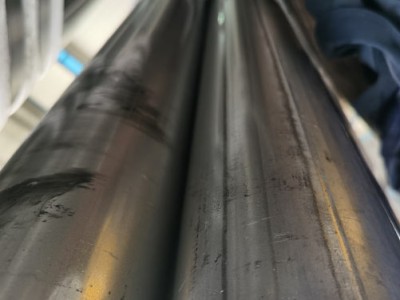
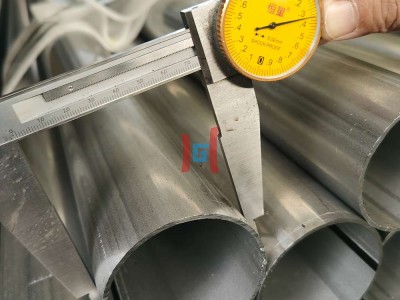
Guia de revestimento de tubo de aço aluminizado AS120 AS150 AS200
AS120, AS150, e AS200 são designações de massa de revestimento, não classificações de temperatura. Para tubos de aço aluminizado, the number generally indicates the specified coating mass per unit area, so a higher designation means a heavier metallic coating. This distinction is important in high-temperature applications: increasing coating mass can improve coating durability and provide more material for corrosion protection, but it does not automatically make a tube suitable for a higher operating temperature. The base steel grade, sistema de revestimento, atmosphere, tube geometry, ciclagem térmica, and required service life must be considered together.
What Do AS120, AS150 and AS200 Mean?
Em especificações de aço aluminizado, COMO designations are commonly used to identify the coating mass. AS120, AS150, and AS200 therefore represent progressively heavier coating levels. The exact measurement convention and minimum requirements should always be confirmed against the applicable product standard and purchase specification.
| Nota | Nominal coating-mass designation | General positioning | Typical selection logic |
|---|---|---|---|
| AS120 | About 120 g/m² total coating mass | Common general-purpose level | Balanced coating requirement and forming/processing needs |
| AS150 | About 150 g/m² total coating mass | Heavier coating level | Greater coating reserve where exposure or service demand increases |
| AS200 | About 200 g/m² total coating mass | Heavy coating level | Applications requiring a larger coating allowance, subject to forming and specification limits |
The stated coating mass is normally a mass-per-area requirement, not a direct coating-thickness specification. Actual coating thickness depends on coating density and measurement method. Buyers should therefore avoid converting AS120, AS150, or AS200 into a fixed micrometer value without checking the governing standard.
Does a Higher AS Grade Mean Higher Temperature Resistance?
Não por si só. This is one of the most important points when selecting aluminized steel tubes for furnaces, sistemas de exaustão, hot-air ducts, fornos, queimadores, and other elevated-temperature applications.
AS200 does not mean “200°C” and AS150 does not mean “150°C.” The numbers identify coating mass rather than the maximum service temperature.
Em temperaturas elevadas, the aluminum-silicon coating develops an intermetallic diffusion layer with the steel substrate. The coating can provide strong resistance to oxidation and corrosion, but prolonged exposure, ciclagem térmica, mechanical deformation, coating damage, and the surrounding atmosphere all influence actual service life.
AS120 vs AS150 vs AS200 for High-Temperature Service
For high-temperature tube procurement, the selection should start with the environment rather than simply choosing the largest coating number.
AS120
A practical choice where the coating requirement is moderate and the tube is not subjected to unusually severe external corrosion or repeated coating damage. It is also widely used where forming and processing efficiency are important.
AS150
A heavier coating provides additional coating reserve. It can be considered when the environment or expected service duration creates a stronger requirement for coating protection, provided the forming process is compatible.
AS200
The heavier coating level can be specified when additional coating mass is required by the application or purchasing standard. It should not be selected solely because the operating temperature is high.
The Five Factors That Matter More Than the AS Number
1. Operating Temperature
Determine the normal temperature, temperatura máxima, duração da exposição, and frequency of thermal cycling. A tube experiencing short peaks is not exposed in the same way as one operating continuously at an elevated temperature.
2. Atmosphere
Combustion gases, oxygen-rich air, umidade, sais, sulfur-bearing gases, condensate, and other contaminants can change coating behavior. A material suitable for dry hot air may require a different specification in a corrosive combustion environment.
3. Base Steel Grade
The coating is only one part of the tube system. Base-metal strength, creep behavior, resistência à oxidação, forming characteristics, and thermal expansion must be considered at the intended operating temperature.
4. Tube Processing
Dobrando, corte, queimando, soldagem, piercing, and end forming can locally damage or redistribute the coating. A heavier coating does not eliminate the need to control coating integrity after fabrication.
5. Required Service Life
Two tubes operating at the same temperature may require different coating levels because their exposure duration, ambiente de corrosão, and maintenance cycles are different.
High-Temperature Application Mapping
| Aplicativo | Main concern | Coating selection approach |
|---|---|---|
| Componentes de escapamento automotivo | Thermal cycling and oxidation | Select coating and base steel together; validate the actual exhaust temperature profile |
| Hot-air ducts | Continuous heat and external corrosion | AS120–AS200 may be considered according to exposure and service-life requirements |
| Oven and baking equipment | Temperatura, cleanliness, and coating integrity | Confirm the coating and substrate are appropriate for the equipment and contact environment |
| Industrial heating systems | High temperature plus thermal cycling | Specify operating profile, atmosphere, base steel, coating mass, and testing requirements |
| General fabricated tubing | Forming and coating damage | Choose the coating level together with bending and welding requirements |
What Should Be Written on the Purchase Order?
Writing only “aluminized steel tube AS120” leaves several important variables undefined. A technical inquiry should identify the complete tube specification.
Recommended inquiry information:
- Base steel grade and applicable standard
- Tube standard and product type
- Outer diameter and wall thickness
- Tube length and dimensional tolerances
- Tipo de revestimento: aluminum-silicon coating where specified
- Massa de revestimento: AS120, AS150, AS200, or another required level
- Whether internal tube coating is required
- Operating temperature and continuous/peak exposure
- Atmosphere or corrosion environment
- Dobrando, corte, soldagem, or other processing requirements
- Inspection and documentation requirements


How to Choose Between AS120, AS150 and AS200
A simple procurement decision can be organized around three questions:
- Is AS120 already sufficient under the applicable specification and service environment? If yes, increasing coating mass may not provide a meaningful benefit.
- Does the environment justify additional coating reserve? If exposure is more demanding, AS150 or AS200 can be evaluated according to the required standard and forming conditions.
- Is the actual limitation temperature rather than corrosion protection? If the concern is maximum service temperature, changing from AS120 to AS200 may not solve the problem. The base steel and complete material system must be reviewed.
Teda Ganghua Aluminized Steel Tube Supply
Teda Ganghua supports aluminized steel tube sourcing for applications requiring controlled tube dimensions, especificações de revestimento, and customized supply. Procurement can be organized around tube OD, espessura da parede, comprimento, coating level, matéria-prima, internal coating requirements, processamento, quantidade, and delivery schedule.
For buyers comparing AS120, AS150, and AS200, Teda Ganghua can help match the tubo de aço aluminizado specification with the intended service environment rather than treating the coating number as a temperature rating. Submit the required dimensions, coating mass, condições de operação, and applicable standard for a technical quotation.
Tubos de aço aluminizado can be reviewed for different industrial tube requirements and customized procurement specifications.
For a high-temperature tube inquiry, send:
DE + espessura da parede + comprimento + classe de aço base + AS coating level + internal coating requirement + temperatura operacional + atmosphere + quantidade + norma aplicável.
FAQs About AS120, AS150 and AS200
Does AS200 mean the tube can operate at 200°C?
Não. AS200 refers to a coating-mass designation, not a 200°C service-temperature rating. Maximum service temperature must be evaluated from the complete material specification and application conditions.
Is AS200 always better than AS120 for high-temperature applications?
Não necessariamente. A heavier coating can provide additional coating reserve, but it does not automatically increase the allowable operating temperature. Base steel, atmosphere, ciclagem térmica, processamento, and required service life also matter.
Qual é a diferença entre AS120 e AS150?
The primary difference is the specified coating mass, with AS150 representing a heavier coating level than AS120. The appropriate selection depends on the applicable standard and the required protection level.
Should the inside of an aluminized tube also be coated?
If the internal surface is exposed to hot gas, condensate, combustion products, or another corrosive medium, the internal coating requirement should be explicitly specified. Do not assume that an external coating designation automatically describes the internal surface.
What information should I give an aluminized steel tube supplier?
Provide the base steel grade, dimensões do tubo, comprimento, tipo de revestimento e massa, internal coating requirement, temperatura operacional, atmosphere, requisitos de processamento, quantidade, norma aplicável, e requisitos de documentação de inspeção.