
Stainless Steel for Exhaust Hot Ends and High-Temperature Applications
The first section of an exhaust system operates under some of the most demanding thermal conditions in automotive manufacturing. Exhaust manifolds, front pipes, and other upstream components face high gas temperatures, repeated heating and cooling, oxidation, and corrosive exhaust compounds. Although an aluminum-based coating can improve the heat resistance of carbon steel, its protective performance may deteriorate as thermal exposure becomes more severe. Selecting stainless steel for the hot end is therefore not simply a material preference. It is a durability decision based on oxidation resistance, thermal fatigue, and the long-term stability of the substrate.
Why the Exhaust Hot End Requires a Different Material Strategy
The hot end is the section closest to the engine, typically including the exhaust manifold, front pipe, and components around the catalytic converter. Actual temperatures depend on engine design, load, exhaust flow, component location, and driving conditions. Under demanding operating conditions, exhaust manifold temperatures can approach 900°C, while some high-performance applications may experience brief or localized temperatures approaching 1,000°C.
At these temperatures, a steel component must do more than retain its shape. It must resist oxidation, preserve mechanical strength, tolerate repeated thermal expansion and contraction, and maintain structural integrity around welds, bends, and formed sections.
Key engineering principle: A coating may delay oxidation, but the underlying steel must still withstand the actual service temperature and thermal cycling. When the coating deteriorates, substrate performance becomes critical to component life.
How Temperature Accelerates Coating Failure
1. Oxidation Rates Increase with Temperature
At elevated temperatures, oxidation reactions generally proceed faster because chemical reactions and diffusion processes accelerate. Oxygen can react with the exposed metal to form oxide scales, while iron-rich oxides may develop when the original protective layer is damaged or no longer sufficiently stable.
Aluminum-silicon coatings can provide useful oxidation protection in applications designed around their specified temperature range. However, their effectiveness depends on coating composition, thickness, adhesion, substrate condition, atmosphere, and exposure duration. A coating suitable for moderate-temperature service should not automatically be considered suitable for a continuously operated exhaust manifold.
2. Thermal Cycling Creates Cracks and Delamination
An exhaust component rarely remains at a constant temperature. It heats rapidly during acceleration, cools during idling or shutdown, and may experience repeated temperature gradients across its walls. The coating and steel substrate do not necessarily expand or contract at the same rate.
These differences generate interfacial stresses. Repeated cycles can initiate microscopic cracks, extend existing defects, and weaken adhesion between the coating and substrate. Once a crack provides a pathway for oxygen, oxidation can advance beneath the protective layer. Localized coating separation may then expose the underlying steel to direct thermal and chemical attack.
3. Protective Oxide Scales Can Lose Their Integrity
Aluminum-rich surfaces can form an alumina (Al2O3) scale that slows further oxidation. This protective effect depends on the formation and continued integrity of the oxide layer. Excessive temperature, repeated thermal shocks, scale growth stresses, and mechanical damage can undermine its protection.
Research on aluminized ferritic stainless steel has also identified cracking and partial peeling of aluminide layers during cyclic oxidation tests at 900°C and 1,000°C. These findings illustrate an important distinction: forming a protective oxide does not guarantee that the complete coating system will remain intact throughout service.
4. Corrosive Exhaust Gas Adds Another Failure Mechanism
Exhaust environments contain more than oxygen. Water vapor, carbon dioxide, sulfur-containing compounds, and other combustion products can influence oxidation and corrosion behavior. During cooling, moisture and chloride-containing deposits may also contribute to localized corrosion in susceptible areas.
Temperature, gas composition, deposits, and cycling therefore act together. A coating that performs adequately in a simple laboratory atmosphere may behave differently under real exhaust conditions. Material qualification should reflect the intended operating environment rather than relying on a single maximum-temperature figure.
Stainless Steel vs. Aluminized Carbon Steel at the Hot End
Stainless steel is widely used in high-temperature exhaust components because its alloying elements help the material develop protective oxide scales and resist oxidation. Chromium is particularly important because it supports the formation of a chromium-rich oxide film. Depending on grade and exposure conditions, this film can slow further oxidation and help preserve the underlying metal.
Ferritic grades such as 409 and 441 are used in many exhaust applications, while higher-alloy grades may be selected for more demanding combinations of temperature, oxidation resistance, and thermal fatigue. Austenitic grades can also be suitable where their high-temperature properties, forming characteristics, and thermal expansion behavior meet the design requirements.
| Evaluation Factor | Aluminized Carbon Steel | Stainless Steel |
|---|---|---|
| Primary protection mechanism | Aluminum-rich coating and its protective oxide | Protective oxide formed from alloying elements, particularly chromium |
| Coating dependence | Strongly dependent on coating continuity and adhesion | Bulk alloy composition provides oxidation resistance; surface oxide integrity remains important |
| Repeated heating and cooling | Thermal mismatch may cause cracking or delamination | Still vulnerable to thermal fatigue, but does not rely on a separate aluminum coating for its basic alloy resistance |
| After localized surface damage | Exposed carbon steel may oxidize rapidly at elevated temperatures | Resistance depends on grade, local chemistry, temperature, and the ability to maintain or reform a protective oxide |
| Material selection priority | Suitable where coating performance is validated for the intended duty cycle | Suitable when the complete alloy system meets high-temperature and service-life requirements |
Neither material is universally superior in every operating condition. Aluminized carbon steel can be appropriate for applications within its validated service envelope. Stainless steel becomes particularly attractive when long-term resistance to high-temperature oxidation, cyclic thermal stress, and localized coating damage is a priority.
Typical Temperature Ranges and Material Selection
The following table provides indicative temperature ranges for understanding exhaust-system material requirements. These figures are engineering context, not universal continuous-service ratings or guarantees of coating life. Actual component temperatures and allowable material limits must be confirmed for the specific design.
| Component or Condition | Indicative Temperature | Main Material Concern |
|---|---|---|
| Exhaust manifold under demanding operation | Approximately 800–950°C | Oxidation resistance, high-temperature strength, thermal fatigue |
| Severe or localized hot-end exposure | May approach 1,000°C or higher in some designs | Grade-specific oxidation limits, thermal cycling, and creep resistance where relevant |
| Front pipe and other upstream sections | Often approximately 600–900°C, depending on location and operating conditions | Oxidation, weld durability, thermal gradients |
| Mid-system exhaust piping | May operate within approximately 300–600°C | Temperature variation, corrosion, condensate exposure |
The critical selection parameter is not simply the highest temperature recorded during a short test. Engineers should consider the continuous operating temperature, peak temperature, exposure time, heating and cooling rate, and number of thermal cycles. Wall thickness, airflow, component geometry, weld locations, and local hot spots can all change the actual service conditions.
Which Stainless Steel Properties Matter Most?
Oxidation Resistance
Chromium-containing stainless steels can develop a chromium-rich oxide layer that limits further oxidation under suitable conditions. The required chromium level and grade selection depend on the temperature and atmosphere. At very high temperatures, the stability of the protective scale can be affected by water vapor, gas chemistry, and repeated thermal cycling.
Thermal Fatigue Resistance
Thermal fatigue develops when repeated temperature changes generate cyclic stresses. Even when the material does not exceed its nominal temperature capability, repeated expansion and contraction can initiate cracks near welds, bends, mounting points, and areas with steep temperature gradients. A suitable grade must therefore be evaluated for both oxidation resistance and resistance to cyclic damage.
High-Temperature Mechanical Strength
Steel strength generally changes with increasing temperature. For components exposed to sustained loads, engineers may also need to consider creep, permanent deformation, and stress relaxation. The appropriate stainless steel grade should be selected using relevant high-temperature mechanical data rather than room-temperature tensile strength alone.
Formability and Weldability
Exhaust manifolds and pipes frequently require deep forming, bending, and welding. A material with good oxidation resistance may still be unsuitable if it cracks during forming or develops unacceptable weld-zone performance. Grade selection should account for manufacturing processes, joint design, heat input, and the properties required after fabrication.
How to Specify Stainless Steel for Exhaust Applications
Procurement managers and component manufacturers should establish the operating requirements before requesting quotations or approving a material substitution. A practical specification should cover the following points.
1. Define the thermal profile. Record continuous temperature, peak temperature, exposure duration, and expected heating and cooling cycles.
2. Identify the operating atmosphere. Consider oxygen, water vapor, combustion products, salt exposure, and possible condensate corrosion.
3. Confirm the grade. Specify the stainless steel grade and applicable material standard according to the actual service conditions.
4. Establish dimensions and tolerances. Define thickness, width, tube outside diameter, wall thickness, length, and dimensional tolerances as applicable.
5. Verify manufacturing and documentation. Review forming and welding requirements, material test certificates, traceability, and any application-specific testing requirements.
For demanding applications, material qualification may include cyclic oxidation testing, thermal fatigue testing, weld evaluation, and corrosion testing under representative conditions. Test temperature, atmosphere, cycle duration, and acceptance criteria should be documented so that results can be compared meaningfully.
Sourcing Stainless Steel Tubes for High-Temperature Applications
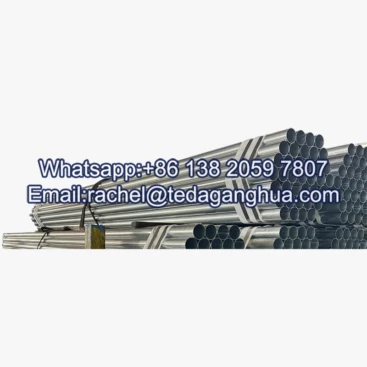
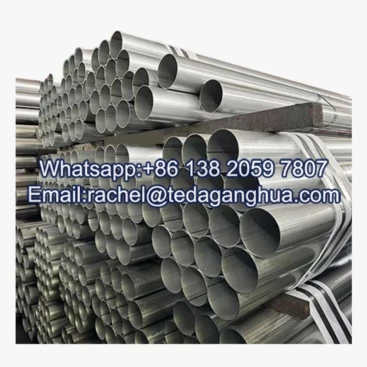
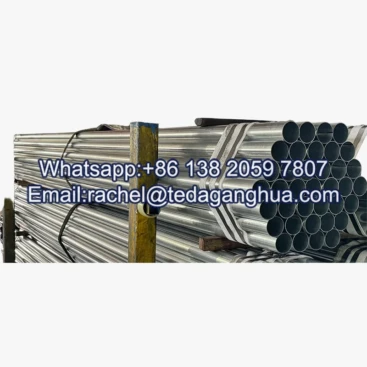
For manufacturers developing exhaust piping, industrial hot-gas lines, and other heat-exposed assemblies, reliable material sourcing is part of the engineering process. The selected tube must meet the specified grade, dimensions, manufacturing requirements, and service conditions. A general stainless designation alone does not establish suitability for every high-temperature application.
Teda Ganghua supports industrial buyers with stainless steel and metal product sourcing, processing coordination, and material documentation. When evaluating aluminized steel tubes or comparing coated products with stainless alternatives, buyers should provide the intended operating temperature, tube dimensions, environment, and expected service life. This allows the material options to be assessed against the actual application rather than a coating description alone.
For procurement teams, the most useful supplier discussion covers grade verification, dimensional consistency, traceability, inspection requirements, and whether the proposed product is intended for the stated operating environment. Material substitution should be approved only after the relevant technical requirements have been checked.
Frequently Asked Questions
1. Why is stainless steel commonly used in the exhaust hot end?
Stainless steel can provide oxidation resistance, high-temperature strength, and thermal fatigue performance appropriate for demanding exhaust conditions. The correct grade depends on operating temperature, exhaust chemistry, component geometry, and manufacturing requirements.
2. Does an aluminum-silicon coating fail immediately at high temperatures?
No. Its durability depends on coating composition, thickness, adhesion, atmosphere, exposure time, and thermal cycling. Failure can occur when repeated thermal stresses crack or separate the coating, allowing oxidation to attack the underlying steel. Suitability must be established for the intended service conditions.
3. Can stainless steel also oxidize at 1,000°C?
Yes. Stainless steel is not immune to high-temperature oxidation. Its performance depends on grade composition, atmosphere, duration, and temperature cycling. Some grades may lose protective-scale stability under severe conditions, so the maximum service temperature must be evaluated for the specific environment.
4. Is grade 409 suitable for every exhaust manifold?
No. Grade 409 is used in many automotive exhaust applications, but it is not universally suitable for every manifold design. Peak temperature, thermal fatigue, corrosion exposure, weld design, and service-life requirements should all be reviewed before selecting a grade.
5. What information should buyers provide when sourcing high-temperature stainless steel tubes?
Provide the intended application, stainless steel grade, applicable standard, outside diameter, wall thickness, length, dimensional tolerances, operating temperature, service environment, and required inspection documents. These details help suppliers assess whether the requested material and product configuration match the intended use.


