渗铝钢管质量检验: 5 每个买家都应该知道的测试
如何检验渗铝钢管质量: 5 每个买家都应该知道的测试
Aluminized steel pipe quality inspection is an essential step for buyers who need reliable performance in high-temperature, 耐腐蚀, 和工业应用. Because the aluminum coating provides the main protection against oxidation and corrosion, checking coating integrity and mechanical performance is critical before shipment.
Professional inspection should not only focus on appearance but also evaluate coating thickness, 附着力, bending performance, 耐腐蚀性, and internal structure. This guide introduces five important tests every buyer should understand before purchasing aluminized steel pipe.
Why Quality Inspection Matters Before Purchase
During manufacturing, problems such as uneven coating, insufficient bonding, surface defects, or improper processing may affect service life. A complete inspection process helps buyers confirm that the pipe meets application requirements for exhaust systems, 加热设备, industrial machinery, and other demanding environments.
Buyer Tip: A qualified inspection process should evaluate both the steel substrate and the aluminum coating because coating performance directly affects long-term durability.
Five Essential Tests for Aluminized Steel Pipe Inspection
| Inspection Test | 目的 | Key Evaluation |
|---|---|---|
| Bending Test | Check coating flexibility | Cracks, 脱皮, and surface damage after deformation |
| Coating Thickness Test | Measure protective layer consistency | Uniform aluminum coating thickness |
| Salt Spray Test | Evaluate corrosion resistance | Resistance to corrosion environment |
| Metallographic Test | Analyze coating structure | Bonding layer and microstructure quality |
| 附着力测试 | Verify coating bonding strength | Resistance against coating separation |
1. Bending Test: Checking Coating Flexibility
The bending test evaluates whether the aluminum coating can withstand mechanical deformation without cracking or peeling. This test is especially important for pipes that require additional fabrication, such as bending, 成型, or assembly.
During inspection, the pipe sample is bent according to specified requirements and then examined for visible coating damage.
- Check for surface cracks after bending.
- Observe whether the coating remains attached.
- Evaluate flexibility under mechanical stress.
2. Coating Thickness Measurement
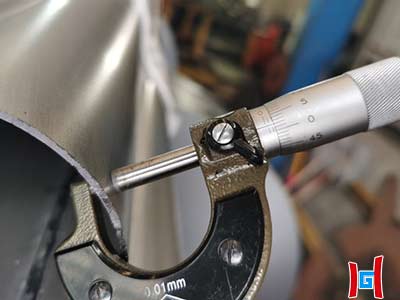
The aluminum coating thickness directly influences corrosion resistance and service performance. An uneven or insufficient coating layer may reduce protection in harsh environments.
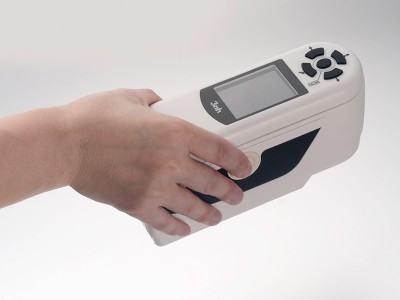
Thickness measurement is usually performed using non-destructive testing equipment, allowing inspectors to check multiple areas quickly.
| 检查项目 | What Buyers Should Check |
|---|---|
| Average Coating Thickness | Confirm sufficient protective layer |
| Surface Uniformity | Avoid thin coating areas |
| Coating Distribution | Ensure consistent protection around the pipe |
3. Salt Spray Test: Evaluating Corrosion Resistance
The salt spray test simulates a corrosive environment to evaluate coating durability. It helps buyers understand how well the aluminum layer protects the steel substrate.
This test is commonly used for products exposed to moisture, 化学物质, or outdoor conditions. The evaluation focuses on corrosion appearance, coating deterioration, 及表面防护性能.
4. Metallographic Test: Understanding Coating Structure
Metallographic examination provides detailed information about the internal structure of the coating system. It can reveal the bonding layer between aluminum and steel and identify possible manufacturing issues.
- Observe aluminum layer structure.
- Check the transition layer between coating and substrate.
- Identify defects such as uneven bonding.
5. 附着力测试: Measuring Coating Bond Strength
The adhesion test determines how strongly the aluminum coating is attached to the steel surface. Good adhesion prevents peeling and improves durability during thermal cycling and mechanical processing.
A strong coating bond is particularly important for applications involving temperature changes, 振动, and repeated operation.


Visual Inspection Before Shipment
Besides laboratory testing, visual inspection remains an important step before delivery. Buyers should check the overall appearance and ensure that the pipe surface is free from obvious defects.
- No visible cracks or coating peeling.
- No serious scratches or surface damage.
- Consistent surface appearance.
- Correct dimensions and packaging condition.
Recommended Inspection Checklist for Buyers
| Inspection Stage | Buyer Action |
|---|---|
| Before Production | Confirm material specifications and coating requirements |
| During Production | Monitor coating quality and manufacturing process |
| Before Shipment | Perform appearance, 涂层, and performance inspection |
Teda Ganghua Quality Support: Teda Ganghua supplies aluminized steel tubes with stable coating performance and supports customized specifications for automotive, 工业的, 和高温应用. Customers can select suitable products and processing solutions through our 渗铝钢管 range.
Common Mistakes Buyers Should Avoid
- Only checking appearance without testing coating performance.
- Ignoring coating thickness consistency.
- Skipping adhesion evaluation for demanding applications.
- Accepting products without proper inspection records.
FAQ About Aluminized Steel Pipe Quality Inspection
1. Which test is most important for aluminized steel pipe?
There is no single test that covers all performance factors. A combination of coating thickness, 附着力, 弯曲, 腐蚀, and structural tests provides a more complete evaluation.
2. Why is coating thickness important?
The coating thickness determines the level of protection against oxidation and corrosion, 特别是在高温环境中.
3. Can coating damage be detected visually?
Some defects can be identified visually, but professional testing is required to confirm coating bonding, 厚度, and internal quality.
4. Should buyers request inspection reports before shipment?
是的. Inspection reports help verify product quality and ensure that the material meets application requirements before delivery.