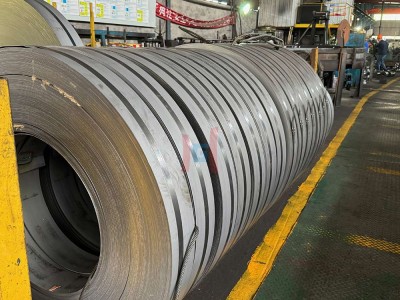
Estructura de tres capas de acero aluminizado Óxido de aluminio y capa intermetálica
El acero aluminizado no está protegido por una única capa uniforme de aluminio.. Its performance comes from a layered metallurgical structure formed during hot-dip coating and further modified when the surface is exposed to oxygen and elevated temperature. In practical terms, three functional zones are important: the outer aluminum-rich coating, the iron-aluminum intermetallic layer beneath it, and the steel substrate. During service, the exposed aluminum-rich surface can develop a very thin aluminum oxide film that acts as an additional protective barrier.
The key concept: the oxide layer provides surface protection, the intermetallic layer creates metallurgical bonding and contributes to thermal and oxidation resistance, while the steel substrate carries most of the structural load. These layers work together rather than functioning as three independent coatings.
The Three-Layer Structure at a Glance
A cross-section of hot-dip aluminum-coated steel typically reveals an aluminum-rich outer region, an Fe-Al intermetallic reaction layer, and the underlying steel. Depending on coating chemistry and processing conditions, the intermetallic region can contain several phases rather than one perfectly uniform compound. Research on hot-dip aluminum-silicon coatings has identified phases such as FeAl3 and Fe2Alabama5, while silicon can modify the thickness, morphology and phase constitution of the reaction layer.
| Capa | Main Composition | Primary Function | Typical Service Role |
|---|---|---|---|
| Surface oxide | Alabama2O3-rich oxide | Limits further oxidation | Surface barrier during atmospheric and thermal exposure |
| Aluminum-rich coating | Al or Al-Si-rich coating | Provides corrosion and heat protection | Sacrificially protects and shields the steel surface |
| capa intermetálica | Fe-Al or Fe-Al-Si compounds | Creates metallurgical bonding | Supports coating adhesion and thermal stability |
| Sustrato de acero | Iron-based steel | Provides structural strength | Carries mechanical loads and defines the base material properties |
The exact phase distribution is affected by coating chemistry, bath composition, dipping conditions, steel chemistry and subsequent thermal exposure. The surface oxide is also a service-generated layer rather than simply a separately applied coating.
Capa 1: The Aluminum Oxide Surface Film
The outermost protective feature develops when aluminum reacts with oxygen. Instead of allowing oxidation to continue rapidly through the coating, aluminum can form a compact aluminum-oxide film. This oxide is extremely important because the protective behavior of aluminum-based surfaces depends heavily on the ability of this film to limit oxygen transport.
At moderate exposure, the oxide film can remain very thin while still providing an effective barrier. Under elevated temperature, oxide formation becomes more significant, and the stability of the oxide layer becomes one of the reasons aluminum-coated steel is useful in thermal applications.
Why the Oxide Layer Matters
- Reduces direct contact between oxygen and the underlying aluminum-rich coating.
- Slows further oxidation when the film remains continuous and adherent.
- Contributes to high-temperature oxidation resistance.
- Helps preserve the aluminum reservoir beneath the surface.
- Can become more important as service temperature increases.
Sin embargo, an oxide film should not be interpreted as an unlimited heat shield. Mechanical damage, severe thermal cycling, surface contamination, coating depletion and localized cracking can change the protective behavior. Service temperature therefore needs to be evaluated together with exposure time and atmosphere.
Capa 2: The Fe-Al Intermetallic Layer
The intermetallic layer is formed by a metallurgical reaction between molten aluminum and iron from the steel substrate during hot-dip processing. It is therefore fundamentally different from a simple mechanically attached paint or deposited film.
Common phases reported in hot-dip aluminum-coated steel include Fe2Alabama5 and FeAl3. Their relative amount, morphology and thickness can change with aluminum bath chemistry, silicon additions, immersion conditions and substrate composition. In some systems, silicon-containing phases can also develop within or around the reaction zone.
This layer is essential for coating adhesion, but it introduces an important engineering trade-off. Intermetallic compounds can be substantially harder and more brittle than the aluminum-rich outer layer. Excessive intermetallic growth can therefore reduce forming tolerance and increase the risk of cracking during severe deformation.
The Intermetallic Layer Is a Bonding Zone
Its purpose is not simply to make the coating thicker. The reaction zone connects the aluminum-rich surface to the steel metallurgically. A controlled intermetallic layer can provide strong attachment, while excessive growth may make bending, stamping or other forming operations more demanding.
Capa 3: The Steel Substrate
The steel substrate remains the structural foundation of the product. Resistencia a la tracción, límite elástico, alargamiento, forming behavior, weldability and dimensional stability are primarily determined by the selected steel grade and its processing condition.
The aluminum-based coating should therefore not be treated as a replacement for the mechanical properties of the substrate. A component may have excellent oxidation resistance at its surface while still requiring a specific steel grade to withstand pressure, vibración, doblando, fatigue or impact.
This distinction is particularly important when designing tubes and fabricated components. The coating protects the surface, but tube diameter, espesor de pared, grado de acero, weld construction and forming process determine much of the component’s structural performance.
How the Three Layers Work Together
The three functional zones can be understood as a protection chain:
1. Protección de superficies
The aluminum-rich surface reacts with oxygen and develops a protective oxide film that slows additional oxidation.
2. Metallurgical Bond
The Fe-Al reaction zone connects the coating to the steel and helps maintain coating attachment during service.
3. Structural Core
The steel substrate supplies the mechanical properties required by the finished component.
If one layer is compromised, the other layers may still provide partial protection, but the overall performance can deteriorate. Por ejemplo, mechanical damage can expose the underlying coating, while severe thermal exposure can consume or transform the aluminum-rich region and alter the intermetallic structure.
Why Silicon Changes the Intermetallic Layer
Silicon is particularly important when comparing aluminum-silicon coatings with commercially pure aluminum coatings. Experimental studies show that increasing silicon content in the molten bath can reduce the growth of the Fe-Al intermetallic layer and change the morphology of the interface. Silicon can also participate in additional Fe-Al-Si phases.
This explains why coating chemistry should be specified rather than described only as an aluminum surface. Two products can both be visually recognized as aluminum-coated steel while having different reaction-layer structures and different forming behavior.
For thermal components, the interaction between aluminum, silicon and iron becomes even more important because the coating continues to evolve during heating. Diffusion can redistribute elements, while repeated thermal exposure can modify the balance between the outer coating and the intermetallic zone.
What Happens During High-Temperature Exposure?
When the material is heated, oxygen interacts with the aluminum-rich surface and promotes oxide formation. Al mismo tiempo, diffusion between the coating and steel can continue. The intermetallic region may change in phase composition as aluminum is consumed or redistributed.
This means that the as-coated microstructure and the in-service microstructure are not necessarily identical. For components operating at elevated temperature for long periods, engineers should evaluate the entire thermal history rather than relying only on room-temperature coating appearance.
| Service Condition | Main Layer Concern | What to Evaluate |
|---|---|---|
| Normal atmospheric exposure | Surface protection | Humedad, condensación, pollutants and coating continuity |
| Repeated heating and cooling | Oxide and intermetallic stability | Temperature cycle, oxidation and thermal stress |
| Severe forming | Intermetallic cracking risk | Bend radius, forming sequence and coating adhesion |
| Welding or fabrication | Local coating alteration | Heat input, joint design and post-fabrication protection |
| Long-term high-temperature service | Diffusion and coating depletion | Tiempo, temperatura, atmosphere and remaining aluminum-rich material |
Why the Layer Structure Matters for Forming and Welding
A coating specification cannot be separated from fabrication requirements. Bending and stamping impose strain on the coating and the intermetallic layer. If the reaction layer is excessively thick or brittle, severe deformation can produce cracks that eventually expose the underlying material.
Welding introduces another consideration. The localized heat can modify or remove the coating near the joint, and the final component may therefore require an appropriate joining procedure and post-fabrication protection strategy.
For tubular products, these issues become more relevant because the material may be roll-formed, soldado, cut, expanded, bent or assembled after coating. The finished tube should therefore be evaluated according to its actual manufacturing sequence rather than by coating chemistry alone.
How to Specify the Material for Procurement
A useful purchase specification should identify the governing standard, grado de sustrato, nominal dimensions, coating type, coating mass or designation where applicable, requisitos de superficie, forming requirements and intended service conditions.
Para aplicaciones de alta temperatura, also provide the expected continuous temperature, temperatura máxima, heating cycle, atmosphere and exposure duration. For outdoor applications, include humidity, salt exposure, condensation and other corrosive conditions that could influence coating performance.
Procurement Checklist
- Base steel grade and mechanical requirements
- Coating standard and coating type
- Espesor, width or tube dimensions
- Coating mass or designation
- Surface and appearance requirements
- Doblar, Requisitos de conformado y soldadura.
- Operating temperature and thermal cycling
- Atmospheric or chemical exposure
- Inspection and material documentation
Teda Ganghua Supply and Processing Support
Teda Ganghua provides aluminum-coated steel solutions for industrial applications where coating chemistry, steel substrate and fabrication requirements need to be considered together. The team can review dimensions, material specifications, coating requirements and application conditions to help procurement managers define a practical supply specification before production.
For tubular applications such as exhaust components, heat-resistant piping and fabricated industrial tubes, buyers can review tubos de acero aluminizado and provide the outside diameter, espesor de pared, longitud, weld condition and operating environment. This information helps determine whether the proposed material structure is suitable for the intended forming and service conditions.
The objective is not simply to supply a coated steel product, but to match the steel substrate, coating structure and processing route with the finished component’s actual working environment.
Preguntas frecuentes
What are the three main layers of aluminized steel?
The functional structure consists of an aluminum-rich outer coating, an Fe-Al or Fe-Al-Si intermetallic reaction layer, and the steel substrate. During exposure to oxygen, the aluminum-rich surface can also develop a thin protective aluminum oxide film.
What is the purpose of the intermetallic layer?
The intermetallic layer provides metallurgical bonding between the aluminum-rich coating and the steel substrate. It is essential to coating adhesion, although excessive growth can increase brittleness and affect forming performance.
Does the aluminum oxide layer exist immediately after coating?
A thin oxide film can form naturally when an aluminum-rich surface encounters oxygen. During elevated-temperature exposure, oxidation becomes a more significant part of the coating’s protective behavior.
Why does silicon affect the coating structure?
Silicon changes the reactions between molten aluminum and steel. Increasing silicon content can reduce intermetallic-layer growth and modify the phases and morphology within the reaction zone.
Does the coating determine the mechanical strength of the finished tube?
No. El sustrato de acero es el componente estructural principal.. Dimensiones del tubo, grado de acero, espesor de pared, El método de soldadura y el proceso de conformado deben especificarse junto con los requisitos de recubrimiento..