- Description
Description
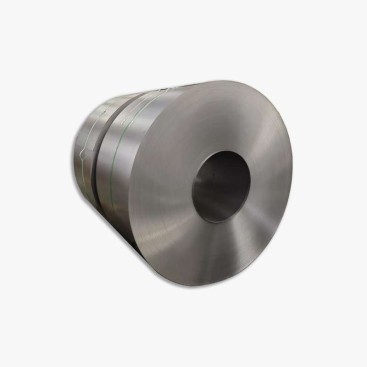
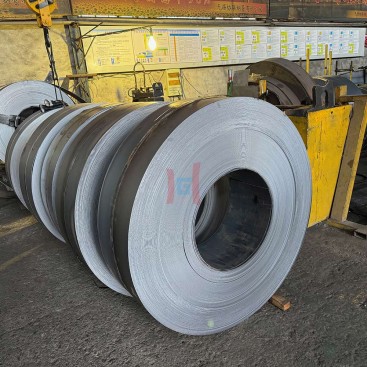
An aluminized steel coil factory controls much more than the final coil appearance. The manufacturing route typically combines strip cleaning, annealing, molten aluminium-based coating, gas wiping, cooling and recoiling. For procurement managers, the key factory-level questions are whether the line can maintain stable bath chemistry and temperature, control coating mass across the strip width, achieve reliable coating adhesion, and provide consistent coil dimensions and inspection records. Continuous hot-dip aluminizing lines use a coating bath followed by gas-wiping equipment to control the coating layer, with cooling used to solidify and stabilize the coating.
1. Inside a Continuous Hot-Dip Aluminizing Line
A modern production route can be understood as a sequence of controlled operations rather than simply “dipping steel into aluminium.” The strip must first reach a suitable surface condition and temperature before entering the molten coating bath. After coating, the liquid layer is adjusted and rapidly cooled before the finished strip is inspected and recoiled.
| Production stage | Main purpose | Key control point |
|---|---|---|
| Cleaning / pretreatment | Remove oil, dirt and surface contamination | Surface cleanliness and wettability |
| Annealing | Adjust substrate properties and prepare the surface | Temperature, atmosphere and strip speed |
| Molten bath | Apply the aluminium-based coating | Al-Si chemistry and bath temperature |
| Gas wiping | Remove excess liquid coating | Knife pressure, gap, alignment and line speed |
| Cooling | Solidify and stabilize the coating | Cooling rate and strip stability |
| Inspection / recoiling | Verify and package the finished coil | Coating mass, surface, dimensions and coil shape |
Continuous hot-dip aluminizing is therefore a process-control operation. Historical technical descriptions of aluminizing lines also show the sequence of surface preparation, annealing, controlled-atmosphere treatment, immersion in the aluminium coating bath and air-knife adjustment of the coating layer.
2. Step One: Cleaning Before Coating
Before the strip enters the molten bath, surface preparation is critical. Oil, dirt and surface oxides can interfere with wetting and create uncoated areas or pinholes. Continuous aluminizing lines therefore incorporate cleaning and controlled-atmosphere heating before the strip reaches the coating pot.
The importance of surface preparation is especially clear when coating difficult substrates. Technical descriptions of continuous hot-dip aluminizing identify surface oxides as a potential barrier to wetting and coating continuity, while reducing-atmosphere treatment is used to prepare the steel surface before immersion.
Factory-level principle: a coating defect that appears on the finished coil may originate before the strip ever enters the aluminium bath. Cleaning, annealing atmosphere and surface condition therefore belong in the supplier qualification process.
3. Annealing: Substrate and Surface Preparation
The annealing section performs two functions: it establishes the required mechanical condition of the steel substrate and prepares the strip surface for the coating operation. Furnace temperature, atmosphere, strip speed and cooling before bath entry must be coordinated with the selected substrate and coating system.
For Al-Si hot-dip coating, the strip is normally brought to a temperature compatible with the molten bath before entering the coating pot. The exact furnace cycle is product- and line-dependent rather than a single universal temperature recipe.
4. Molten Bath Control: Aluminium, Silicon and Temperature
The molten bath is one of the most important control points in an aluminized steel coil factory. For common Al-Si aluminizing systems, silicon is added to the aluminium bath to control the interfacial reaction and help limit excessive growth of brittle iron-aluminium intermetallic phases. Technical literature describes commercial hot-dip aluminium baths commonly containing roughly 7–11% silicon, while specific product standards and factory recipes determine the actual chemistry.
For production planning, a bath-temperature window around 660–700°C may be used for certain Al-Si aluminizing operations, but it should be treated as a typical process range rather than a universal requirement. Actual bath temperature must be matched to bath chemistry, substrate, line design and the applicable product specification. Published technical descriptions show that bath temperature is controlled in relation to the liquidus and process conditions, while other hot-dip aluminium references report broader temperature ranges.
| Bath control | Why it matters |
|---|---|
| Aluminium content | Provides the primary corrosion and oxidation-resistant coating phase |
| Silicon content | Helps control the steel/coating interfacial reaction |
| Bath temperature | Controls fluidity, wetting and process stability |
| Iron pickup | Can affect bath condition and coating metallurgy |
| Bath cleanliness | Helps reduce inclusions and surface defects |
5. The Coating Interface: Why Silicon Matters
During hot-dip aluminizing, the coating is not simply a layer of aluminium sitting on bare steel. An interfacial Fe-Al-Si reaction layer develops between the steel substrate and the outer coating. Research on Al-Si hot-dip coatings has identified aluminium-rich and iron-aluminium intermetallic phases within the coating structure.
The factory objective is therefore to obtain sufficient metallurgical bonding without allowing the interfacial alloy layer to develop in a way that compromises forming or coating performance. Production line speed, bath chemistry, strip temperature and subsequent cooling can all influence this balance.
6. Gas Knife: Controlling Coating Thickness
After the strip leaves the molten bath, it carries liquid coating on both surfaces. Gas knives positioned near the strip use controlled airflow to wipe away excess liquid metal and establish the required coating mass and thickness.
This is one of the most important line-control operations. Technical descriptions of continuous aluminizing specifically identify gas wiping immediately above the bath as the mechanism for adjusting coating thickness.
Knife pressure
Changes the amount of liquid coating remaining on the strip.
Knife-to-strip distance
Influences wiping efficiency and coating uniformity.
Strip alignment
Helps maintain consistent coating across the strip width.
Line speed
Must be coordinated with bath and gas-knife conditions.
Gas-knife technology is widely used in continuous hot-dip coating lines to control coating mass and improve its distribution across the strip width.
7. Cooling After the Coating Bath
Once the coating has been wiped to the required level, controlled cooling solidifies the aluminium-based layer. Cooling rate affects coating solidification behavior and can also influence the development of the interfacial alloy layer.
Advanced hot-dip aluminizing technology can use forced cooling above the bath to control solidification and interfacial-layer development. Research and patent literature describe controlling conveying speed and cooling conditions as ways to influence coating solidification and alloy-layer thickness.
8. Factory Quality Control: Coating Weight
Coating weight is one of the first specifications buyers should request from a factory. The nominal coating designation should be linked to a defined standard and test method rather than treated as a visual estimate.
| QC item | What the factory should control | Buyer concern |
|---|---|---|
| Coating mass | Target value and allowable variation | Corrosion and heat-exposure performance |
| Cross-width uniformity | Stable coating from edge to center | Consistent downstream performance |
| Coating adhesion | Resistance to cracking or peeling during specified forming | Forming and fabrication reliability |
| Surface appearance | Control of bare spots, inclusions, scratches and other defects | Appearance and functional surface quality |
| Thickness and width | Dimensional tolerance along the coil | Fit with slitting, tube and forming equipment |
9. Coating Adhesion: A Critical Factory Test
A coating can meet its nominal weight and still create problems if adhesion is inadequate for the intended forming operation. Bending, stamping, roll forming and tube manufacturing impose deformation on the coated surface.
For this reason, supplier qualification should include the agreed coating-adherence test and acceptance criteria. The test should be evaluated together with substrate grade, thickness, coating system and forming requirements rather than considered independently.
10. Surface QC: What a Good Coil Should Avoid
Visual inspection should look for continuous coating coverage and a stable surface appearance. Typical defects requiring investigation include bare spots, coating lumps, scratches, inclusions, streaks, edge buildup and localized coating variation.
For high-volume production, visual inspection should be supported by process data and sampling rather than relying entirely on manual observation. A supplier should be able to trace a surface issue back to a production lot, line condition or coil section.
11. Typical Factory Capability Indicators
When comparing manufacturers, buyers often start with thickness and width capability. A representative commercial production range can be around 0.3–2.0 mm thickness and 600–1500 mm width, although actual capability varies by line, substrate, coating system and product standard. Published industry product information also shows commercial Al-Si coated coil ranges around 0.30–3.00 mm and 600–1500 mm, illustrating why the final capability must be confirmed against the specific factory line.
| Factory capability | Recommended inquiry |
|---|---|
| Thickness range | 0.3–2.0 mm or project-specific range |
| Width range | 600–1500 mm or required slit/master width |
| Coating system | Al-Si coating and applicable standard |
| Coil ID / OD | Match customer’s decoiler and handling equipment |
| Coil weight | Confirm standard and customized coil weights |
| Annual capacity | Request stated line capacity and actual product capacity separately |
Annual capacity should not be considered in isolation. A factory may have a large nominal line capacity but limited availability for a particular thickness, width, coating level or substrate. Product-specific capacity and current production scheduling are more useful for procurement than a headline annual figure alone.
12. Factory vs Trader: What Changes for the Buyer?
A direct factory can provide stronger visibility into production parameters, coating control and quality records. A qualified trading supplier can still be useful when it consolidates multiple mills, provides local inventory or handles smaller quantities. The correct choice depends on the buyer’s technical and logistical requirements.
| Evaluation point | Factory | Trader |
|---|---|---|
| Production visibility | Usually direct | Depends on mill relationship |
| Coating process control | Directly managed | Managed through the supplying mill |
| Customization | Usually stronger for production parameters | Depends on supplier network |
| Small-volume sourcing | May require production planning | May be more flexible if stock is available |
| Technical traceability | Can be linked directly to production records | Should be verified through mill documentation |
The best procurement model is therefore not simply “factory is always better.” The buyer should verify whether the supplier has real production access, traceable inspection records and the ability to control the exact specification being quoted.
13. What to Ask an Aluminized Coil Manufacturer
- What continuous hot-dip coating line produces the requested material?
- Which substrate grades can the line process?
- What Al-Si bath chemistry is used for the requested product?
- How is bath temperature monitored and recorded?
- How is coating mass controlled by the gas-knife system?
- How is cross-width coating uniformity verified?
- Which coating-adherence test is used?
- How are surface defects detected and recorded?
- What thickness and width ranges are available?
- What coil ID, OD and weight combinations can be supplied?
- Can the factory provide slitting, levelling or cut-to-length processing?
- Can the supplier provide MTC and coating inspection data for each production lot?
14. Teda Ganghua Manufacturing and Supply Support
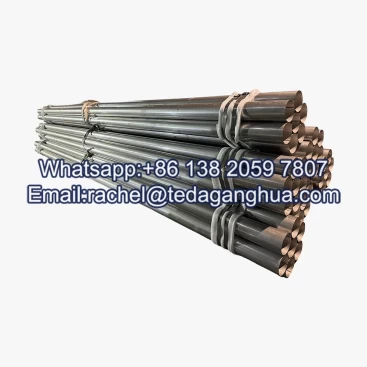
Teda Ganghua can support procurement projects requiring aluminized steel tubes and related aluminized steel material sourcing. The commercial process can be coordinated around substrate grade, coating requirement, tube or coil dimensions, processing requirements and inspection documentation.
For a production inquiry, provide the required standard, substrate grade, thickness, width, coating designation, coil weight, ID/OD, quantity and downstream application. For tube production, also provide the final OD, wall thickness, length and forming/welding requirements so the material route can be evaluated before production.
15. Recommended Factory Purchase Specification
Example:
Continuous hot-dip Al-Si coated steel coil, [standard/grade], [coating designation], [thickness] × [width] mm, [coil ID/OD], [coil weight], mill edge or slit edge, specified coating mass and adhesion requirements, surface-quality requirements, MTC and inspection report required.
This specification separates the material into the essential manufacturing layers: substrate + coating chemistry + coating mass + dimensions + coil condition + inspection. It also gives the factory enough information to determine whether the order can be supplied from existing production capability or requires a dedicated production schedule.
16. FAQ
What is the main production process for aluminized steel coil?
A typical continuous route includes cleaning, annealing, controlled-atmosphere preparation, immersion in a molten aluminium-based bath, gas-knife coating control, cooling, inspection and recoiling.
What temperature is used in an Al-Si coating bath?
Around 660–700°C can be used as a representative operating range for some Al-Si aluminizing processes, but it is not a universal fixed value. Actual temperature depends on bath chemistry, equipment, substrate and the applicable specification.
How does a factory control aluminized coating thickness?
The strip exits the molten bath carrying liquid coating, and gas knives remove excess coating to establish the target coating mass. Knife pressure, position, strip speed and alignment all influence the result.
Why is coating adhesion important?
The coated strip may be bent, stamped, roll formed or welded after production. Adequate adhesion helps the coating withstand the specified downstream deformation without unacceptable cracking or peeling.
Is buying directly from a factory always better than buying from a trader?
Not necessarily. A factory offers direct production visibility, while an experienced trading supplier may provide stock, consolidation and flexible sourcing. The critical issue is whether the supplier can provide traceable production, coating-control and inspection data for the exact material being purchased.